


Washington DMV Knowledge Test Practice 6

4.8 out of 5 (1147 votes)
80% Passing score
20 Questions
4 Mistakes allowed
This sixth Washington DOL practice test is built around turn signals, which sounds like a narrow topic until you remember how often signaling shows up in actual driving. Turning at an intersection, changing lanes on a busy road, merging into traffic, pulling away from the curb, moving into a turn lane — the signal is the part that tells everyone else what you are about to do before you do it. Washington expects drivers to understand that, not just sort of recognize it from the handbook. The practice knowledge driving test gives you 20 multiple-choice questions, and you will need 16 correct answers to pass. It is not timed, which is a small mercy, honestly, because some of these rules are best learned slowly. Read the question, think through the situation, and pay attention to the wording. That is where a Washington DMV knowledge test practice can do more than hand you a score. It shows you whether you actually understand the rule well enough to use it when the setting changes a little. For teen drivers, this practice test also fits into a bigger licensing process. Washington’s system for 16- and 17-year-old drivers moves from an instruction permit to an intermediate driver license, then to unrestricted adult driving privileges at age 18. A teen may apply for a permit at 15 when enrolled in an approved driver training course, or at 15½ after passing the knowledge test if not enrolled. Before applying for a license at 16 or 17, the driver must hold the permit for at least six months, complete approved driver training, pass the knowledge test and the driving skills test, and log supervised practice: 40 daylight hours and 10 nighttime hours with a qualified licensed driver. The driving skills test requires at least 80 out of 100. The intermediate license rules matter, too, even though people tend to skim them. For the first six months, Washington limits passengers under 20 unless they are immediate family members, and it restricts driving between 1 a.m. and 5 a.m. unless a parent, guardian, or licensed driver at least 25 is along. Cell phone use is prohibited while driving, even hands-free, except to report an emergency. So yes, this Washington knowledge test practice is about turn signals. But it is also a useful checkpoint inside the whole licensing path — a focused way to tighten up one everyday rule before the real DOL knowledge test asks whether you were paying attention.
FREE DMV Practice Test App
Study for your Washington permit test or driver’s license with the NextDoorDriving app. 700+ DMV questions and answers, 100% free!
Download on the App Store

Sample Washington Permit Test Questions

Question 1

An oncoming vehicle begins turning left across your lane, creating an immediate collision risk. What should you do?

  1. A. Maintain speed because you have the right-of-way
  2. B. Slow down or stop as necessary to avoid the collision
  3. C. Sound your horn but maintain your speed
  4. D. Accelerate to pass through the intersection first

Correct answer: B. – Slow down or stop as necessary to avoid the collision

The left-turning driver must yield to oncoming traffic that is close enough to be an immediate hazard. However, Washington’s basic speed rule also requires drivers to control speed as necessary to avoid a collision and to reduce speed when traffic creates a special hazard at an intersection. Slow down or stop if needed.

Source: RCW 46.61.185(1) – Vehicle turning left—Vulnerable users of a public way—Fine., RCW 46.61.400(1), (3) – Basic rule and maximum limits.
Question 2

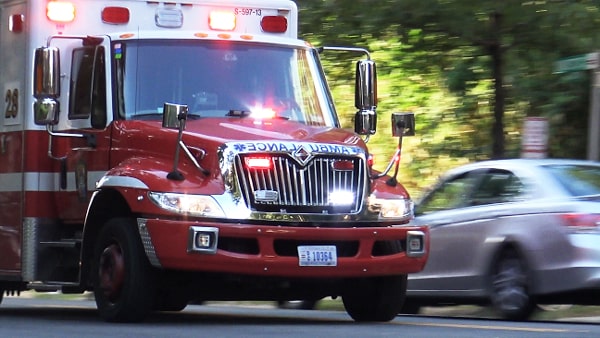
You are outside an intersection when an emergency vehicle approaches with the required warning signals. What must you do?

When you hear the siren or see the flashing red light of a closely approaching emergency vehicle, and you are not in the intersection, you should:
  1. A. Continue slowly in the right lane
  2. B. Speed up to stay ahead of it
  3. C. Move near the right edge of the roadway and stop
  4. D. Stop immediately in your current traffic lane

Correct answer: C. – Move near the right edge of the roadway and stop

Upon the immediate approach of a properly signaling emergency vehicle, Washington drivers must yield and move parallel to, and as close as possible to, the right-hand edge or curb. The vehicle must be stopped clear of an intersection and remain there until the emergency vehicle passes. Follow different instructions if directed by a police officer.

Source: RCW 46.61.210(1) – Operation of vehicles on approach of emergency vehicles or organ transport vehicles transporting a time urgent organ.

Question 3

Which methods can drivers use to communicate their intentions or warn others of a risk?

  1. A. Turn signals and brake lights
  2. B. The horn when a warning is needed
  3. C. Hazard lights or hand signals when appropriate
  4. D. All of the above

Correct answer: D. – All of the above

Turn signals communicate a planned change in direction, and brake lights warn following drivers that you are slowing or stopping. Hazard lights can alert others when your vehicle malfunctions or you must make an emergency stop. The driver guide also identifies thoughtful use of lights, the horn, and hand signals as ways to communicate risk.

Source: Washington State Driver Guide — § 2.5, “Brake Lights,” “Turn Signals,” “Hand Signals,” and “Hazard Warning Lights”, Washington State Driver Guide — § 5.8, “Communicating Risk”

Question 4

While driving alone, you begin drifting from your lane and cannot stay awake. What should you do?

  1. A. Turn on the air conditioner and drink coffee
  2. B. Open the windows and increase the radio volume
  3. C. Leave the roadway safely and take a short nap
  4. D. Drive faster to reach your destination sooner

Correct answer: C. – Leave the roadway safely and take a short nap

Lane drifting and difficulty staying awake are warning signs of fatigue. The driver guide advises pulling over and resting when those signs appear. A person traveling alone who becomes tired should leave the roadway safely and take about a 20-minute nap rather than continue driving while drowsy.

Source: Washington State Driver Guide — § 3.1, “Fatigue and Drowsy Driving”

Question 5

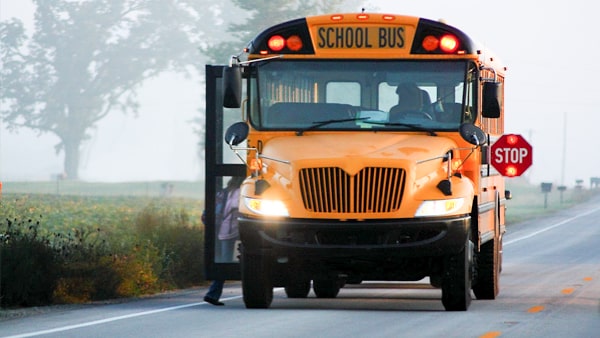
On a two-lane road, a school bus ahead in the opposite lane has stopped with red lights flashing and its stop sign extended. What must you do?

If a school bus stops to unload children on a two-lane highway, vehicles traveling in the opposite direction are:
  1. A. Continue if no children are visible
  2. B. Slow down but do not stop
  3. C. Stop, then pass at low speed while the lights flash
  4. D. Stop and wait until the bus moves or its visual signals deactivate

Correct answer: D. – Stop and wait until the bus moves or its visual signals deactivate

In Washington, traffic meeting a stopped school bus from either direction must stop when the bus’s required visual signals are operating. Drivers may not proceed until the bus resumes motion or those signals are no longer activated. The opposite-direction exceptions apply to separate divided roadways and highways with at least three marked lanes, not an ordinary two-lane road.

Source: RCW 46.61.370(1)–(3) – Overtaking or meeting school bus, exceptions—Duties of bus driver—Penalty—Safety cameras.

Question 6

If your vehicle begins to hydroplane, which actions are recommended?

  1. A. Take your foot off the accelerator
  2. B. Keep the steering wheel steady and avoid sudden corrections
  3. C. Apply the brakes gently rather than forcefully
  4. D. All of the above

Correct answer: D. – All of the above

Hydroplaning occurs when water separates the tires from the roadway and causes a loss of traction. Take your foot off the accelerator, keep the steering wheel steady, and avoid jerking or overcorrecting. The driver guide also recommends gently pressing the brakes; forceful braking, particularly without antilock brakes, can worsen the loss of traction.

Source: Washington State Driver Guide — § 5.6, “Hydroplaning”