


West Virginia Permit Practice Test 5

5 out of 5 (77 votes)
80% Passing score
20 Questions
4 Mistakes allowed
A WV DMV practice permit test should do more than toss a few random road sign questions at you. This one has 20 realistic, multiple-choice questions with immediate feedback and explanations, which matters for learning. You are not just checking whether you guessed correctly; you are seeing why an answer works, where the rule comes from, and how West Virginia expects drivers to think about safety on the road. The emphasis here is child passenger safety, so expect questions that deal with young passengers, restraint rules, and the kind of practical detail that can get overlooked during a quick read-through of the handbook. West Virginia requires children under 8 to be properly secured in a federally approved child safety seat, and that is exactly the sort of rule worth knowing before test day — and, obviously, before you are responsible for a child in the vehicle. The practice test also covers general driving knowledge and local requirements, so it still feels like a real learners permit practice test, not a narrow quiz pretending to be one. For context, the official WV DMV written test is based on the West Virginia Driver’s Licensing Handbook. It has at least 25 questions, and you need 19 correct answers to pass, which comes out to 76%. Unanswered questions can count as incorrect if the time limit runs out, a small detail that can become a real detail once you are actually taking the test. This WV practice permit test uses a 20-question format and requires 16 correct answers to pass, making it a good focused review before the real knowledge test. There are a few licensing details worth keeping straight while you study. West Virginia allows online knowledge testing through KnowTo Drive, but only on a desktop or laptop with a front-facing camera; phones are not allowed. Passing online gives you a certificate that is valid for 6 months, not permission to drive. You still have to go to the DMV. Teen drivers have their own steps, too. A Level 1 GDL permit starts at age 15, requires a supervising driver age 21 or older in the front passenger seat, and limits driving to 5:00 a.m. through 10:00 p.m. Applicants under 18 also need parent or guardian consent and a School Driver Eligibility Certificate. So the practice test is the study tool, yes, but it also gives you a cleaner sense of the larger licensing process before the forms, fees, vision screening, and DMV visit start piling together.
FREE DMV Practice Test App
Study for your West Virginia permit test or driver’s license with the NextDoorDriving app. 700+ DMV questions and answers, 100% free!
Download on the App Store

Sample West Virginia Permit Test Questions

Question 1

Which observation indicates that your vehicle is in a large truck’s blind spot?

  1. A You are beside the truck’s left front wheel
  2. B You cannot see the truck driver’s reflection in a side mirror
  3. C You are more than ten feet behind the truck
  4. D All of the above

Correct answer: B – You cannot see the truck driver’s reflection in a side mirror

Large trucks have extensive blind spots called the “No-Zone.” The West Virginia handbook states that if you cannot see the driver’s reflection in the truck’s side mirror, you are in the driver’s blind spot. Avoid remaining there longer than necessary to pass safely, because the truck driver cannot see vehicles occupying that area.

Source: West Virginia Driver’s Licensing Handbook — Ch. VI, “The ‘No-Zone’”
Question 2

Why is alcohol-impaired driving a concern for everyone using the road?

  1. A It presents little risk when traffic is light
  2. B It impairs driving abilities and can endanger other road users
  3. C It is solely a law-enforcement concern
  4. D It affects only the person who has been drinking

Correct answer: B – It impairs driving abilities and can endanger other road users

Alcohol reduces alertness, interferes with judgment, and impairs vision. An affected driver is less able to recognize hazards and respond safely, placing passengers and other road users at risk. West Virginia prohibits driving while in an impaired state, including impairment caused by alcohol, controlled substances, other drugs, or a combination of substances.

Source: W. Va. Code §17C-5-2(a)(1), (e) – Driving under influence of alcohol, controlled substances, or drugs; penalties, West Virginia Driver’s Licensing Handbook — Ch. III, “Driving Impaired or Under the Influence”

Question 3

If another driver fails to follow the right-of-way rules, what is the safest response?

  1. A Proceed because the law gives you priority
  2. B Sound the horn and force the other driver to stop
  3. C Yield when necessary to avoid a collision
  4. D Follow the other vehicle closely afterward

Correct answer: C – Yield when necessary to avoid a collision

Right-of-way rules establish who should proceed first, but they do not make a collision acceptable. If another driver does not follow those rules, yield rather than insist on proceeding. The driver’s handbook describes right-of-way as something to be given, not taken. Remaining alert and avoiding the conflict is the defensive response.

Source: West Virginia Driver’s Licensing Handbook — Ch. VI, “Right-of-Way”

Question 4

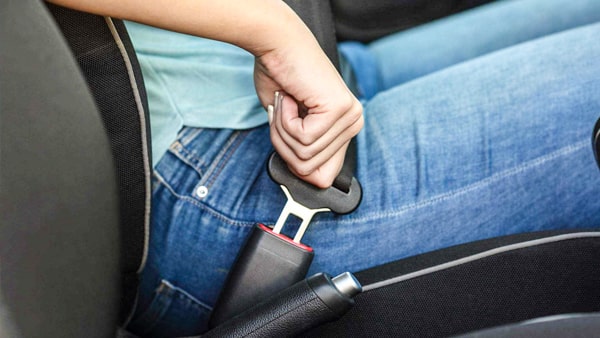
For the greatest protection from crash injuries, seat belts should be worn by:

Seat belts can be most effective as injury preventive devices when they are worn by:
  1. A Only the driver
  2. B Passengers only on long trips
  3. C Only occupants traveling on an interstate
  4. D The driver and every passenger on every trip

Correct answer: D – The driver and every passenger on every trip

Seat belts provide the best protection when every occupant uses them on every trip. The handbook reports that wearing safety belts substantially reduces the chance of injury or death and distributes crash forces over stronger parts of the body. West Virginia law requires restraints for the driver, front-seat passengers, and rear-seat passengers under age 18, subject to specified exceptions.

Source: W. Va. Code §17C-15-49(a), (b) – Operation of vehicles with safety belts; exception; penalty; educational program by West Virginia State Police, West Virginia Driver’s Licensing Handbook — Ch. VIII, “Safety Equipment—Safety Belts”

Question 5

How should you direct your attention while driving?

  1. A Keep looking straight ahead without checking elsewhere
  2. B Watch only the vehicle directly ahead
  3. C Check mirrors only before stopping
  4. D Regularly scan ahead, check mirrors, and watch areas where traffic may enter

Correct answer: D – Regularly scan ahead, check mirrors, and watch areas where traffic may enter

A driver should make regular traffic and mirror checks rather than focus on one vehicle or one part of the road. Check before, during, and after intersections, turns, and lane changes. Search left and right near driveways, railroad tracks, and other places where paths may cross. This scanning helps identify developing hazards early.

Source: West Virginia Driver’s Licensing Handbook — Ch. IV, “Road Test—General Driving”

Question 6

Which traffic sign is normally displayed on a vertical rectangle?

  1. A School crossing sign
  2. B Railroad crossing warning sign
  3. C Stop sign
  4. D Speed limit sign

Correct answer: D – Speed limit sign

Speed limit signs are rectangular regulatory signs, usually with black lettering on a white background. A school warning sign is pentagonal, a railroad advance-warning sign is circular, and a stop sign is octagonal. Recognizing a sign’s shape can help identify its general meaning before its words can be read.

Source: West Virginia Driver’s Licensing Handbook — Ch. V, “Single Message Shaped Signs”, West Virginia Driver’s Licensing Handbook — Ch. V, “Square & Rectangular Signs”