


West Virginia Learners Permit Practice Test 9

4.9 out of 5 (50 votes)
80% Passing score
20 Questions
4 Mistakes allowed
This ninth WV DMV practice test is built around one of those topics West Virginia does expect drivers to know cold: school bus safety. The rules for stopping when a school bus is loading or unloading children are not background trivia. They are part of the road culture here, part of the permit test material, and frankly part of not being the driver everyone else is glaring at from the opposite lane. You get 20 questions, all centered on school bus interactions and the safety decisions that go with them. That gives this West Virginia practice permit test a tighter focus than a broad mixed-topic quiz, which is useful because bus questions can be more detailed than people expect. The wording matters. The direction of travel matters. Whether the road is divided can matter. And yes, the real DMV learners permit test likes those little distinctions, so this practice format gives you room to get used to them before you are dealing with the official screen and the official silence of a DMV testing area. A score of 16 out of 20 is a solid target. It suggests you are not just guessing your way through the material, although missed answers are not wasted either. They show you exactly where your understanding is still a little thin, which is the whole point of taking a WV learners permit practice test before the actual knowledge exam. For teen drivers, this fits into West Virginia’s Graduated Driver Licensing process. The Level 1 GDL Instruction Permit starts at age 15, and applicants need to pass the knowledge test and vision screening, provide the required School Driver Eligibility Certificate, and have parent or guardian consent unless a legal exception applies. Once issued, the Level 1 permit comes with real limits: a licensed adult 21 or older must sit in the front passenger seat, driving is limited to 5:00 a.m. through 10:00 p.m., and wireless device use is off-limits except for contacting 911. Later, moving to Level 2 means holding Level 1 for at least 180 consecutive conviction-free days, passing the road skills test, and completing either 50 supervised driving hours — including 10 at night — or an approved driver education course. Adults follow a separate Class E route, but they still have to deal with the knowledge test, permit stage, road test, and first-time DUI awareness requirement. So this WV learner permit test online is not the entire licensing process, no. But it is a smart, repeatable way to lock down school bus rules before they cost you points.
FREE DMV Practice Test App
Study for your West Virginia permit test or driver’s license with the NextDoorDriving app. 700+ DMV questions and answers, 100% free!
Download on the App Store

Sample West Virginia Permit Test Questions

Question 1

When an exit ramp curves downhill, when should you reduce your speed?
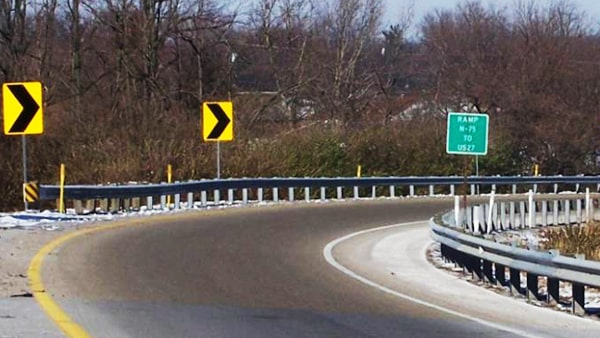
If you exit a freeway with a ramp that curves downhill, you should:
  1. A Before entering the curve
  2. B Only after reaching the sharpest part of the curve
  3. C After leaving the curve
  4. D Only if another vehicle is ahead

Correct answer: A – Before entering the curve

Reduce speed before entering a curve so additional braking is not required while the vehicle is turning. When leaving an interstate, enter the deceleration lane before slowing and brake gently toward the ramp’s posted or advisory speed. Maintain a safe speed and remain within your lane throughout the curve.

Source: West Virginia Driver’s Licensing Handbook — Ch. IV, “Curves”, West Virginia Driver’s Licensing Handbook — Ch. VII, “Exit Lanes”

Question 2

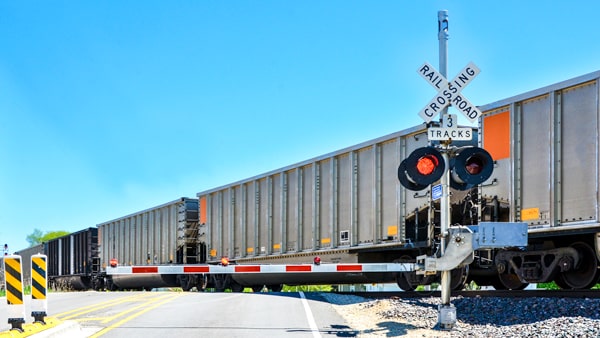
When may you drive through, around, or under a railroad gate that is closed or moving?

When may you legally drive around or under a railroad crossing gate?
  1. A Never while the gate is closed, opening, or closing
  2. B After looking carefully in both directions
  3. C When no train is visible
  4. D When another driver crosses first

Correct answer: A – Never while the gate is closed, opening, or closing

West Virginia law prohibits driving through, around, or under a railroad gate while it is closed, opening, or closing. When a gate is lowered, stop 15 to 50 feet from the nearest rail and remain stopped until proceeding is safe. A violation is generally a misdemeanor punishable by a $100 fine or up to 10 days in jail, and the statute directs assessment of three license points. Subsection (c) excludes those penalties when the electric or mechanical signal device is malfunctioning.

Source: W. Va. Code § 17C-12-1(a)–(c) – Obedience to signal indicating approach of train.

Question 3

In West Virginia, where is stopping, standing, or parking prohibited even for a vehicle displaying an accessible-parking placard?

  1. A In the striped access aisle beside an accessible parking space
  2. B In an unrestricted space next to an accessible space
  3. C In a legal curbside space without a prohibition sign
  4. D In a regular parking space while loading a passenger

Correct answer: A – In the striped access aisle beside an accessible parking space

No vehicle may stop, stand, or park in a marked access aisle beside a regular or van-accessible parking space. This restriction also applies to vehicles displaying valid accessible-parking plates or placards. A violation is a misdemeanor carrying a $200 fine for the first conviction, $300 for the second, and $500 for a third or subsequent conviction.

Source: W. Va. Code § 17C-13-6(f), (m) – Stopping, standing, or parking privileges for persons with a mobility impairment; disabled veterans and Purple Heart designations; definitions; qualification; special registration plates and removable windshield placards; expiration, application; violation; penalties.

Question 4

On a two-lane road, what does a solid yellow line on your side of the centerline mean?

  1. A Passing is allowed when no vehicle is visible
  2. B You must not pass across the line
  3. C Traffic in both lanes travels in the same direction
  4. D Passing is permitted only during daylight

Correct answer: B – You must not pass across the line

The driver’s handbook states that a solid yellow line separates opposing traffic and prohibits passing when the line is on your side. State law requires drivers to obey clearly visible no-passing signs and roadway markings. Violations are misdemeanors punishable by up to $100 for a first conviction, $200 for a second within one year, and $500 for a third or subsequent conviction.

Source: W. Va. Code § 17C-7-7 – Same -- No-passing zones; penalty., West Virginia Driver’s Licensing Handbook — Ch. V, “Pavement Markings”

Question 5

Before driving after taking a prescription or over-the-counter drug, what risk should you consider?

Who is responsible for knowing how your medications affect your driving?
  1. A It may cause drowsiness, poor coordination, or other impairment
  2. B Prescribed drugs cannot affect driving
  3. C Over-the-counter drugs are always safe for drivers
  4. D Combining the drug with alcohol will reduce its effects

Correct answer: A – It may cause drowsiness, poor coordination, or other impairment

Prescription and over-the-counter drugs can cause drowsiness, loss of coordination, hallucinations, or other bodily effects that interfere with driving. A medication does not become safe for driving merely because it was prescribed or purchased without a prescription. Alcohol combined with drugs can create an especially dangerous effect.

Source: West Virginia Driver’s Licensing Handbook — Ch. III, “Other Drugs”

Question 6

On a two-way roadway, yellow centerlines generally separate:

  1. A A bicycle lane from motor-vehicle traffic
  2. B Lanes moving in the same direction
  3. C A parking lane from a travel lane
  4. D Traffic moving in opposite directions

Correct answer: D – Traffic moving in opposite directions

Yellow centerlines on a two-way roadway separate traffic moving in opposite directions. White lines generally divide lanes moving in the same direction. A solid yellow line can also mark the left edge of the pavement on an interstate, one-way street, or divided four-lane roadway, so the roadway context matters.

Source: West Virginia Driver’s Licensing Handbook — Ch. V, “Pavement Markings”