


West Virginia DMV Test Evaluation

4.7 out of 5 (341 votes)
80% Passing score
10 Questions
2 Mistakes allowed
If you are preparing for the West Virginia DMV permit test, a practice test is one of the simplest ways to see what you know before you take the official exam. The real test is based on the West Virginia Driver’s Licensing Handbook, so it is not just checking whether you recognize common road signs. It also covers traffic laws, pavement markings, signals, safe driving practices, DUI rules, sharing the road, and the basic responsibilities that come with earning a Class E license or instruction permit. This WV DMV practice test gives you 10 randomly selected questions and asks you to answer at least 8 correctly to pass. The official West Virginia knowledge test is longer, with at least 25 questions, and you need 19 correct answers to pass. So this shorter practice permit test is not meant to be the whole picture, exactly, but it does give you a clean first read on where you stand. And, well, that is usually better than walking into the DMV with only a vague memory of the handbook and a lot of hope. The questions follow the same general material West Virginia expects new drivers to understand. You may see road signs, traffic-control devices, lane markings, right-of-way situations, alcohol-related laws, and safe driving rules that seem simple until the answer choices start sounding a little too similar. When you miss a question, you get immediate feedback and a clear explanation, so you can see what went wrong and fix it before the real exam. Hints are available too, which is useful when you are close to the answer but not quite there. This free DMV practice test works for different West Virginia applicants. Teens preparing for a Level 1 GDL Instruction Permit should know that the state also requires parent or guardian consent and a School Driver Eligibility Certificate. Adults applying for a regular Class E instruction permit do not follow the same teen GDL path, but they still need to pass the vision screening and the knowledge test before moving on toward the road skills exam. Use this West Virginia DMV permit practice test as a practical starting point. A passing score is a good sign. A few strong scores across different question sets are a much better sign that you are ready.
FREE DMV Practice Test App
Study for your West Virginia permit test or driver’s license with the NextDoorDriving app. 700+ DMV questions and answers, 100% free!
Download on the App Store

Sample West Virginia Permit Test Questions

Question 1

Four-way flashers displayed by a stopped passenger vehicle most directly indicate that:
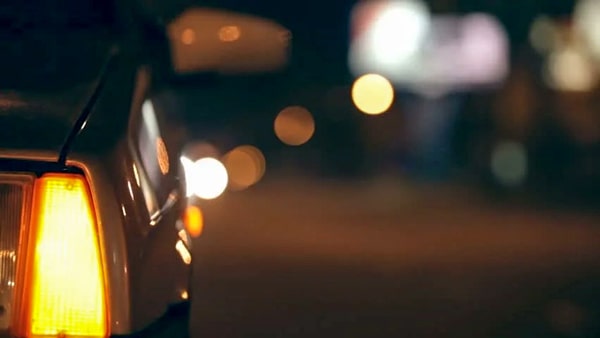
If you see warning hazard lights on a moving passenger vehicle, it means:
  1. A All approaching drivers must turn around
  2. B Every vehicle must stop on the shoulder
  3. C The vehicle may be disabled or stopped because of an emergency
  4. D The stopped vehicle has priority over all traffic

Correct answer: C – The vehicle may be disabled or stopped because of an emergency

West Virginia law permits blinking or flashing lights on a vehicle to indicate that it is disabled or otherwise stopped for an emergency. The driver’s handbook also instructs drivers of disabled vehicles to use four-way flashers to show that the vehicle is stopped. The lights serve as a warning of that condition.

Source: W. Va. Code § 17C-15-26(c) – Special restrictions on lamps, West Virginia Driver’s Licensing Handbook — Ch. VII, “Adverse Conditions”

Question 2

Which driving abilities can alcohol impair?

  1. A Alertness
  2. B Judgment
  3. C Vision
  4. D All of these choices

Correct answer: D – All of these choices

Alcohol can reduce alertness, interfere with judgment, and impair vision. These abilities are all important for recognizing hazards and making safe driving decisions. Because alcohol does not affect only one driving skill, all three listed abilities can be impaired.

Source: West Virginia Driver’s Licensing Handbook — Ch. III, “Driving Impaired or Under the Influence”

Question 3

If you become too drowsy to remain alert while driving, what should you do?

  1. A Depend on coffee and the air conditioner
  2. B Open the windows and increase the radio volume
  3. C Pull over in a safe area and rest
  4. D Increase speed to reach your destination sooner

Correct answer: C – Pull over in a safe area and rest

Fatigue dulls the mind and slows reaction time. If you become drowsy, do not continue trying to drive through it; pull over in a safe area and rest. The handbook notes that even a short nap can improve alertness, while a rested licensed driver should take over when possible.

Source: West Virginia Driver’s Licensing Handbook — Ch. III, “How to Prevent Drowsy Driving”, West Virginia Driver’s Licensing Handbook — Ch. VIII, “Fatigue”

Question 4

At an intersection, which maneuver requires you to yield to opposite-direction traffic that presents an immediate hazard?

  1. A Continuing within a traffic circle
  2. B Proceeding after already clearing the intersection
  3. C Traveling straight in your lane
  4. D Turning left

Correct answer: D – Turning left

A driver intending to turn left must yield to a vehicle approaching from the opposite direction when it is already in the intersection or is close enough to present an immediate hazard. After yielding and signaling as required, the driver may complete the turn. A green circular signal does not remove this duty.

Source: W. Va. Code § 17C-9-2 – Vehicle turning left at intersection, W. Va. Code § 17C-3-5(a)(1) – Traffic-control signal legend

Question 5

Which behavior does the West Virginia handbook identify as creating a hazard on an interstate?

  1. A Using the right lane when not passing
  2. B Maintaining a steady speed within the legal limit
  3. C Matching traffic speed while merging when conditions permit
  4. D Driving much slower than surrounding traffic without conditions requiring it

Correct answer: D – Driving much slower than surrounding traffic without conditions requiring it

Driving much slower than surrounding interstate traffic can create a hazard because other drivers may make abrupt lane changes. Drivers should maintain a steady, lawful speed appropriate for weather, roadway, and traffic conditions. Slower vehicles should normally remain in the right-hand lane unless passing or another condition requires a different position.

Source: West Virginia Driver’s Licensing Handbook — Ch. VII, “Speeds on Interstates”

Question 6

Which traffic signal requires a complete stop?

  1. A A flashing red light
  2. B A steady yellow light
  3. C A yellow arrow
  4. D A flashing yellow light

Correct answer: A – A flashing red light

A flashing red signal requires the driver to stop at the applicable crosswalk, marked limit line, or intersection entrance. After stopping, the driver may proceed only under the rules that apply at a STOP sign. A flashing yellow signal requires caution but does not automatically require a stop.

Source: W. Va. Code § 17C-3-7(1), (2) – Flashing signals, West Virginia Driver’s Licensing Handbook — Ch. V, “Intersection Flashers”