West Virginia Road Signs Test Simulator

4.9 out of 5 (54 votes)
80% Passing score
25 Questions
5 Mistakes allowed
This WV DMV road signs practice test is built for one narrow but important part of West Virginia driver prep: recognizing signs, signals, and markings before they turn into missed questions on the permit test. The official West Virginia knowledge exam covers more than signs, of course. It also includes traffic laws, rules of the road, safe driving practices, pavement markings, traffic signals, and basic driver responsibilities. Still, road signs are one of those areas where a little extra review pays off quickly, because the questions often depend on small details—shape, color, wording, or what a driver is supposed to do next. For a standard Class E instruction permit, West Virginia does not treat road signs as a separate sign-only test. They are included in the regular knowledge exam, which is based on the West Virginia Driver’s Licensing Handbook. The official test has at least 25 questions, and applicants must answer 19 correctly to pass. That is a 76% passing score, which sounds manageable until you remember that unanswered questions count as wrong and that the DMV is testing recognition, not just vague familiarity. This WV permit practice test uses a shorter 20-question format, with 16 correct answers needed to pass. So, yes, it is more compact than the real DMV permit test, but it keeps the same basic pressure around accuracy. Each round pulls from a larger road-sign database, which helps keep the practice from turning into simple memorization. You may see regulatory signs, warning signs, guide signs, railroad crossing signs, traffic lights, lane-use signals, pavement markings, sign shapes, and sign colors. Some of it will feel familiar. Some of it will probably feel familiar in that slightly dangerous way where you recognize the sign but hesitate over the exact meaning. The study tools are meant to help with that hesitation. Hints can give you a push when you are close, and explanations after missed answers make the review feel less like guessing and more like learning what the handbook was trying to get across in the first place. That matters for teens preparing for a Level 1 GDL Instruction Permit, adults applying for a regular Class E instruction permit, new residents moving into West Virginia licensing, renewal drivers, and anyone who wants a practical road sign refresher before dealing with the DMV. Taking the test once is useful. Taking it a few times is better, mostly because the weak spots become harder to ignore. And with West Virginia roads—mountain curves, rural crossings, small-town intersections, and all the little decisions packed between them—sign knowledge is not just test material. It is part of driving here without making the road do all the explaining.

FREE DMV Practice Test App
Study for your West Virginia permit test or driver’s license with the NextDoorDriving app. 700+ DMV questions and answers, 100% free!
Download on the App Store

Sample West Virginia Permit Test Questions

Question 1

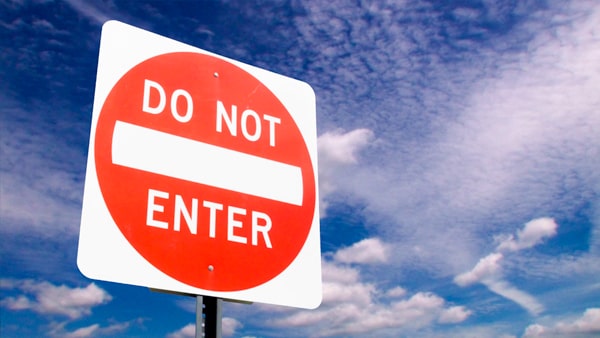
What does a DO NOT ENTER sign prohibit?

This sign is used to prevent:
  1. A Entering a parking area that is full
  2. B Entering any highway work zone
  3. C Entering a dead-end street
  4. D Entering a roadway or ramp against the permitted direction of traffic

Correct answer: D – Entering a roadway or ramp against the permitted direction of traffic

A DO NOT ENTER sign warns that traffic is prohibited from entering in that direction. It is commonly used where entering would place a driver against traffic on a one-way roadway or ramp. The sign may be used with a WRONG WAY sign to reinforce the restriction.

Source: West Virginia Driver’s Licensing Handbook — Ch. V, “Square & Rectangular Signs—Wrong Way or Do Not Enter”

Question 2

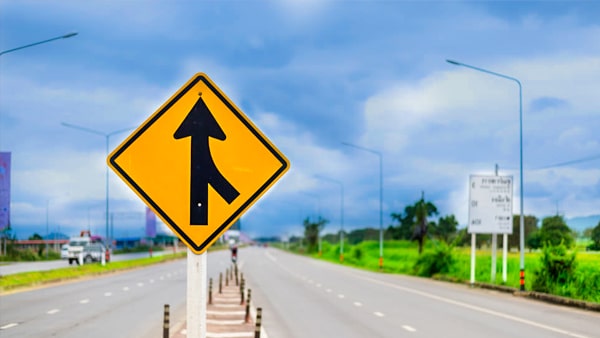
What hazard does the merging-traffic warning sign indicate?

This sign means:
  1. A Two-way traffic begins ahead
  2. B The roadway narrows from both sides
  3. C Traffic from another roadway may enter your lane ahead
  4. D A divided highway begins

Correct answer: C – Traffic from another roadway may enter your lane ahead

This warning sign indicates that traffic from another roadway may move into your lane ahead. Be prepared to adjust your speed or change lanes when the movement can be completed safely. The sign warns of the merging condition but does not by itself assign an unrestricted right-of-way to either driver.

Source: West Virginia Driver’s Licensing Handbook — Ch. V, “Diamond & Warning Signs”

Question 3

In West Virginia, a curb marking used for a no-parking zone may be painted:

  1. A Yellow
  2. B Green
  3. C White

Correct answer: A – Yellow

Do not park where an official sign prohibits parking. The West Virginia handbook notes that a curb in a no-parking zone may also be painted yellow. The paint helps identify the restricted area, while drivers remain responsible for observing the posted parking controls.

Source: W. Va. Code § 17C-13-4(d) – Right and left parallel parking; angle parking; highway signs restricting parking, etc.; penalty, West Virginia Driver’s Licensing Handbook — Ch. VI, “Prohibited Parking”

Question 4

You have a circular green light and intend to turn left, but approaching traffic is close. What must you do?

  1. A Continue straight and use another intersection
  2. B Stop across the pedestrian crosswalk
  3. C Yield until the approaching traffic is no longer an immediate hazard
  4. D Turn immediately because the signal is green

Correct answer: C – Yield until the approaching traffic is no longer an immediate hazard

A circular green signal permits a left turn unless another traffic-control device prohibits it, but turning traffic must yield as required. West Virginia’s left-turn rule requires yielding to an opposite-direction vehicle that is in the intersection or close enough to be an immediate hazard. Begin the turn only after that hazard has passed.

Source: W. Va. Code § 17C-3-5(a)(1) – Traffic-control signal legend, W. Va. Code § 17C-9-2 – Vehicle turning left at intersection

Question 5

How should you respond to a flashing yellow traffic signal?

  1. A Merge with traffic immediately
  2. B Proceed with caution
  3. C Stop for pedestrians even when none are present
  4. D Come to a complete stop before proceeding

Correct answer: B – Proceed with caution

A flashing yellow indication is a caution signal rather than a stop signal. West Virginia law allows a driver to continue through the intersection or past the signal only with caution. A flashing red indication has a different meaning and requires a complete stop.

Source: W. Va. Code § 17C-3-7(2) – Flashing signals, West Virginia Driver’s Licensing Handbook — Ch. V, “Intersection Flashers”

Question 6

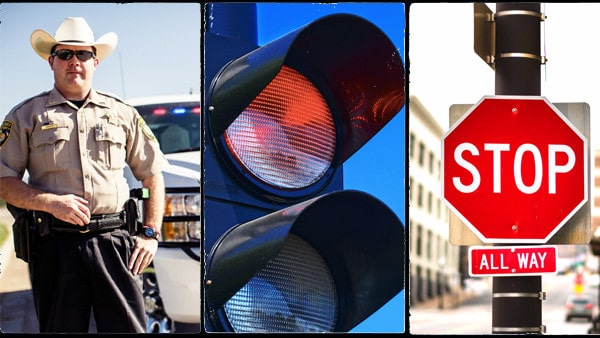
Which direction takes priority over the other three?

Which of the following must you obey over the other three?
  1. A A steady red traffic signal
  2. B A traffic or police officer’s instruction
  3. C A STOP sign
  4. D A flashing red signal

Correct answer: B – A traffic or police officer’s instruction

West Virginia law requires drivers to obey official traffic-control devices unless a traffic or police officer directs otherwise. The officer’s instruction controls even when it differs from a traffic light, sign, or road marking. Watch the officer carefully and follow the direction given.

Source: W. Va. Code § 17C-3-4(a) – Obedience to traffic-control devices; official signs to be in proper position, etc; penalty, West Virginia Driver’s Licensing Handbook — Ch. VI, “Right-of-Way”