


Wisconsin Permit Practice Test 6

4.9 out of 5 (144 votes)
80% Passing score
20 Questions
4 Mistakes allowed
A Wisconsin DMV practice test earns its keep early in the licensing process, before the paperwork and appointments start feeling like the main event. The official knowledge test and signs test are part of getting a Class D instruction permit, and this 20-question Wisconsin permit practice test gives you a cleaner way to see whether the rules are actually sticking. You need 16 correct answers to pass here, so it is close enough to feel useful without turning into some overbuilt study marathon. The questions focus on the kind of material Wisconsin drivers are expected to know before they get behind the wheel with a permit: road signs, safe driving rules, right-of-way, turns, lane use, and proper turn signal use. Turn signals sound almost too ordinary to study, which is probably why people miss questions about them. The test is not just checking whether you recognize a rule in plain English; it is checking whether you can apply it when the situation has a little traffic, timing, or judgment packed into it. For teen drivers, this practice fits into Wisconsin’s Graduated Driver License program. The first stage is the instruction permit, often called “temps,” which may be available at age 15 for eligible applicants. Under-18 drivers also have to deal with driver education enrollment or completion, an adult sponsor, school-enrollment requirements, identity and residency documents, the vision screening, and the knowledge and signs tests. After that, the permit has to be held for at least 6 months, with 6 violation-free months before applying for a probationary license. And then there are the supervised driving hours — 50 total, including 10 at night — which a parent or adult sponsor must certify. Adults have a shorter path, but not a free pass. A first-time Wisconsin driver age 18 or older generally still needs to pass the knowledge test, signs test, and vision screening, obtain an instruction permit, and hold it for at least 7 days before the road test unless a valid foreign license changes that requirement. Adults do not have the teen driver education requirement or the 50-hour supervised driving requirement, but the written rules still count, and probationary demerit-point rules can still matter. Use this Wisconsin DMV practice test with the driver handbook or a driver education course, not instead of them. Repeating the test helps show where your knowledge is thin, which is the whole point. Passing is good. Knowing why the answer is right is better, especially once the practice questions turn into actual decisions on Wisconsin roads.
FREE DMV Practice Test App
Study for your Wisconsin permit test or driver’s license with the NextDoorDriving app. 700+ DMV questions and answers, 100% free!
Download on the App Store

Sample Wisconsin Permit Test Questions

Question 1

Continually driving faster than surrounding traffic to pass other vehicles:

  1. A Always shortens the trip safely
  2. B Can increase the risk of a crash
  3. C Prevents traffic from becoming congested
  4. D Is permitted only on interstate highways

Correct answer: B – Can increase the risk of a crash

The handbook advises drivers to adjust to traffic and notes that passing other vehicles can cause a crash. Repeatedly overtaking traffic exposes the driver to additional passing maneuvers without removing the duty to drive safely. The posted speed limit also continues to apply while passing.

Source: Wisconsin Motorists’ Handbook — § 3B, “Adjust to traffic”, Wisconsin Motorists’ Handbook — § 3H, “When to pass”
Question 2

Under Wisconsin’s right-of-way rule, when may you complete an unprotected left turn?

  1. A After most of the opposing vehicles have passed
  2. B Whenever opposing traffic is more than 500 feet away
  3. C Without yielding if an opposing vehicle is turning right
  4. D After yielding to opposing traffic and determining the turn is safe

Correct answer: D – After yielding to opposing traffic and determining the turn is safe

A driver turning left or making a U-turn at an intersection must yield to vehicles approaching from the opposite direction. The handbook instructs drivers to complete a left turn only when it is safe. Do not use an arbitrary distance or proceed merely because most traffic has passed.

Source: Wis. Stat. § 346.18(2) – General rules of right-of-way., Wisconsin Motorists’ Handbook — § 3G, “Left turn”

Question 3

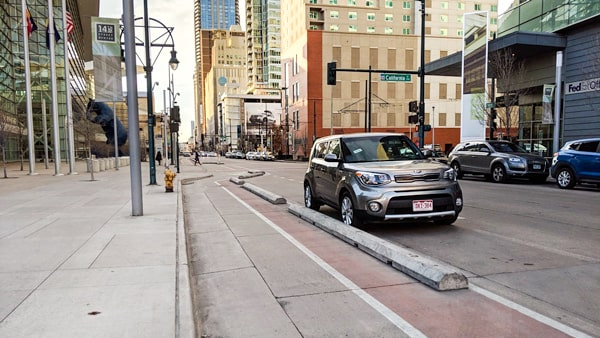
When parallel parking on the right side of a Wisconsin street, your right wheels must be:

When you park on a level road next to a curb:
  1. A Within 12 inches of the curb or street edge
  2. B Turned sharply toward the roadway
  3. C At least 18 inches from the curb
  4. D Touching the curb

Correct answer: A – Within 12 inches of the curb or street edge

For lawful parallel parking on the right, the right wheels must be within 12 inches of the curb or edge of the street. The vehicle must also face in the direction of traffic. The rule does not require the tires to touch the curb.

Source: Wis. Stat. § 346.54(1)(d) – How to park and stop on streets.

Question 4

If your engine stops while the vehicle is moving, which response is appropriate?

  1. A Turn the key off immediately and stop in the traffic lane
  2. B Release the steering wheel and let the vehicle coast
  3. C Exit the vehicle before moving it from traffic
  4. D Hold the wheel, keep the key on and pull safely to the roadside

Correct answer: D – Hold the wheel, keep the key on and pull safely to the roadside

The Wisconsin handbook directs you to hold the steering wheel and keep the key in the on position if the engine stops. Steering may become difficult, so maintain control and move to the roadside when it is safe. Activate the emergency flashers to warn other road users.

Source: Wisconsin Motorists’ Handbook — § 8C, “Roadside Emergencies—Engine Stops Working”

Question 5

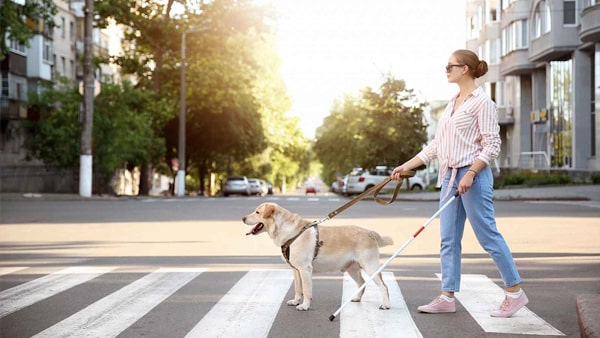
A pedestrian using a guide dog is preparing to cross in front of your right turn. What must you do?

You want to make a right turn at the corner. A pedestrian with a guide dog is at the corner ready to cross the street in front of you. Before making your right turn, you should:
  1. A Turn off the engine while the pedestrian crosses
  2. B Tell the pedestrian when it is safe to cross
  3. C Stop at least 10 feet away and wait until the pedestrian is off the roadway
  4. D Sound the horn before beginning the turn

Correct answer: C – Stop at least 10 feet away and wait until the pedestrian is off the roadway

Wisconsin law requires a driver to stop before coming within 10 feet of a pedestrian using a service animal and to take precautions necessary to avoid injury. The Motorists’ Handbook directs drivers to remain stopped until the person is off the roadway. Do not begin the right turn while the pedestrian is crossing your path.

Source: Wis. Stat. § 346.26(1) – Blind pedestrian on highway, Wisconsin Motorists’ Handbook — Section 3, “A. Right-Of-Way”

Question 6

What is the main reason to look 10 to 15 seconds ahead while driving?

  1. A To eliminate the need to check mirrors
  2. B To measure your exact following distance
  3. C To identify hazards early and maintain control

Correct answer: C – To identify hazards early and maintain control

Looking 10 to 15 seconds down the road helps you notice unexpected objects, changing traffic and other hazards before reaching them. Earlier detection gives you more time to adjust your speed or position smoothly. You should continue checking your mirrors and surroundings rather than focusing only on the area immediately ahead.

Source: Wisconsin Motorists’ Handbook — Section 3, “E. Sight Distance Rule”