


Wisconsin DMV Test Evaluation

4.6 out of 5 (917 votes)
80% Passing score
10 Questions
2 Mistakes allowed
Wisconsin driver licensing has a few moving parts, and the knowledge test is where a lot of people first find out how much they actually remember from the Wisconsin Motorists’ Handbook. This Wisconsin DMV practice test gives you a practical way to check that before you deal with the real Class D testing process, where the state expects more than a casual familiarity with road signs, right-of-way rules, traffic laws, and safe driving habits. The practice test includes 10 questions, which makes it short enough to use as a first read on your readiness but still focused enough to be useful. The official Wisconsin Class D knowledge test has 50 multiple-choice questions, and you need 40 correct answers to pass. That is an 80% score, which is a simple number, sure, but it also tells you something important: missing too many “small” details can add up quickly. A missed sign question here, a shaky right-of-way answer there, and suddenly the test feels less forgiving than it looked from a distance. Wisconsin also treats road signs as part of the permit process, not as extra decoration around the real material. The signs test has 15 questions, with 12 correct answers required to pass, so this DMV written test practice pays attention to the things drivers tend to recognize without fully studying: sign shapes, sign colors, warning signs, regulatory signs, guide signs, pavement markings, and traffic signals. That is where practice helps, because recognition is useful, but tested knowledge has to be cleaner than recognition. For teen drivers, this Wisconsin temps practice test fits neatly into the early stage of the Graduated Driver License process, before the instruction permit, driver education requirements, supervised driving hours, and the later probationary license rules start to pile on. Adults can use it a little differently—as a readiness check before passing the knowledge test, signs test, and vision screening, getting an instruction permit, holding it for at least 7 days, and then moving toward the road test. Use this Wisconsin DMV test online as a starting point, not as the whole study plan. It gives you a controlled way to find weak spots now, while there is still time to fix them, review the handbook, and build the kind of road-rule knowledge that holds up when the official test starts.
FREE DMV Practice Test App
Study for your Wisconsin permit test or driver’s license with the NextDoorDriving app. 700+ DMV questions and answers, 100% free!
Download on the App Store

Sample Wisconsin Permit Test Questions

Question 1

On a roadway with two lanes traveling in your direction, a right turn should normally begin from:

  1. A The lane nearest the center of the roadway
  2. B The lane nearest the right curb or roadway edge
  3. C Either lane if no traffic is approaching
  4. D The paved shoulder

Correct answer: B – The lane nearest the right curb or roadway edge

Wisconsin requires both the approach and the turn to be made as close as practicable to the right curb or roadway edge, unless signs or pavement markings direct otherwise. A vehicle that cannot turn from the right lane because of its size or the roadway design must proceed with due regard for other traffic. Stay within your lane rather than swinging wide.

Source: Wis. Stat. § 346.31(1)–(2) – Required position and method of turning at intersections, Wisconsin Motorists’ Handbook — Section 3, “G. Turning”
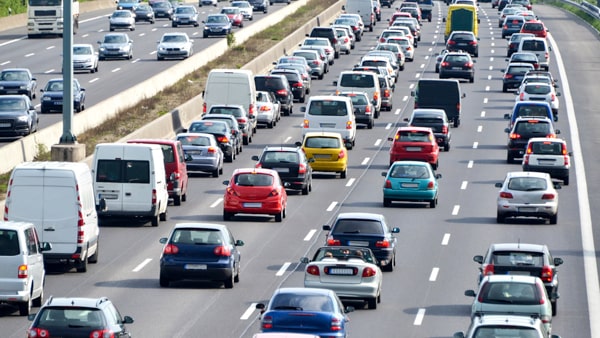
Question 2

At a four-way stop, you arrive before the other drivers. If you repeatedly wave everyone else through instead of proceeding when safe, you are most likely:

  1. A Improving the normal traffic flow
  2. B Creating an unnecessary delay
  3. C Following the required right-of-way order

Correct answer: B – Creating an unnecessary delay

Right-of-way rules establish who should proceed and who should wait. At a four-way stop, the driver or bicyclist who arrives first normally goes first. Giving away every turn to later arrivals postpones the normal sequence and may hold up traffic, although every driver must still yield when necessary to avoid a collision.

Source: Wisconsin Motorists’ Handbook — Section 3, “A. Right-Of-Way”, Wisconsin Motorists’ Handbook — Section 3, “B. Understanding Vehicle Speed”

Question 3

When parking an automatic-transmission vehicle on a hill, after positioning the wheels correctly, you should set the parking brake and:

  1. A Shift the transmission into Park
  2. B Straighten the front wheels
  3. C Leave the transmission in Neutral
  4. D Leave the transmission in Drive

Correct answer: A – Shift the transmission into Park

The Wisconsin handbook directs drivers parking on a hill to position the wheels for the slope, place the vehicle in Park and set the emergency or parking brake. Wheel direction varies: uphill with a curb differs from uphill without one, while downhill wheels turn toward the roadway edge. These steps help keep the vehicle from rolling.

Source: Wisconsin Motorists’ Handbook — Section 3, “J. Parking—Hill parking”

Question 4

Which technique is appropriate when driving on snow or ice?

  1. A Follow other vehicles closely for traction
  2. B Make sudden steering movements to test the surface
  3. C Reduce speed and avoid rapid braking or sharp turns
  4. D Accelerate quickly when the tires begin slipping

Correct answer: C – Reduce speed and avoid rapid braking or sharp turns

Slippery surfaces reduce traction and increase the chance of a skid. Slow down, remain alert and avoid sudden braking or sharp steering movements. Increase the space ahead of your vehicle and avoid cruise control when roads are slippery, icy or covered with snow.

Source: Wisconsin Motorists’ Handbook — Section 7, “B. Severe Weather”, Wisconsin Motorists’ Handbook — Section 7, “C. Winter”

Question 5

What is a main purpose of supervised driving practice for a beginning teen driver?

  1. A To compensate for naturally slow reflexes
  2. B To eliminate every possible driving risk
  3. C To develop driving skill and experience
  4. D To learn to drive below the normal traffic speed

Correct answer: C – To develop driving skill and experience

Wisconsin requires a teen applicant to complete at least 50 hours of supervised driving, including 10 hours during darkness, before receiving a probationary license. The handbook notes that additional practice may be necessary to demonstrate safe driving. Supervised practice helps a beginning driver gain experience and build skills before driving independently.

Source: Wisconsin Motorists’ Handbook — Section 2, “C. Probationary License—Supervised driving program”

Question 6

When preparing to change lanes on a freeway, which sequence is correct?

When changing lanes on a freeway, you should:
  1. A Signal before moving, check mirrors and the blind spot, then move one lane when clear
  2. B Cross several lanes at once to complete the maneuver quickly
  3. C Drive along the lane line until another driver makes room
  4. D Sound the horn and move immediately

Correct answer: A – Signal before moving, check mirrors and the blind spot, then move one lane when clear

Wisconsin law requires a lateral movement to be reasonably safe and requires a signal when other traffic may be affected. Before changing lanes, signal, check your mirrors and look over the appropriate shoulder for vehicles in the blind spot. Move only one lane at a time after confirming that the lane is clear.

Source: Wis. Stat. § 346.34(1)(a)3., (b) – Turning movements and required signals on turning and stopping, Wisconsin Motorists’ Handbook — Section 3, “H. Passing—Changing lanes”