Wyoming DMV Practice Test 9

4.9 out of 5 (39 votes)
80% Passing score
20 Questions
4 Mistakes allowed
A Wyoming permit test can cover a surprising amount of territory before it ever gets to the obvious stuff. Yes, signs and signals matter. So do pavement markings, seat belt laws, impaired-driving rules, safe driving habits, and the plain old judgment required to operate a Class C passenger vehicle without treating every intersection like a personal experiment. The exam is based on Wyoming’s Rules of the Road / Class C Driver License Manual, so that is the material to know — not vaguely recognize, not skim once, actually know. This ninth Wyoming DMV practice test narrows in on school bus safety, which is one of the better areas to practice because the small details matter. Drivers need to know when to stop for a school bus loading or unloading children, and the answer can depend on flashing lights, road layout, lane direction, and what is happening around the bus. A question may look harmless at first, then suddenly expects you to understand the rule clearly. Rude? A little. Fair? Also yes. You will get 20 questions in this Wyoming DMV practice test, along with hints and explanations that make missed answers useful instead of just irritating. That is the point of good DMV knowledge test practice: not just clicking through questions, but learning why one answer holds up and another one falls apart. School bus rules, right-of-way decisions, traffic signs, and Wyoming-specific roadway laws all become easier to handle when you have seen them in context a few times. The real Wyoming Class C permit test has 25 multiple-choice questions. You need 20 correct answers to pass, which is an 80% score, and you can miss up to 5. WYDOT’s automated testing system generates questions based on the license class requested, so Class C applicants should stay focused on Class C material. The licensing steps are part of the picture too, even if they feel like paperwork wearing a name tag. Minors usually apply for a regular learner permit between ages 15 and 16, and applicants under 18 need a parent or legal guardian’s signature. First-time adult applicants must apply in person, provide required documents, be photographed, pass vision screening, and take the written test. New Wyoming residents generally have one year after establishing residency to obtain a Wyoming license, though some applicants need to do it sooner. Use this Wyoming DMV permit test practice as many times as needed. Repeating the material helps the rules stick, especially the ones that tend to hide inside ordinary-looking questions.
FREE DMV Practice Test App
Study for your Wyoming permit test or driver’s license with the NextDoorDriving app. 700+ DMV questions and answers, 100% free!
Download on the App Store

Sample Wyoming Permit Test Questions

Question 1

What can happen if you turn an ignition key to the lock position while the vehicle is moving?

  1. A The steering can lock, causing a loss of vehicle control
  2. B The steering will continue operating normally
  3. C The vehicle will safely coast downhill
  4. D Only the anti-lock brakes will be disabled

Correct answer: A – The steering can lock, causing a loss of vehicle control

Never turn the ignition key to the lock position while the vehicle is moving. On a vehicle equipped with a steering-lock system, doing so can lock the steering mechanism. Without steering control, the driver may be unable to keep the vehicle on its intended path.

Source: Wyoming Rules of the Road — “Be Cautious with Vehicles with Steering-Lock Devices”
Question 2

Which driving ability is typically affected first when a person drinks alcohol?

If you drive after drinking, you should be aware that the first thing alcohol affects is:
  1. A Hearing
  2. B Physical endurance
  3. C Distance vision
  4. D Judgment and self-control

Correct answer: D – Judgment and self-control

Alcohol first affects the part of the brain responsible for judgment and self-control. This can make a person less able to recognize increasing impairment or evaluate driving risks accurately. As the alcohol concentration increases, coordination, vision and other physical abilities are also affected.

Source: Wyoming Rules of the Road — “Alcohol the Major Cause of Crashes”, 2024 Wyoming Commercial Driver License Manual — § 2.22.1, “Alcohol and Driving”

Question 3

In Wyoming, traffic is backed up beyond an intersection. What should you do?

  1. A Enter slowly and wait inside the intersection
  2. B Follow the vehicle ahead as closely as possible
  3. C Wait before the intersection until there is room to clear it
  4. D Sound the horn and enter

Correct answer: C – Wait before the intersection until there is room to clear it

Remain outside the intersection when traffic ahead prevents you from passing completely through it. Entering too soon could leave your vehicle blocking cross traffic or a crosswalk. Wait until sufficient space opens beyond the intersection before proceeding.

Source: Wyoming Rules of the Road — “Right of Way”

Question 4

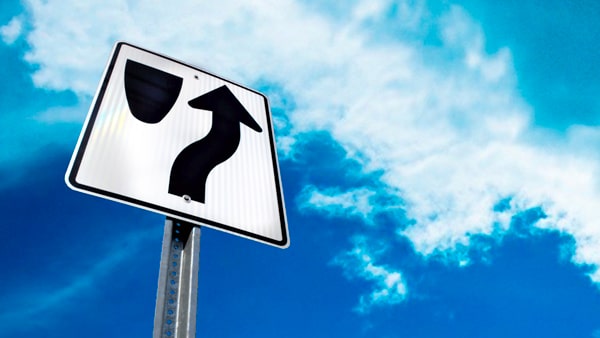
What does this regulatory sign direct a driver to do?

This white sign means:
  1. A Keep to the right of the obstruction
  2. B Yield before turning right
  3. C Move right only if driving slowly
  4. D Turn right at the next intersection

Correct answer: A – Keep to the right of the obstruction

A KEEP RIGHT sign directs traffic to pass to the right of an island, divider or other obstruction. It regulates the side on which drivers must travel. It does not require a turn at the next intersection or apply only to slower vehicles.

Source: Wyoming Rules of the Road — “Traffic Signs, Signals and Road Markings”

Question 5

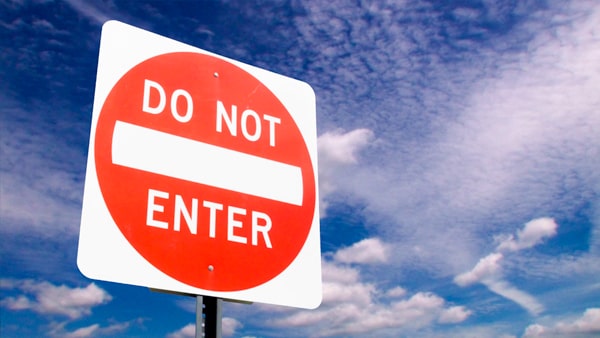
What is the purpose of this DO NOT ENTER sign?

This sign is used to prevent:
  1. A To show that a parking area is full
  2. B To mark every road construction entrance
  3. C To identify a dead-end street
  4. D To prevent entry against traffic on a one-way roadway or ramp

Correct answer: D – To prevent entry against traffic on a one-way roadway or ramp

A DO NOT ENTER sign prohibits a driver from entering the roadway from that direction. It is commonly used where entering would place a vehicle against the lawful flow of traffic, such as at a one-way street or an exit ramp. The sign must be obeyed.

Source: Wyo. Stat. § 31-5-402(a) – Obedience to Devices; Exceptions, Wyoming Rules of the Road — “Traffic Signs, Signals and Road Markings”

Question 6

Which actions are appropriate after a tire blowout?

  1. A Grip the steering wheel firmly and keep the vehicle moving straight
  2. B Ease off the accelerator, then brake gently after regaining control
  3. C Pull off at the nearest safe location and use caution when changing the tire
  4. D All three actions

Correct answer: D – All three actions

Hold the steering wheel tightly and try to keep the vehicle traveling straight. Ease off the accelerator without immediately applying the brakes. Once the vehicle is under control, brake gently, pull off at the nearest safe location and use caution if changing the tire.

Source: Wyoming Rules of the Road — “Emergency Situations,” “Blowout”