


Delaware CDL Class B Practice Test (DE) 3

5 out of 5 (57 votes)
80% Passing score
20 Questions
4 Mistakes allowed
Are you preparing for the Delaware CDL Class B exam? You're in the right place. Our third Delaware CDL practice test is tailored specifically to aid in your preparation. With 20 thoughtfully crafted questions, this class B DMV test is an essential tool for anyone aspiring to operate Class B vehicles. To pass, you'll need to correctly answer at least 16 questions, but don't worry, you can take the test as many times as needed. Our Delaware DMV practice test covers a wide array of topics critical to your success on the actual exam. From pre-trip vehicle inspection to effective communication with other road users, this CDL practice test is comprehensive. You'll find questions on basic vehicle control, gear shifting techniques, including downshifting, and strategies for navigating hills and steep downgrades. Speed control, along with drug and alcohol awareness, are also key components of this Delaware class B general knowledge practice test, ensuring you're well-rounded in your knowledge. What sets our practice test apart is its foundation. Each question is derived from the official CDL driver's manual, the same source used for the actual Delaware CDL written permit test. This means what you study here is directly aligned with what you'll encounter on test day. Moreover, our questions aren't just randomly selected. They are carefully written and reviewed by seasoned driving instructors. These professionals bring years of experience and have aided thousands in obtaining their driver's licenses. Their expertise ensures that our CDL permit practice test is not just a quiz, but a comprehensive learning tool. Best of all, this invaluable resource is absolutely free. We believe in providing quality education without the price tag. While other platforms may charge for such comprehensive tests, we offer ours at no cost. This means you get access to top-tier study materials, equal to any paid version, without spending a penny. Prepare with us and take a significant step towards acing your Delaware CDL Class B test in 2026.
FREE CDL Practice Test App
Pass your Delaware CDL General Knowledge test with the NextDoorDriving app. Real questions and answers—100% free and ad-free.
Download on the App Store

Sample Delaware CDL Test Questions - General Knowledge

Question 1

A yellow circular sign marked with an “X” and “RR” warns of:
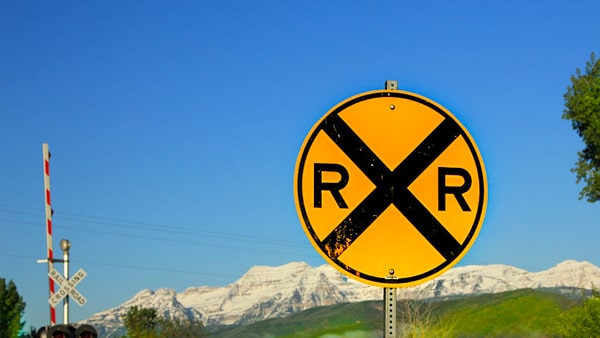
This sign warns drivers to _____________.
  1. A A rural intersection
  2. B A mandatory stop at every crossing
  3. C A pedestrian crossing
  4. D A railroad-highway grade crossing ahead

Correct answer: D – A railroad-highway grade crossing ahead

Delaware uses the circular railroad advance-warning sign to alert drivers that a grade crossing is ahead. Begin checking for tracks, warning devices, traffic conditions, and approaching trains. The advance sign is different from the crossbuck placed at the crossing itself.

Source: Delaware Manual on Uniform Traffic Control Devices — Part 8, “Grade Crossing Advance Warning Signs”
Question 2

It is safe to remove a radiator cap whenever you need to check the coolant.

  1. A True
  2. B False

Correct answer: B – False

Never remove a radiator cap while the cooling system is hot or under pressure. Hot coolant and steam can escape forcefully and cause serious burns. Allow the system to cool and follow the vehicle manufacturer’s procedure before opening the cap or another pressurized cooling-system component.

Source: Delaware Commercial Driver’s Manual — § 2.14.1, “Vehicle Checks—Radiator”

Question 3

A school bus driver can see every area around the bus by using the mirrors alone.

  1. A True
  2. B False

Correct answer: B – False

School buses have danger zones and areas that may not be continuously visible from the driver’s seat. Properly adjusted mirrors help the driver monitor areas around the bus, but they do not replace careful scanning and established loading and unloading procedures. The driver must continually account for students and other road users near the vehicle.

Source: Delaware Commercial Driver’s Manual — § 10.2, “Danger Zones and Use of Mirrors”

Question 4

Before backing with a helper, which hand signal is most important to agree upon?

  1. A Slow down
  2. B Pull forward
  3. C Continue straight back
  4. D Stop

Correct answer: D – Stop

The driver and helper should agree on clear hand signals before backing, especially the signal for “stop.” The helper should remain where the driver can see them. If the driver loses sight of the helper, the driver should stop the vehicle until visual contact is restored.

Source: Delaware Commercial Driver’s Manual — § 2.2.2, “Backing Safely”

Question 5

What is the general goal when distributing cargo weight?

  1. A Keep the load centered and balanced over the vehicle’s axles
  2. B Place most of the weight at the front
  3. C Place most of the weight at the rear
  4. D Concentrate the weight on one side

Correct answer: A – Keep the load centered and balanced over the vehicle’s axles

Cargo should be centered and its weight distributed properly among the axles. Too much weight on the steering axle can make steering difficult and damage components. Too little weight on that axle can reduce steering control, while an uneven side-to-side load can contribute to poor handling or rollover risk.

Source: Delaware Commercial Driver’s Manual — § 3.2.4, “Balance the Weight”

Question 6

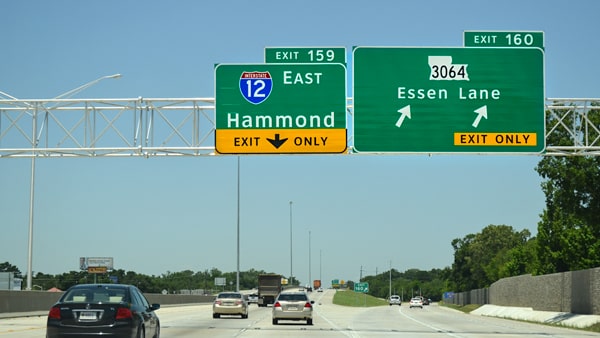
Which class of signs provides route, destination, direction, distance, and service information?

____________ signs inform drivers of basic highway information.
  1. A Parking signs
  2. B Guide signs
  3. C Regulatory signs
  4. D Warning signs

Correct answer: B – Guide signs

Under Delaware’s traffic-control standards, guide signs direct road users along highways and provide useful navigational information. They may identify routes, destinations, directions, distances, and available services. Regulatory signs state traffic laws or restrictions, while warning signs call attention to conditions that may require caution.

Source: Delaware Manual on Uniform Traffic Control Devices — Part 2, “Classification of Signs”