


Arizona CDL Permit Test (AZ) Online Simulator

5 out of 5 (44 votes)
80% Passing score
50 Questions
10 Mistakes allowed
Dive deep into your CDL exam preparation with the most comprehensive online Arizona CDL Permit Test Simulator. A powerful tool that offers an unparalleled approach to studying, this simulator is your stepping stone to securing a commercial driving license. With a vast reservoir of over 700 questions, each practice session brings you a new set of 50 questions, ensuring a broad coverage of possible test scenarios. The design of this simulator is centered around creating an authentic testing experience, with a diverse mix of multiple-choice and true/false questions that mirror the actual Arizona DMV test format. Whether you're aiming for Class A or Class B CDL, this simulator is your reliable companion, providing a rigorous practice environment that is crucial for your success. But it's not just about passing. With the ability to customize your learning sessions, you can delve into specific topics, retake tests to track your improvement, and practice at times that suit your busy schedule. Our commitment to freshness means that our permit test questions are constantly updated, ensuring that you're studying with the most current and relevant material for 2026. Achieving the passing score of 40 out of 50 is just the beginning. We challenge you to set your sights higher, to achieve a command of the material that will not only help you pass but excel. The Arizona CDL test Simulator is more than a study aid; it's a robust educational platform designed to build your confidence and knowledge to professional standards.
FREE CDL Practice Test App
Pass your Arizona CDL General Knowledge test with the NextDoorDriving app. Real questions and answers—100% free and ad-free.
Download on the App Store

Sample Arizona CDL Test Questions - General Knowledge

Question 1

Which category of signs directs road users to routes, destinations, and other useful highway information?
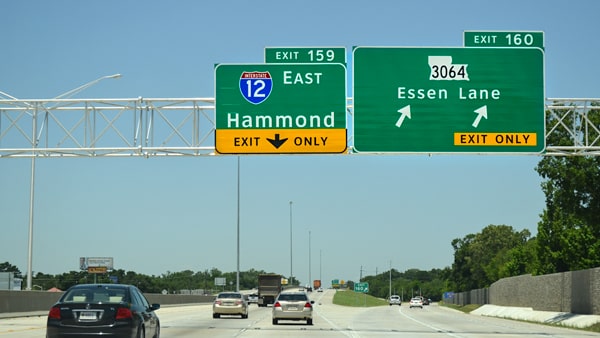
____________ signs inform drivers of basic highway information.
  1. A Parking signs
  2. B Guide signs
  3. C Regulatory signs
  4. D Warning signs

Correct answer: B – Guide signs

Guide signs help road users follow streets and highways and identify intersecting routes, destinations, and nearby places. They can provide route, direction, distance, exit, and destination information. Regulatory signs communicate legal requirements, while warning signs call attention to hazards or changing roadway conditions.

Source: Manual on Uniform Traffic Control Devices for Streets and Highways, 11th Edition with Revision 1 — § 2D.02, “Application”

Question 2

Which description accurately identifies black ice?

  1. A A thin, nearly transparent ice layer through which the pavement remains visible
  2. B Ice that has almost completely melted
  3. C Ice found only along the roadway shoulder
  4. D Ice that does not affect vehicle traction

Correct answer: A – A thin, nearly transparent ice layer through which the pavement remains visible

Arizona’s CDL manual describes black ice as a thin, clear layer through which the road can still be seen. Because it often makes pavement look wet, it can be difficult to recognize. When temperatures are below freezing and the roadway appears wet, drivers should watch for this extremely slippery condition.

Source: Arizona Commercial Driver License Manual — § 2.6.2, “Matching Speed to the Road Surface”

Question 3

When should an adjustable vehicle retarder generally be switched off?

  1. A When the roadway is wet, icy, or snow-covered
  2. B Whenever driving through mountainous terrain
  3. C When the roadway is dry and traction is good
  4. D A driver cannot switch off a retarder

Correct answer: A – When the roadway is wet, icy, or snow-covered

Retarders apply braking power to the drive wheels when the accelerator is released. If those wheels have poor traction, retarder operation may cause them to skid. The manual instructs drivers to turn an adjustable retarder off on wet, icy, or snow-covered roads.

Source: Arizona Commercial Driver License Manual — § 2.2.6, “Retarders”

Question 4

Approximately how does doubling vehicle speed affect braking distance?

  1. A It produces no change
  2. B It doubles the distance
  3. C It makes the distance about four times longer
  4. D It makes the distance about eight times longer

Correct answer: C – It makes the distance about four times longer

Doubling speed makes braking distance approximately four times longer under comparable conditions. For example, increasing speed from 20 to 40 mph does not merely double the distance required for braking. Higher speed also greatly increases impact force and crash severity.

Source: Arizona Commercial Driver License Manual — § 2.6.1, “Stopping Distance”

Question 5

For safe front-to-rear weight distribution, where should cargo generally be positioned?

  1. A As far forward as possible
  2. B As far rearward as possible
  3. C Balanced near the center
  4. D On the floor without regard to axle loading

Correct answer: C – Balanced near the center

Cargo should be balanced rather than concentrated at either end of the vehicle. Too much forward weight can overload the steering axle and cause hard steering. Weight placed too far rearward can leave the steering axle too lightly loaded and can also reduce drive-axle traction.

Source: Arizona Commercial Driver License Manual — § 3.2.4, “Balance the Weight”

Question 6

What should you do immediately when a tire fails while you are driving?

  1. A Grip the steering wheel firmly with both hands
  2. B Apply the brakes sharply
  3. C Sound the horn continuously
  4. D Do all of the above

Correct answer: A – Grip the steering wheel firmly with both hands

A tire failure, especially on a front wheel, can pull or twist the steering wheel sharply. Hold the wheel firmly with both hands and avoid braking until the vehicle has slowed, unless a collision is otherwise imminent. After slowing, brake gently, leave the roadway safely, and stop to inspect the tires.

Source: Arizona Commercial Driver License Manual — § 2.17.4, “Tire Failure”