Idaho Practice Drivers Test 5

4.9 out of 5 (280 votes)
80% Passing score
20 Questions
4 Mistakes allowed
Idaho’s Class D knowledge test is not built around trivia, and that is the first thing worth understanding. It comes straight from the Idaho Driver’s Handbook, which means the real exam can pull from traffic laws, road signs, signals, pavement markings, safe driving practices, impaired driving, sharing the road, and the general responsibility that comes with being the person behind the wheel. This Idaho DMV practice test keeps that same practical angle, with extra attention on DUI rules, blood alcohol limits, and the consequences that follow impaired driving. Idaho is fairly direct about that part. You should be, too. The official Idaho drivers permit test has 40 questions. You need 34 correct answers to pass, which works out to 85%, and you can miss no more than 6. Fail it, and you are waiting 3 days before another attempt, plus paying the knowledge test fee again. That is not catastrophic, obviously, but it is irritating in the very specific way licensing delays tend to be irritating, especially when the missed questions were things you could have cleaned up ahead of time. This Idaho drivers license practice test gives you 20 multiple-choice questions in a calmer format, so you can slow down and actually learn the material instead of racing through it and calling that studying. There is no timer, no one hovering, no official score being stamped into your day. You can use hints when you are stuck, read explanations when an answer feels slippery, and review feedback after a wrong choice so the mistake does some useful work for you. It also helps to know where the knowledge test sits in Idaho’s licensing process. Driver training can begin at 14½, and applicants under 17 must complete an approved program, hold a supervised instruction permit for at least 6 months, and log 50 hours of supervised driving, including 10 at night. A license can be issued at 15 once the required training, testing, and parent or guardian verification are complete. Adults have a more straightforward path, though they may still need documents, vision screening, an instruction permit, the knowledge test, and a skills test depending on their situation. From Boise traffic to winter highways in southern Idaho and mountain roads farther north, this Idaho practice drivers test is meant to sharpen more than memory. It helps you understand the rules well enough to use them, which is the part that matters after the DMV visit is over.

FREE DMV Practice Test App
Study for your Idaho permit test or driver’s license with the NextDoorDriving app. 700+ DMV questions and answers, 100% free!
Download on the App Store

Sample Idaho Permit Test Questions

Question 1

What must you do when approaching a flashing red traffic signal?

If you are approaching an intersection with a red flashing light, what should you do?
  1. A. Continue through without reducing speed
  2. B. Slow down and yield without stopping
  3. C. Wait until the signal changes to green
  4. D. Stop completely, then proceed when the way is clear

Correct answer: D. – Stop completely, then proceed when the way is clear

Under Idaho law, a flashing red signal requires a complete stop at the marked limit line. If there is no line, stop before the crosswalk or at the nearest point where you can view approaching traffic. Yield as required and proceed only when it is safe.

Source: Idaho Code § 49-804(1)(a) – Flashing Signals, Idaho Driver’s Handbook — “Traffic Signals,” “Flashing Red Light”

Question 2

If answering a ringing phone would require holding or manually operating it while driving, what should you do?

If you are a minor and your cell phone rings while you are driving, you should:
  1. A. Answer quickly with one hand
  2. B. Let the call go to voicemail and stop legally before using the phone
  3. C. Answer only when the caller is a parent
  4. D. Send a short text explaining that you are driving

Correct answer: B. – Let the call go to voicemail and stop legally before using the phone

Idaho prohibits drivers of all ages from using a handheld mobile electronic device while operating a vehicle. A vehicle temporarily stopped for traffic or a red light is still being operated; pull legally to the side or park before manually using the phone. Fines are $75 for a first offense, $150 for a second within three years, and $300 for later offenses within that period.

Source: Idaho Code § 49-1401A(1)–(5), (7) – Distracted Driving, Idaho Driver’s Handbook — “Cell Phones”

Question 3

In Idaho, what must you do before leaving a vehicle unattended on a public road while its engine is running?

  1. A. Leave it unlocked and shift into neutral
  2. B. Lock the vehicle and effectively set the parking brake
  3. C. Set the brake only when parked on a hill
  4. D. Take no precautions if you will return within five minutes

Correct answer: B. – Lock the vehicle and effectively set the parking brake

The vehicle must be locked if its engine remains running, and the parking brake must be effectively set. When the vehicle is on a grade, its front wheels must also be turned toward the curb or side of the highway. This statutory rule does not apply to vehicles on private property.

Source: Idaho Code § 49-602 – Unattended Motor Vehicle

Question 4

Which speed practice is recommended for freeway travel when traffic and weather conditions permit?

  1. A. Always drive at least 10 mph below the posted limit
  2. B. Match the fastest driver, even if that requires speeding
  3. C. Frequently vary your speed to remain alert
  4. D. Maintain a steady, lawful speed that fits the traffic flow

Correct answer: D. – Maintain a steady, lawful speed that fits the traffic flow

The Idaho handbook recommends maintaining a steady freeway speed and keeping up with the traffic flow when conditions permit. This does not authorize exceeding a posted speed limit. A driver must still adjust for weather, visibility, congestion, and any posted minimum or maximum speed.

Source: Idaho Driver’s Handbook — “Freeway Driving,” “Don’t Drive Too Fast or Slow”

Question 5

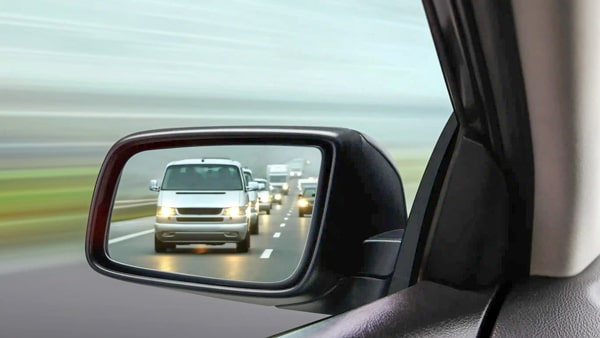
Why should you check traffic behind your vehicle frequently?

Checking traffic behind you:
  1. A. To avoid looking at the roadway ahead
  2. B. To notice a tailgater, a rapidly approaching vehicle, or someone passing
  3. C. Only to prepare for a sudden stop
  4. D. Only when preparing to back up

Correct answer: B. – To notice a tailgater, a rapidly approaching vehicle, or someone passing

Frequent mirror checks help you identify vehicles following too closely, approaching rapidly, or preparing to pass. This information gives you more time to respond to developing hazards. Continue scanning ahead and to the sides rather than concentrating on one area for too long.

Source: Idaho Driver’s Handbook — “Defensive Driving,” “Look Behind”

Question 6

Which action is an unsafe scanning habit?

  1. A. Keeping at least a three-second following distance
  2. B. Fixing your eyes continuously on the center of the road
  3. C. Checking the roadway ahead, to the sides, and behind
  4. D. Maintaining space around your vehicle

Correct answer: B. – Fixing your eyes continuously on the center of the road

A fixed, straight-ahead stare can prevent you from noticing hazards beside or behind your vehicle. Keep your eyes moving and look about 10 to 15 seconds ahead while also checking mirrors and roadside areas. Maintaining following distance and a space cushion provides additional time to respond.

Source: Idaho Driver’s Handbook — “Defensive Driving,” “Scanning” and “Look Ahead”, Idaho Driver’s Handbook — “Following Distances” and “Keep a Space Cushion”