Idaho Drivers License Practice Test 6

4.8 out of 5 (241 votes)
80% Passing score
20 Questions
4 Mistakes allowed
This sixth Idaho DMV practice test is built for people who want to walk into the Idaho knowledge test with something better than a vague memory of the handbook and a hopeful mood. The official Class D knowledge test is based on the Idaho Driver’s Handbook, so the material here stays close to the same territory: traffic laws, signs, signals, pavement markings, safe driving practices, impaired driving, sharing the road, and all the small driver-responsibility details that are easy to skim past until they show up as a test question. The practice drivers test itself gives you 20 multiple-choice questions covering real Idaho driving knowledge, including turn signals, yielding, four-way stops, and those ordinary road situations where the correct answer is obvious only after you slow down and think about it. You’ll need 16 correct answers to pass this Idaho drivers license practice test. That is an 80% score, which gives you a solid benchmark, though the real Idaho Class D knowledge test is a little less forgiving: 40 questions, 34 correct answers required, and only 6 misses allowed. So, yes, there is some room for error. Just not much. A useful thing about this Idaho driving permit practice test is that it does not rush you. No timer breathing down your neck, no artificial pressure, no reason to guess just because you feel like you should already know it. Take the question apart, read the answer choices, and let the explanation do its job. The test also draws from a larger pool of questions and answers, which means another attempt can bring up different situations instead of the same tired loop. That matters more than it sounds like it should. And since Idaho does attach a few real-world consequences to the official test, it is worth practicing before you pay the fee. The knowledge test costs $5, and if you fail, you have to wait 3 days before trying again and pay the fee again. New drivers, out-of-state transfers, and applicants with an Idaho license expired for 25 months or more may all need to take the test. For teen drivers, this practice also fits into the larger licensing process, including driver education, supervised driving, and the Supervised Instruction Permit period. Better to sort out the weak spots here, quietly, than discover them at the counter.

FREE DMV Practice Test App
Study for your Idaho permit test or driver’s license with the NextDoorDriving app. 700+ DMV questions and answers, 100% free!
Download on the App Store

Sample Idaho Permit Test Questions

Question 1

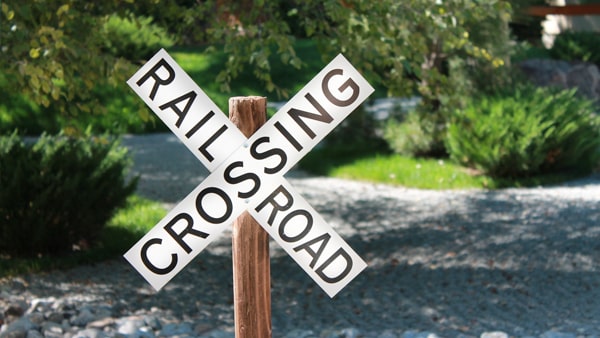
What does a white, X-shaped crossbuck sign identify?

This road sign means:
  1. A. A stop required only when highway traffic is approaching
  2. B. A three-way intersection
  3. C. A highway crossroad
  4. D. A railroad grade crossing

Correct answer: D. – A railroad grade crossing

Crossbuck signs identify railroad grade crossings. Look and listen in both directions for approaching trains and observe any gates or flashing-light signals. If crossing lights are flashing, stop and proceed only after the signals permit travel and the crossing is safe.

Source: Idaho Driver’s Handbook — “Intersections,” “Railroad Crossings”

Question 2

What can happen when alcohol is combined with certain drugs or medications?

  1. A. The driver’s overall impairment can increase
  2. B. The substances have no effect on driving ability
  3. C. The medication automatically cancels alcohol’s effects
  4. D. The alcohol makes the medication safer to use

Correct answer: A. – The driver’s overall impairment can increase

Alcohol taken with certain drugs or medications can make a person more impaired and less able to perform driving tasks. Prescription and over-the-counter medicines may cause drowsiness or other effects that interfere with driving. Read medication labels and ask a medical professional how a drug may affect you before driving.

Source: Idaho Driver’s Handbook — “Drugs & Driving”

Question 3

On an Idaho two-lane highway outside an urban area, three vehicles have formed a line behind you where passing is unsafe. What should you do?

  1. A. Make a U-turn at the next opening
  2. B. Use the nearest designated turnout or next safe, reasonable place to let them pass
  3. C. Move into the opposing lane to allow them by on the right
  4. D. Stop in your travel lane immediately

Correct answer: B. – Use the nearest designated turnout or next safe, reasonable place to let them pass

When three or more vehicles form a line behind a vehicle under these conditions, the driver must turn off at the nearest designated turnout or the next location where pulling over is safe and reasonable. The purpose is to allow following vehicles to pass. The duty applies after the driver reaches an appropriate turnout or safe location.

Source: Idaho Code § 49-639 – Turning Out of Slow Moving Vehicles

Question 4

At an uncontrolled Idaho intersection without painted crosswalk lines, a pedestrian is already crossing within the unmarked crosswalk. Who must yield?

  1. A. The driver must yield, slowing or stopping if necessary
  2. B. The pedestrian must yield because there is no green signal
  3. C. The pedestrian must yield because no lines are painted
  4. D. The driver has priority whenever traveling below the speed limit

Correct answer: A. – The driver must yield, slowing or stopping if necessary

A driver must yield to a pedestrian crossing within a crosswalk when traffic signals are absent or not operating. The law expressly recognizes unmarked crosswalks at intersections. A pedestrian may not suddenly enter the path of a vehicle that is too close to yield safely.

Source: Idaho Code § 49-702(1), (2), (4) – Pedestrians’ Right-of-Way in Crosswalks

Question 5

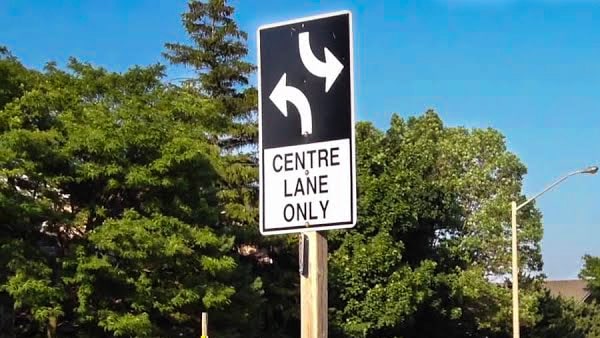
What is a shared center turn lane intended to be used for?

From the center lane, what maneuvers can you perform?
  1. A. Preparing for a left turn from either direction
  2. B. Traveling for several blocks
  3. C. Passing slower traffic
  4. D. Parking temporarily

Correct answer: A. – Preparing for a left turn from either direction

A shared center lane is reserved for left turns from traffic moving in either direction and for U-turns where those turns are permitted. Do not use it as a regular travel or passing lane. Enter only when preparing for an allowed turn and do not interfere with another turning vehicle.

Source: Idaho Driver’s Handbook — “Pavement Markings,” “Shared Lanes”

Question 6

On an Idaho road that is not a controlled-access highway, how far before a turn must you signal?

When you are planning to make a turn, you should activate your turn signals:
  1. A. Only when another vehicle is following
  2. B. Beginning as you enter the intersection
  3. C. Continuously for at least the final 100 feet
  4. D. For the final two vehicle lengths

Correct answer: C. – Continuously for at least the final 100 feet

A turn signal must be given continuously for at least the final 100 feet before turning in this situation. On a controlled-access highway and when leaving a parked position, the minimum is five seconds. Signaling communicates your intention but does not permit a movement that cannot be made with reasonable safety.

Source: Idaho Code § 49-808(1), (2) – Turning Movements and Required Signals