


Wyoming DMV Permit Practice Test 2

4.8 out of 5 (70 votes)
80% Passing score
20 Questions
4 Mistakes allowed
Wyoming’s knowledge test rewards drivers who actually understand the rules, not just the ones who skim a few road signs. This WY DMV permit practice test gives you 20 multiple-choice and true-or-false questions that stay close to the kind of material you can expect on the real Wyoming DMV knowledge test: traffic laws, signs, safe-driving judgment, and the Wyoming-specific situations that tend to show up once you leave town limits and the road gets a little less forgiving. For many younger applicants, the written exam is tied to getting a learner’s permit. Wyoming generally issues a regular learner’s permit to minors ages 15 to 16, although older first-time drivers may also need one while they are learning. If the applicant is under 18, a parent or legal guardian has to sign the application. And, yes, there is still the in-person part of it: the applicant needs to appear at a local driver exam office, get photographed, provide the required documents, pass the written exam, and complete the vision screening. WYDOT may let you start part of the process through oneWYO, which is convenient in the limited way DMV conveniences are convenient, but the permit itself still involves showing up. Adult applicants are handled a bit differently, and this is where people sometimes blur the rules together. Adults who have never held a license generally need to pass the written test, vision screening, and driving skills test unless Wyoming rules allow a waiver. They are not under the teen intermediate-permit restrictions, but they still have to prove they know the material. New residents have another timeline to keep in mind: Wyoming generally gives new residents one year after establishing residency to obtain a Wyoming driver license, though some license holders — including drivers from Georgia, Massachusetts, Michigan, Tennessee, Wisconsin, or anyone with a CDL — may need to apply once residency is established. This Wyoming DMV test practice is built to help you check your readiness before the official exam decides it for you. Expect questions that touch on seat belt rules, rural highways, winter driving, wildlife crossings, farm equipment on county roads, and the ordinary-but-important details that make driving in Wyoming different from driving somewhere flatter, busier, or less weather-stubborn. It is not a substitute for the Wyoming driver manual or a certified driver’s education course. Still, as a DMV practice permit test, it gives you a useful read on what you know, what you almost know, and what needs one more pass before test day.
FREE DMV Practice Test App
Study for your Wyoming permit test or driver’s license with the NextDoorDriving app. 700+ DMV questions and answers, 100% free!
Download on the App Store

Sample Wyoming Permit Test Questions

Question 1

When may you cross onto the left half of a two-way roadway to pass another vehicle?
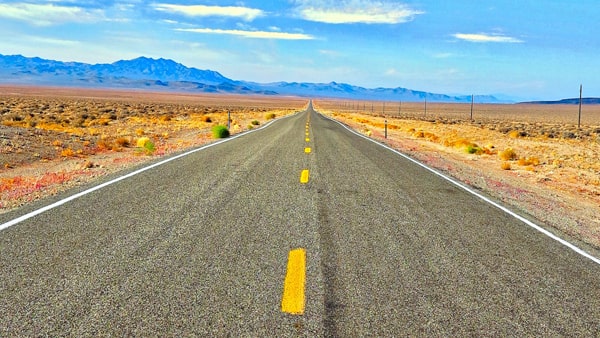
On a two-way highway, you are allowed to drive on the left half of the roadway when:
  1. A Whenever the roadway has double yellow centerlines
  2. B When a solid yellow line is on your side
  3. C When passing is permitted and the oncoming lane is clear for a sufficient distance
  4. D When approaching a hillcrest that blocks your view

Correct answer: C – When passing is permitted and the oncoming lane is clear for a sufficient distance

Wyoming generally requires vehicles to remain on the right half of the roadway, with an exception for lawful passing. A driver may not use the left side in a marked no-passing zone or when an obstructed hill or curve creates a hazard. The oncoming lane must be visible and clear far enough ahead to complete the pass safely.

Source: Wyo. Stat. § 31-5-201(a)(i) – Driving on right side of roadway; exceptions, Wyo. Stat. § 31-5-204 – General limitations on overtaking on the left, Wyo. Stat. § 31-5-207 – No-passing zones
Question 2

A vehicle behind you sounds its horn and begins passing on your left. What should you do?

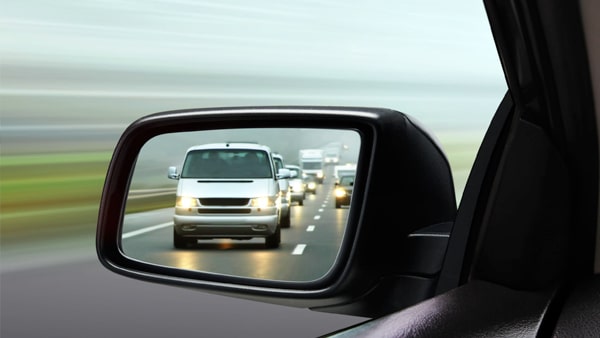
The car behind you begins to pass you. You should:
  1. A Increase speed to shorten the passing time
  2. B Stop immediately in your traffic lane
  3. C Give way to the right and do not increase speed until fully passed
  4. D Sound your horn continuously

Correct answer: C – Give way to the right and do not increase speed until fully passed

Under Wyoming law, an overtaken driver must give way to the right when the passing driver gives an audible signal. The overtaken driver may not increase speed until the passing vehicle has completely passed. These duties help provide the passing vehicle with room to complete the maneuver while each driver remains responsible for obeying applicable passing rules.

Source: Wyo. Stat. § 31-5-203(a)(ii) – Rules governing overtaking on the left

Question 3

At an intersection without operating traffic signals, who must yield when a pedestrian is within or entering the crosswalk?

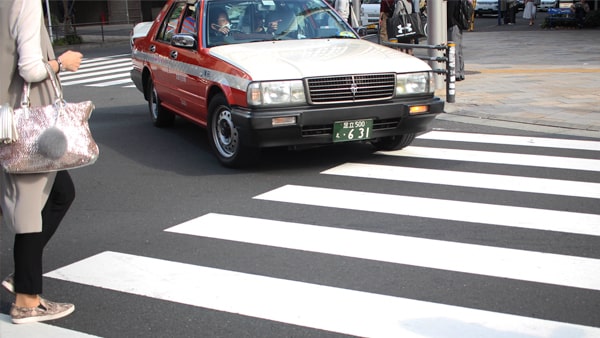
Who must yield when a driver is turning and a pedestrian is crossing without a traffic light?
  1. A Whichever road user arrived second
  2. B The driver
  3. C Whichever road user is moving faster
  4. D The pedestrian in every situation

Correct answer: B – The driver

In Wyoming, a driver must yield by slowing or stopping when necessary for a pedestrian within or entering a crosswalk where traffic signals are absent or not operating. A pedestrian may not suddenly enter the path of a vehicle that is too close to stop safely. That pedestrian duty does not remove the driver's crosswalk-yield requirement.

Source: Wyo. Stat. § 31-5-602(a), (c) – Right-of-way in crosswalks

Question 4

If you are traveling below the normal traffic speed on a two-way road, where should you drive?

  1. A Near the centerline to discourage passing
  2. B In the available right-hand lane or as close as practicable to the right edge
  3. C On the shoulder whenever another vehicle approaches
  4. D In any lane if your hazard lights are on

Correct answer: B – In the available right-hand lane or as close as practicable to the right edge

Wyoming requires a vehicle moving below the normal traffic speed to use the available right-hand lane or travel as close as practicable to the right edge. Exceptions apply when passing or preparing for a left turn. A driver also may not travel so slowly that normal and reasonable traffic is impeded unless the reduced speed is needed for safety or required by law.

Source: Wyo. Stat. § 31-5-201(b) – Driving on right side of roadway; exceptions, Wyo. Stat. § 31-5-304(a) – Minimum speed limits

Question 5

Which nighttime driving habit is unsafe?

  1. A Increasing your following distance when visibility is limited
  2. B Fixing your eyes on one spot illuminated by your headlights
  3. C Using low beams when meeting an oncoming vehicle
  4. D Keeping your windshield and headlights clean

Correct answer: B – Fixing your eyes on one spot illuminated by your headlights

Staring at the same illuminated area can contribute to eyestrain, fatigue and reduced concentration. Keep your eyes moving and scan for vehicles, pedestrians, bicyclists and animals. The driver manual also recommends clean windshields and headlights, appropriate following distance and low beams when meeting or following other vehicles.

Source: Wyoming Driver License Manual — “Special driving conditions,” “Reduced light”

Question 6

What does a driver's left arm extended upward signal?

  1. A A left turn
  2. B A right turn
  3. C A stop or decrease in speed
  4. D Continued travel straight ahead

Correct answer: B – A right turn

Wyoming's statutory hand signals are given from the left side of the vehicle. A hand and arm extended upward indicates a right turn. A horizontal arm indicates a left turn, while an arm extended downward indicates a stop or decrease in speed.

Source: Wyo. Stat. § 31-5-219(a) – Manner of giving hand and arm signals