


Alabama Practice Permit Test 4

4.8 out of 5 (232 votes)
80% Passing score
20 Questions
4 Mistakes allowed
Getting ready for the Alabama permit test is not the moment to “sort of” know the rules. The official written exam is based on the Alabama Driver Manual, and it is the first gate for a lot of new drivers—especially teens starting Alabama’s Graduated Driver License process. So yes, you need road signs and basic traffic laws, obviously. But you also need the smaller, easier-to-miss details that tend to show up when you least want them to. This Alabama permit practice test gives you 20 multiple-choice questions built around the kind of knowledge Alabama drivers are expected to have: safe driving habits, traffic rules, general road awareness, and child passenger safety, including the proper use and installation of child safety seats. That part can feel oddly specific until you remember that driving is not just about keeping the car between the lines. Sometimes there is a child in the back seat, and the law—and plain common sense—expects you to know what you are doing. For teen applicants, Alabama allows a restricted learner license at age 15. That Stage I learner permit requires passing the written exam, paying the required fees, and then driving only with the proper supervising adult or certified instructor beside you. Later, moving into the restricted license stage usually means being at least 16, holding the learner license long enough if you are under 18, passing the road skills test, and completing either 50 hours of supervised practice or an approved driver education course. It is a process, not a quick little errand, and pretending otherwise does not help anybody. Adults can use this Alabama DMV practice test too. First-time adult applicants, seniors refreshing their knowledge, or drivers whose Alabama license has been expired long enough to require testing again still need to walk in prepared. The teen GDL restrictions may not apply to adults, but the knowledge test, vision screening, road skills expectations, and basic legal responsibilities are still very real. After you finish the Alabama practice permit test, you can review the questions you missed, read the explanations, and actually fix the gaps instead of guessing your way through them twice. Scoring 16 or more correct answers is a good sign, sure, but the review is where the useful stuff happens. Use this practice permit test to get comfortable with Alabama’s rules before the official DMV written test, and to build the kind of driving knowledge that holds up after test day.
FREE DMV Practice Test App
Study for your Alabama permit test or driver’s license with the NextDoorDriving app. 700+ DMV questions and answers, 100% free!
Download on the App Store

Sample Alabama Permit Test Questions

Question 1

Under normal driving conditions, the Alabama manual recommends a following interval of at least:

  1. A. Twenty feet
  2. B. One vehicle length for every 10 mph
  3. C. Two seconds
  4. D. Five seconds in every situation

Correct answer: C. – Two seconds

Use the two-second rule by selecting a fixed roadside object and counting after the vehicle ahead passes it. If you reach the object before finishing the two-second count, increase your distance. Poor road or weather conditions and longer vehicles call for a larger interval of four or five seconds.

Source: Alabama Driver Manual — Ch. 4, “How to Avoid Rear End Collisions”
Question 2

Which passing maneuver is prohibited in Alabama?

  1. A. Passing a vehicle preparing to turn left when passing on the right is otherwise lawful
  2. B. Passing on a multilane one-way street
  3. C. Passing a vehicle stopped at a crosswalk for a pedestrian
  4. D. Passing a vehicle preparing to parallel park when the maneuver is otherwise lawful

Correct answer: C. – Passing a vehicle stopped at a crosswalk for a pedestrian

A driver approaching from behind may not overtake and pass a vehicle stopped at a marked crosswalk or an unmarked crosswalk at an intersection to allow a pedestrian to cross. The stopped vehicle can screen the pedestrian from the passing driver’s view. Remain behind it until the crossing is clear.

Source: Ala. Code § 32-5A-211(c) — Pedestrians’ Right-of-Way in Crosswalks

Question 3

After passing another vehicle, when is it appropriate to return to the right lane?

  1. A. When the entire front of the passed vehicle is visible in your interior mirror
  2. B. Immediately after activating your right turn signal
  3. C. As soon as your rear bumper clears its front bumper
  4. D. When the other driver flashes the headlights

Correct answer: A. – When the entire front of the passed vehicle is visible in your interior mirror

The passing driver may not return to the right side until safely clear of the overtaken vehicle. The driver manual recommends waiting until the entire front of that vehicle is visible in the interior rearview mirror. Signal before returning and check that the lane and the area beside your vehicle are clear.

Source: Ala. Code § 32-5A-82(1) — Overtaking and Passing Vehicles Proceeding in Same Direction, Alabama Driver Manual — Ch. 6, “No Passing Zones”

Question 4

High-beam headlights should be used at night:

  1. A. Only within cities
  2. B. Whenever you are traveling over 45 mph
  3. C. On dark roads when their use is legal and will not interfere with other drivers
  4. D. At all times on highways

Correct answer: C. – On dark roads when their use is legal and will not interfere with other drivers

High beams illuminate farther ahead and can be useful on dark, open roads. In Alabama, they must be dimmed within 500 feet of an approaching vehicle and within 200 feet when following another vehicle. Drive slowly enough to stop within the distance illuminated by your headlights.

Source: Ala. Code § 32-5-242 — Requirements as to Head Lamps and Auxiliary Driving Lamps, Alabama Driver Manual — Ch. 7, “Night Driving”

Question 5

Why must Alabama motorists watch for bicyclists in regular traffic lanes?

  1. A. Bicyclists must travel against traffic
  2. B. Bicyclists have roadway rights and may lawfully occupy a traffic lane
  3. C. Bicyclists always have priority over every vehicle

Correct answer: B. – Bicyclists have roadway rights and may lawfully occupy a traffic lane

Traffic laws apply to people riding bicycles, and bicyclists share roadway rights and responsibilities with motorists. A bicyclist may move away from the right edge when passing, preparing for a left turn, or avoiding hazards. Shared-lane markings also notify drivers that bicyclists may occupy the travel lane.

Source: Ala. Code § 32-5A-260 — Traffic Laws Apply to Persons Riding Bicycles, Alabama Driver Manual — Ch. 3, “Sharing the Road with Bicycles”

Question 6

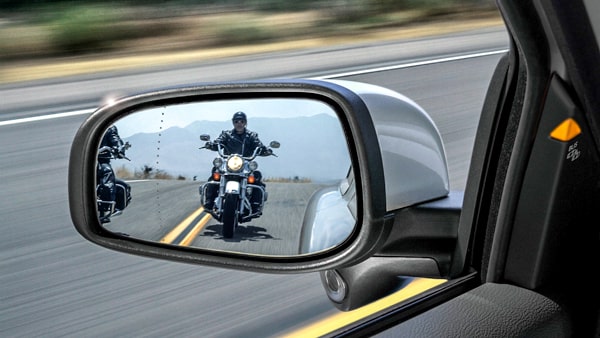
Why should you look carefully for motorcycles before changing lanes?

Look carefully for motorcycles before you change lanes because:
  1. A. Motorcycles may not use ordinary traffic lanes
  2. B. Their narrow profile makes them more difficult to detect
  3. C. Motorcycles always have priority at intersections
  4. D. Motorcycles always have priority on highways

Correct answer: B. – Their narrow profile makes them more difficult to detect

Motorcycles are not as easily identified in traffic because they are much narrower than automobiles. Their size can also make their distance and speed difficult to judge. Check mirrors and the space beside your vehicle carefully before changing lanes, and remember that a motorcycle is entitled to the full width of its lane.

Source: Alabama Driver Manual — Ch. 3, “Sharing the Road with Motorcycles”