Georgia Drivers Ed Practice Test 8

4.9 out of 5 (109 votes)
80% Passing score
20 Questions
4 Mistakes allowed
Intersections are where Georgia’s driving rules stop acting like neat little study-guide facts and start behaving like a group project, which is to say: someone is probably confused, someone is too confident, and someone is rolling forward when they really should not be. This Georgia permit practice test focuses on those exact moments, especially four-way stops, right-of-way decisions, and the little intersection puzzles that sound simple until there are actual bumpers involved. This is the eighth test in our Georgia permit practice test series, with 20 multiple-choice questions built around intersection rules and real traffic situations. The point is not to turn you into a walking copy of the driver’s manual, although, sure, knowing the manual helps. The real value is getting used to the way DDS-style questions ask you to apply the rule, not just recognize it. Who arrived first? Who is turning left? Who needs to yield even though they seem personally offended by the idea? That is the kind of thinking this GA DDS practice test pushes you to practice. You can retake the test as often as you want, and each attempt may bring in a different mix of questions from a larger pool. That matters because memorizing one tidy answer pattern is a flimsy little strategy. Seeing several versions of the same general situation, with slightly different details, is closer to how the Georgia drivers ed written test actually tests your judgment. It is also closer to driving, unfortunately, where people do not come labeled with answer choices. A few DDS details are worth knowing before you get too deep into test-day planning. Georgia permit and license applicants must pass a vision screening, with at least 20/60 vision in one eye, with or without corrective lenses, and a 140-degree field of vision. If glasses or contacts are needed to meet the standard, Georgia may add a restriction for corrective lenses required. The knowledge exam is taken at a DDS Customer Service Center, and no appointment is needed for that part, though road skills tests are appointment-only. The Class CP learner’s permit fee is $10, paid before the test begins. Fail any part of the knowledge exam and, well, there goes the fee; it is not refunded, and you pay again for another try. After a first failure, the wait is one day. After a second, it becomes seven days. So retaking this Georgia drivers ed practice test is not busywork. It is the cheaper, calmer version of finding out what you do not know.
FREE DMV Practice Test App
Study for your Georgia permit test or driver’s license with the NextDoorDriving app. 700+ DMV questions and answers, 100% free!
Download on the App Store

Sample Georgia Permit Test Questions

Question 1

Which U-turn is permitted under Georgia law?

  1. A. One made where a sign prohibits crossing the median
  2. B. One made on a curve where approaching drivers cannot see you
  3. C. One made where it is not prohibited and drivers in both directions can see your vehicle from at least 500 feet
  4. D. One made near a hillcrest where the view is blocked

Correct answer: C. – One made where it is not prohibited and drivers in both directions can see your vehicle from at least 500 feet

A U-turn is prohibited on a curve or near the crest of a grade when approaching drivers cannot see the vehicle from at least 500 feet in either direction. A posted No U-turn sign must also be obeyed. The maneuver may be made only where it is permitted and can be completed safely without interfering with traffic.

Source: O.C.G.A. § 40-6-121 – U-Turns, Georgia Department of Driver Services Drivers' Manual — Section 5, “U-Turns”
Question 2

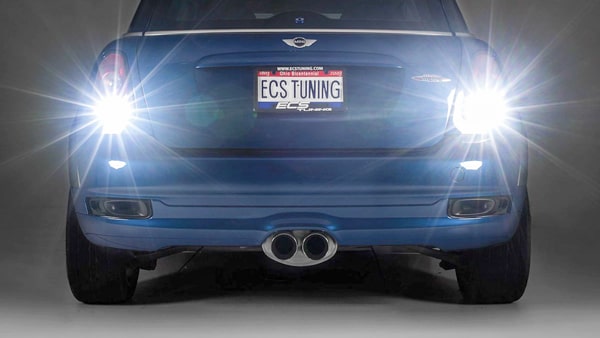
What is the recommended way to look behind your car while backing?

When backing up your car, you should:
  1. A. Use only the inside and outside mirrors
  2. B. Turn and look over your right shoulder while backing slowly
  3. C. Look only over your left shoulder
  4. D. Rapidly turn your head from side to side

Correct answer: B. – Turn and look over your right shoulder while backing slowly

Check all sides of the vehicle before beginning to back. While moving backward, turn your head and look over your right shoulder rather than relying entirely on mirrors. Back slowly and remain alert for pedestrians, vehicles, and objects entering your path.

Source: Georgia Department of Driver Services Drivers' Manual — Section 5, “Backing Up”

Question 3

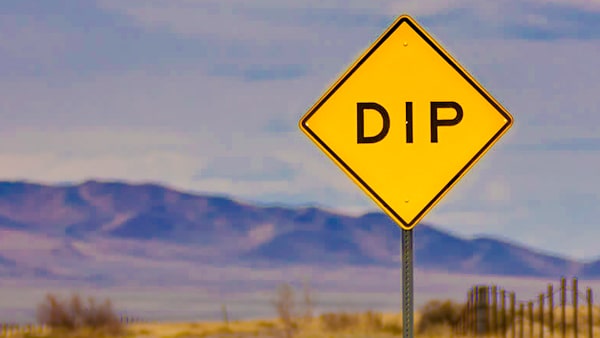
A yellow diamond-shaped sign displaying the word “DIP” warns of:

This sign means:
  1. A. A low place in the roadway ahead
  2. B. A soft roadway shoulder
  3. C. A pedestrian crossing
  4. D. A required stop

Correct answer: A. – A low place in the roadway ahead

A DIP sign warns that there is a low section in the roadway ahead. Because a dip can affect vehicle stability and visibility, reduce speed before reaching it. The sign is a warning sign, not an instruction to make a complete stop.

Source: Georgia Department of Driver Services Drivers' Manual — Section 7, “Dip sign”

Question 4

If you become so drowsy that ordinary efforts do not keep you alert, what should you do?

  1. A. Depend on coffee or stimulant products
  2. B. Open the windows and increase the radio volume
  3. C. Stop driving at a safe location and rest
  4. D. Increase speed to shorten the trip

Correct answer: C. – Stop driving at a safe location and rest

Stop driving when you feel drowsy and use a safe stopping location, such as a rest area. The driver's manual warns against relying on stimulant products to remain awake. Fatigue reduces alertness and can prevent you from responding properly to changing road conditions.

Source: Georgia Department of Driver Services Drivers' Manual — Section 8, “Tips For Expressway Driving”

Question 5

Why is following another vehicle too closely dangerous on Georgia roads?

Following closely behind another vehicle:
  1. A. It removes your vehicle from the other driver's blind spot
  2. B. It can cause a rear-end crash when the vehicle ahead slows or stops
  3. C. It consistently improves fuel economy
  4. D. It is required during the road test

Correct answer: B. – It can cause a rear-end crash when the vehicle ahead slows or stops

Drivers must not follow more closely than is reasonable and prudent for the traffic and roadway conditions. The driver's manual connects inadequate following distance with rear-end crashes because the following driver may be unable to stop when traffic ahead slows suddenly. Increase the gap further during bad weather, construction, heavy traffic, and nighttime driving.

Source: O.C.G.A. § 40-6-49 – Following Too Closely, Georgia Department of Driver Services Drivers' Manual — Section 8, “Following Too Closely”

Question 6

How should you check an area beside your vehicle that is hidden from the mirrors?

  1. A. Look only in the inside rearview mirror
  2. B. Look only in the outside mirrors
  3. C. Turn your head and look over the appropriate shoulder
  4. D. Continue looking straight ahead

Correct answer: C. – Turn your head and look over the appropriate shoulder

Mirrors leave areas beside and slightly behind a vehicle that may not be visible. Before passing or changing lanes, turn your head and look over the appropriate shoulder to check the blind spot. Make the check briefly while maintaining control and continue monitoring the roadway ahead.

Source: Georgia Department of Driver Services Drivers' Manual — Section 5, “How To Pass On A Two-Lane Road”; Section 8, “Tips For Expressway Driving”