Georgia Practice Permit Test 5

4.9 out of 5 (133 votes)
80% Passing score
20 Questions
4 Mistakes allowed
Before Georgia hands over even a learner’s permit, it wants proof that you can read the road and understand the rules behind the road. The DDS knowledge exam is split cleanly into two parts: 20 road rules questions and 20 road signs questions. You have to get at least 15 right on each section, not just scrape together a decent total score. So yes, 30 out of 40 is the overall minimum, but only if both halves pass separately. That little detail catches people more often than it should. This GA permit practice test is built to help you study the way the real exam is actually structured, with 20 multiple-choice questions that keep the focus on Georgia road rules, signs, safe driving habits, and the legal judgment new drivers are expected to have. That includes DUI laws and BAC limits, which are not just “know it for the test” material. They are the kind of rules that matter after a late night in Athens, a crowded festival weekend in Atlanta, or some ordinary situation where someone thinks they are probably fine to drive. Georgia takes impaired driving seriously, and the permit test reflects that seriousness in its own quiet, bureaucratic way. The practice test also gives you a cleaner view of what comes next in the licensing process. A Class CP learner’s permit is available at 15, costs $10, and lasts for 2 years. For teens working toward a Class D license, the permit has to be held for 1 year and 1 day. There is also the usual pile of requirements that sounds simple until you are actually gathering it: Joshua’s Law, 30 hours of classroom or approved online driver education, 40 hours of supervised driving, and 6 of those hours at night. Behind-the-wheel training can be done through a certified instructor or parent-taught option, depending on the route you take. Before test day, the paperwork matters too. Applicants need 1 identity document and 2 Georgia residency documents. Minors need proof of school enrollment or an accepted alternative, and the Online License/ID/Permit Form is valid for 60 days. Georgia also checks vision, requiring at least 20/60 in one eye and a visual field of at least 140 degrees, with corrective lenses allowed. Use this Georgia DDS practice test to find the weak spots before they cost you time. After a first failed knowledge test, the retest wait is 1 day. After a second failure, it jumps to 7 days. Nobody needs that headache.
FREE DMV Practice Test App
Study for your Georgia permit test or driver’s license with the NextDoorDriving app. 700+ DMV questions and answers, 100% free!
Download on the App Store

Sample Georgia Permit Test Questions

Question 1

Your signal changes from red to green. What must you verify before entering the intersection?

  1. A. That every approaching driver has stopped
  2. B. That it is safe and vehicles or pedestrians already there have been yielded to
  3. C. That pedestrians understand they must yield to you
  4. D. That you are traveling straight ahead

Correct answer: B. – That it is safe and vehicles or pedestrians already there have been yielded to

A green light permits you to proceed only when it is safe. Yield to vehicles already within the intersection and stop for pedestrians as required. The Georgia driver manual specifically warns drivers not to enter an intersection merely because the light has changed to green.

Source: O.C.G.A. § 40-6-22 — Traffic-control signal legend, Georgia Department of Driver Services Drivers Manual — Section 5, “Laws Governing Right-of-Way”, Georgia Department of Driver Services Drivers Manual — Section 7, “Green Light”
Question 2

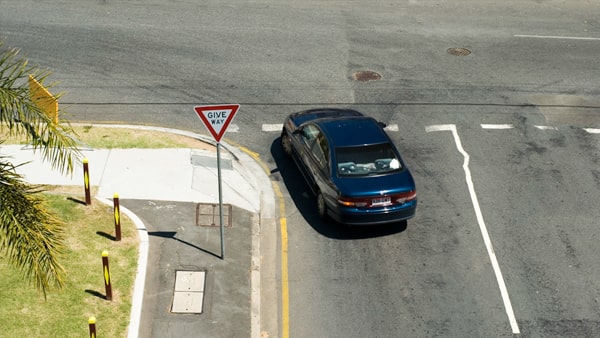
While waiting to begin a left turn, how should your front wheels be positioned?

You are waiting in the intersection to complete a left turn. You should:
  1. A. Turned fully to the left
  2. B. Pointed straight ahead
  3. C. Turned toward the right curb
  4. D. Alternated from left to right

Correct answer: B. – Pointed straight ahead

Keep the wheels straight until you actually begin the left turn. Signal in advance and use the far-left lane or a designated turn lane. Before turning, yield to oncoming vehicles, bicyclists, and pedestrians as required.

Source: Georgia Department of Driver Services Drivers Manual — Section 5, “How To Make A Left Turn”

Question 3

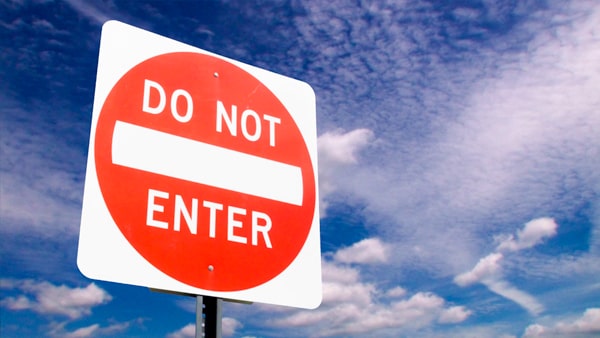
Where is a DO NOT ENTER sign commonly used?

This sign is used to prevent:
  1. A. At the entrance to a full parking lot
  2. B. At every road construction area
  3. C. At the beginning of a dead-end street
  4. D. Where entry could send traffic the wrong way on a one-way road or ramp

Correct answer: D. – Where entry could send traffic the wrong way on a one-way road or ramp

A DO NOT ENTER sign marks a point where vehicles may not enter from the direction they are facing. It is used to prevent traffic from entering one-way roadways or ramps against the lawful flow. A WRONG WAY sign may provide an additional warning to a driver traveling in the prohibited direction.

Source: Georgia Department of Driver Services Drivers Manual — Section 7, “Regulatory Signs—Do Not Enter Sign”, Georgia Department of Driver Services Drivers Manual — Section 7, “Wrong Way Sign”

Question 4

If you must slow suddenly, how should you warn traffic behind you?

  1. A. Turn around and look through the rear window
  2. B. Switch off the vehicle’s exterior lights
  3. C. Give the proper brake-operated or hand-and-arm stop signal
  4. D. Drive continuously with one foot pressing the brake

Correct answer: C. – Give the proper brake-operated or hand-and-arm stop signal

When stopping or slowing suddenly, a driver must provide the proper stop signal. Normally, pressing the brake pedal activates the brake lamps and warns drivers behind that speed is decreasing. A hand-and-arm stop signal may be required when illuminated vehicle signals are unavailable.

Source: Georgia Department of Driver Services Drivers Manual — Section 5, “Stopping”

Question 5

When approaching a lawful U-turn on a road with two lanes in your direction, which lane should you use?

  1. A. A center turn lane in every situation
  2. B. The far-left lawful lane or designated turn lane
  3. C. The far-right lane
  4. D. Whichever lane has the fewest vehicles

Correct answer: B. – The far-left lawful lane or designated turn lane

Approach the maneuver from the far-left lane in your direction or from a lawfully designated turn lane. Georgia permits a U-turn only where it can be completed safely without interfering with traffic and where it is not prohibited. Do not make one on a curve or near a hillcrest when other drivers cannot see your vehicle.

Source: O.C.G.A. § 40-6-120(2) — Methods of turning at intersections, O.C.G.A. § 40-6-121 — U-turns, Georgia Department of Driver Services Drivers Manual — Section 5, “How To Make A Left Turn; U-Turns”

Question 6

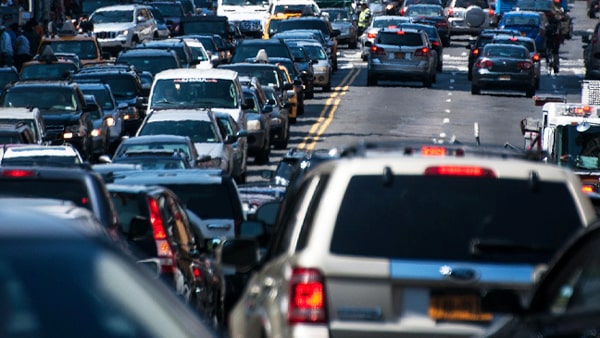
Which choice can help reduce the number of vehicles contributing to traffic congestion?

Choose the situation that would have the best impact on reducing traffic congestion:
  1. A. Using public transit or ridesharing
  2. B. Following other vehicles more closely
  3. C. Taking additional unnecessary trips
  4. D. Tailgating to discourage lane changes

Correct answer: A. – Using public transit or ridesharing

Using transit, carpools, or other ridesharing options can reduce the number of individual vehicles on the road. The official driver manual recommends these choices, along with consolidating trips and limiting unnecessary travel, to help reduce traffic congestion and vehicle emissions. Reducing following distance or tailgating is unsafe and does not provide that benefit.

Source: Georgia Department of Driver Services Drivers Manual — Section 8, “Protecting the Air”