


Missouri Practice Permit Test 4

4.9 out of 5 (223 votes)
80% Passing score
20 Questions
4 Mistakes allowed
This Missouri permit practice test gives you a focused way to review the rules before you take the real written exam, without pretending the licensing process is simpler than it is. Missouri’s Class F path has stages, age rules, supervised-driving requirements, and a few details that are easy to gloss over when you are mostly thinking, reasonably enough, about passing the test and getting on the road. The fourth Missouri permit practice test includes 20 multiple-choice questions covering general driving knowledge, with a sharper focus on child safety seats. That matters because child passenger safety is one of those topics where “I basically know it” is not always enough. Proper seat use, correct placement, and knowing how the rules apply in an actual vehicle are all part of being a safer driver, not just a better test-taker. And yes, the written test can pull from ordinary road rules and very specific safety topics in the same sitting, which is why a practice permit test with a little range is worth your time. For teen drivers, the Class F instruction permit is the first stage of Missouri’s Graduated Driver License program. You can apply at age 15, but you will need to pass the vision, road sign, and written tests. A parent, stepparent, legal guardian, or qualifying trainer must also sign the permission statement at the license office. Also, and this is one of those small details that matters more than it sounds, the Driver Examination Record is not enough by itself. You need to carry the actual permit when driving. The supervision rules shift with age. Under 16, you must drive with an approved supervising driver in the front seat. At 16 or older, you may drive with a licensed driver who is at least 21. Before moving to an intermediate license, Missouri requires at least 182 days with the instruction permit, 40 hours of supervised driving, and at least 10 of those hours at night. The intermediate license begins at 16 and brings its own passenger and late-night driving limits, so the learning process does not just end once the written test is behind you. What makes this Missouri DMV practice test useful is the immediate feedback. You answer, then you see why the answer works or why it does not, which is where the rule starts to settle in. Since it is available online from a phone, tablet, or desktop, you can use it in short sessions and come back to it as needed — especially before the real Missouri permit test starts feeling a little too close.
FREE DMV Practice Test App
Study for your Missouri permit test or driver’s license with the NextDoorDriving app. 700+ DMV questions and answers, 100% free!
Download on the App Store

Sample Missouri Permit Test Questions

Question 1

At night, glare from oncoming headlights makes seeing difficult. Which roadway reference should you use as a guide?
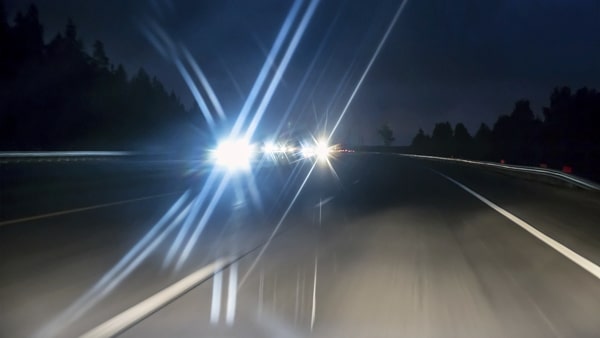
At night, if an oncoming vehicle fails to dim its high-beams, look:
  1. A. The center of the oncoming lane
  2. B. The edge line of your roadway
  3. C. The approaching vehicle’s headlights
  4. D. The unpaved shoulder

Correct answer: B. – The edge line of your roadway

Oncoming headlight glare can make the roadway more difficult to see. The driver guide recommends using the edge line as a guide during night driving. If no edge line is present, use the center line to help maintain the vehicle’s position within the proper lane.

Source: Missouri Driver Guide — Ch. 9, “Night Driving”

Question 2

If another road user fails to yield as required, what is your responsibility?

  1. A. Proceed because the law is on your side
  2. B. Sound the horn and maintain your course
  3. C. Take reasonable action to avoid a collision
  4. D. Yield only when carrying passengers

Correct answer: C. – Take reasonable action to avoid a collision

Right-of-way rules establish who must wait; they do not justify deliberately entering a collision. Drivers must operate carefully and prudently and exercise the highest degree of care. Slow, stop, or otherwise give way when necessary to avoid striking another vehicle, pedestrian, or cyclist, even if that road user was required to yield.

Source: RSMo § 304.012.1 – Motorists to exercise highest degree of care — violation, penalty, Missouri Driver Guide — Ch. 3, “Right-of-Way”, Missouri Driver Guide — Ch. 8, “Defensive Driving”

Question 3

Before changing lanes, which area requires a brief look over your shoulder?

  1. A. The roadway visible through the windshield
  2. B. The area shown in the inside mirror
  3. C. The area fully visible in the side mirror
  4. D. The blind spot not visible in your mirrors

Correct answer: D. – The blind spot not visible in your mirrors

Blind spots are spaces around your vehicle that cannot be seen in the rearview mirrors. A brief shoulder check helps you determine whether a vehicle is beside you before you change lanes. Continue using your mirrors and signal before making the lane change.

Source: Missouri Driver Guide — Ch. 6, “Passing on Highways”

Question 4

What color identifies a warning sign for road work ahead?

  1. A. Fluorescent orange
  2. B. White
  3. C. Blue
  4. D. Green

Correct answer: A. – Fluorescent orange

Missouri uses fluorescent orange signs to identify work being performed on or beside the roadway. White generally identifies regulatory information, blue marks motorist services, and green provides direction or distance. Drivers should obey work-zone signs and watch for flaggers and other temporary traffic-control devices.

Source: Missouri Driver Guide — Ch. 7, “Work Zone Signs”, Missouri Driver Guide — Ch. 7, “Sign Colors”

Question 5

How should you choose a safe driving speed?

  1. A. Always drive at the posted limit
  2. B. Adjust for weather, visibility, traffic, and roadway conditions
  3. C. Match the fastest vehicle nearby
  4. D. Base it on your driving experience alone

Correct answer: B. – Adjust for weather, visibility, traffic, and roadway conditions

A posted speed limit is the maximum for ideal conditions, not a guarantee that the speed is always safe. Missouri drivers must adjust for slippery pavement, limited sight distance, curves, pedestrians, and other hazards. When conditions make the posted limit unsafe, reduce speed and allow more room to stop.

Source: Missouri Driver Guide — Ch. 7, “Speed Limit”

Question 6

Which statement about testing alcohol concentration is correct?

  1. A. A chemical breath test can measure alcohol concentration
  2. B. Alcohol concentration can be determined only from blood
  3. C. Coffee quickly reduces a test result
  4. D. Physical fitness prevents a measurable alcohol concentration

Correct answer: A. – A chemical breath test can measure alcohol concentration

Missouri law authorizes chemical testing of breath, blood, saliva, or urine under specified circumstances. A properly performed breath analysis can determine alcohol concentration, and qualifying chemical results may be admitted as evidence. Coffee, exercise, or physical fitness does not change the legal function of the test.

Source: Mo. Rev. Stat. § 577.020.1, .3 – Chemical tests for alcohol content of blood — consent implied, when — administered, when, how — information available to person tested, contents — videotaping of chemical or field sobriety test admissible evidence, Mo. Rev. Stat. § 577.037.1, .3, .5 – Chemical tests, results admitted into evidence, when, effect of