Missouri Practice Permit Test 6

4.9 out of 5 (160 votes)
80% Passing score
20 Questions
4 Mistakes allowed
The Missouri DMV practice test is worth taking seriously, even if the material feels familiar at first glance. A lot of it is familiar, honestly — signs, signals, lane changes, traffic laws, the usual safe-driving language — but Missouri’s written exam still expects you to know the rules the way they appear in the Missouri Driver Guide, not the way you half-remember them from riding around with someone else. For a Class F instruction permit, the written knowledge test is one part of Missouri’s four-part driver examination. The Missouri State Highway Patrol administers the exam, while the Missouri Department of Revenue handles the actual permits and licenses. That split is easy to overlook, and most people do, because it sounds like paperwork trivia. Still, it matters when you are figuring out where the test comes from and what source to study. The official source is the Missouri Driver Guide. The real written test is multiple choice, not open book, and built around Missouri traffic laws, safe driving practices, roadway markings, traffic signs and signals, sharing the road, alcohol and drug rules, distracted driving, electronic communication device restrictions, and vehicle operation basics. It has 25 questions. You need 20 correct answers to pass, which means an 80% score. Miss 6 or more, and that attempt does not pass. Simple math, slightly less simple when the questions start mixing ordinary driving habits with exact legal wording. This Missouri permit practice test gives you a more focused way to work through that material, with special attention on the correct use of turn signals. That may sound almost too basic, but signaling is where a surprising amount of real driving judgment shows up: turning, merging, changing lanes, leaving a curb, entering traffic, dealing with intersections that are busy enough to make everyone impatient. In Kansas City traffic, on rural highways, or along curving Ozarks roads where visibility changes fast, the “basic” rules stop feeling quite so basic. Taking the Missouri DMV practice test more than once is not about memorizing a neat little answer key. It is about catching weak spots before the official exam catches them for you. DMV test cheat sheets can make the whole thing feel easier than it is, but they usually skip the part that matters: understanding why the rule works. This practice test keeps the emphasis where it belongs — on passing the Missouri permit test and becoming the kind of driver who actually knows what to do next.

FREE DMV Practice Test App
Study for your Missouri permit test or driver’s license with the NextDoorDriving app. 700+ DMV questions and answers, 100% free!
Download on the App Store

Sample Missouri Permit Test Questions

Question 1

What does a steady yellow arrow following a green arrow require you to do?

  1. A. Prepare to yield or stop for the next signal indication
  2. B. Begin the turn without checking traffic
  3. C. Treat the arrow as another protected green phase
  4. D. Accelerate before the arrow changes

Correct answer: A. – Prepare to yield or stop for the next signal indication

A steady yellow arrow warns that the green-arrow phase is ending. The next indication may require you to yield to oncoming traffic or stop. Do not speed up merely to enter the intersection before the signal changes.

Source: Mo. Rev. Stat. § 304.281.1(2)(a) – Rules for traffic where controlled by light signals — right turn on red light, when — violations, penalty, Missouri Driver Guide — Ch. 7, “Left Turn Signals”

Question 2

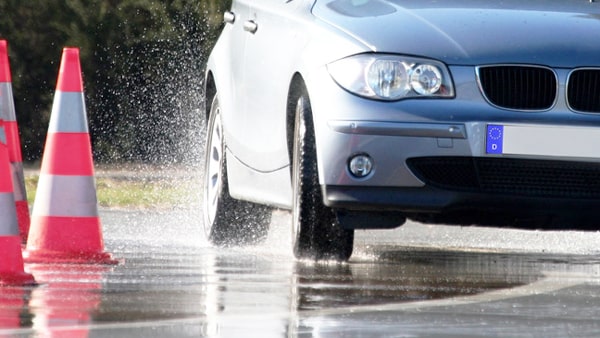
Why should you reduce speed when rain first begins?

The road surface is most slippery:
  1. A. Wind immediately increases tire pressure
  2. B. Road markings become legally optional
  3. C. Water mixes with roadway oil and dust, creating a slick film
  4. D. Vehicle brakes automatically become more sensitive

Correct answer: C. – Water mixes with roadway oil and dust, creating a slick film

At the beginning of rainfall, water combines with oil and dust on the roadway and forms a slick film. Wet pavement reduces traction and increases the distance needed to stop. Slow down, increase the space ahead, and avoid using cruise control on wet pavement.

Source: Missouri Driver Guide — Ch. 9, “Wet Pavement”

Question 3

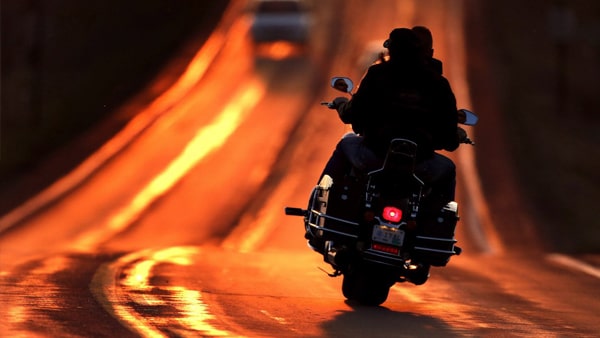
Under normal conditions, what time gap should you use when following a motorcycle?

When traveling behind a motorcycle:
  1. A. One second
  2. B. At least three seconds
  3. C. Two motorcycle lengths
  4. D. One car length

Correct answer: B. – At least three seconds

The Missouri guide recommends the three-second rule as a way to measure a safe following distance. Apply that measured gap when following a motorcycle just as you would with another vehicle. Motorcycles can change speed or lane position for roadway hazards, and additional space may be necessary when conditions are poor.

Source: Missouri Driver Guide — Ch. 8, “Following Other Vehicles”, Missouri Driver Guide — Ch. 4, “Sharing the Road with Motorcycles”

Question 4

Why is driving at night more difficult than driving in daylight?

  1. A. Traffic signals operate differently
  2. B. Posted speed limits automatically increase
  3. C. Headlights limit how far ahead and to the sides you can see
  4. D. Roadway curves become sharper

Correct answer: C. – Headlights limit how far ahead and to the sides you can see

Headlights do not provide the same forward and side visibility available in daylight, and glare from oncoming headlights can make seeing more difficult. Drive slowly enough to stop or turn within the distance illuminated ahead. Remain alert for signs, pedestrians, and vehicles along the roadside.

Source: Missouri Driver Guide — Ch. 9, “Night Driving”

Question 5

What is the purpose of a posted minimum speed?

  1. A. To prevent unnecessarily slow vehicles from blocking normal traffic flow
  2. B. To show the recommended speed for curves
  3. C. To establish a speed for pedestrians
  4. D. To identify the maximum speed during bad weather

Correct answer: A. – To prevent unnecessarily slow vehicles from blocking normal traffic flow

Minimum speeds help keep traffic moving without being unnecessarily obstructed by very slow vehicles. Under normal conditions, Missouri drivers may not travel below a posted minimum. A lower speed may still be appropriate when bad weather, heavy traffic, or poor roadway conditions require it.

Source: Missouri Driver Guide — Ch. 8, “Slow Poke Driving”

Question 6

A vehicle ahead has stopped to let a pedestrian cross. What should you do?

  1. A. Stop behind it and do not pass
  2. B. Pass on the left after sounding your horn
  3. C. Pass slowly on the right shoulder
  4. D. Change lanes and continue at the same speed

Correct answer: A. – Stop behind it and do not pass

Do not pass a vehicle that has stopped or slowed for a pedestrian. The vehicle may conceal someone who is still crossing, placing that person directly in your path if you pass. Missouri guidance requires drivers to yield to pedestrians in marked or unmarked crosswalks on or approaching their side of the road.

Source: Mo. Rev. Stat. § 300.375.4 – Pedestrians' right-of-way in crosswalks, Missouri Driver Guide — Ch. 4, “Sharing the Road with Pedestrians”