Missouri Practice Permit Test 5

4.8 out of 5 (207 votes)
80% Passing score
20 Questions
4 Mistakes allowed
This Missouri permit practice test is aimed at adult drivers working toward a Class F license, which is the regular noncommercial license used for most everyday passenger vehicles in Missouri. For first-time adult applicants, the process is fairly direct, though not exactly one-step simple. You will need the right identity, lawful-status, Social Security, and Missouri residency documents, and you will also need to complete the Missouri State Highway Patrol driver examination before taking your Driver Examination Record to a license office and paying the required fee. This fifth Missouri practice test for permit focuses on DUI regulations, impaired-driving consequences, and the way alcohol affects judgment, reaction time, and control behind the wheel. That is a serious chunk of the written test material, and honestly, it is one of those areas where half-understanding the rule can be almost as bad as not knowing it at all. The legal limits matter. The penalties matter. The practical “what happens to your driving after drinking” material matters too, even if it feels a little obvious until the test starts asking about it in a more formal, Missouri-specific way. The DMV practice test includes 20 questions and is not timed, which gives you room to read carefully instead of clicking through in a hurry. After you answer, you get immediate feedback with explanations, so the test does more than mark something wrong and leave you irritated about it. It shows why an answer is correct, where the trap was, and what you should remember before you sit for the real Missouri permit test. Adult licensing rules are worth keeping in mind as well. A Class F full driver license is available starting at age 18. Drivers ages 18 to 20 receive a 3-year license, drivers ages 21 to 69 receive a 6-year license, and drivers 70 or older receive a 3-year license. So yes, there is the written test, the vision test, the road sign test, and the driving skills test—but this Missouri permit practice test helps tighten up one of the most important parts of the knowledge exam before you get that far.
FREE DMV Practice Test App
Study for your Missouri permit test or driver’s license with the NextDoorDriving app. 700+ DMV questions and answers, 100% free!
Download on the App Store

Sample Missouri Permit Test Questions

Question 1

When parking downhill where there is no curb, point the front wheels:
When parking downhill and the curb is absent, your front wheels must be turned:
  1. A. Toward the center of the roadway
  2. B. Straight ahead
  3. C. Toward the side of the road
  4. D. In the direction of travel

Correct answer: C. – Toward the side of the road

Turn the wheels sharply toward the side of the road when parking on a hill without a curb. If the vehicle begins rolling downhill, this position directs it away from traffic. Also place an automatic transmission in Park, or a manual transmission in the proper gear, and set the parking brake.

Source: Missouri Driver Guide — Ch. 5, “Parking on Hills”
Question 2

In Missouri, orange signs and traffic cones indicate that you should:

  1. A. Change lanes while maintaining your speed
  2. B. Watch for workers, work vehicles, and changed road conditions
  3. C. Assume your lane ends immediately
  4. D. Accelerate through the area

Correct answer: B. – Watch for workers, work vehicles, and changed road conditions

Orange is the designated color for construction warnings. Work zones may contain reduced speed limits, narrow lanes, workers, flaggers, and slow-moving or stopped work vehicles. Stay alert, obey all signs and flaggers, and watch for vehicles entering or leaving the work area.

Source: Missouri Driver Guide — Ch. 7, “Sign Colors” and “Types of Work Zones”

Question 3

Before turning across the path of an approaching streetcar, what must you verify?

  1. A. The streetcar operator has sounded a warning
  2. B. The streetcar will slow for your vehicle
  3. C. The turn can be completed with reasonable safety
  4. D. Your vehicle can accelerate faster than the streetcar

Correct answer: C. – The turn can be completed with reasonable safety

Missouri law prohibits turning or moving from a direct course until the movement can be made with reasonable safety. This requirement applies when a streetcar or any other traffic is approaching your path. Give the appropriate signal and wait if the turn would interfere with the approaching streetcar.

Source: RSMo § 304.019.1 – Hand and mechanical signals, violations, penalty

Question 4

Under Missouri law, a non-exempt adult driving a passenger car manufactured after January 1, 1968, must:

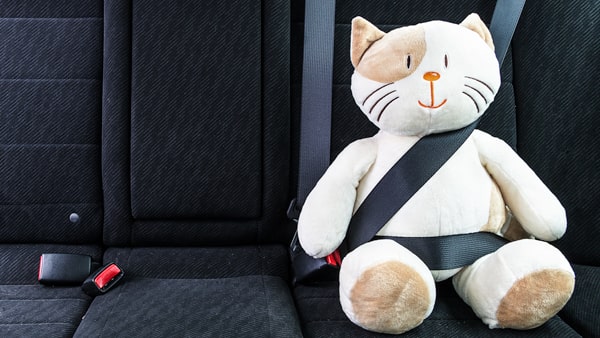
You must use your seat belt:
  1. A. Wear a seat belt only on interstate highways
  2. B. Wear a seat belt only if the vehicle lacks airbags
  3. C. Wear a properly fastened seat belt; a violation may bring a fine up to $10
  4. D. Wear a seat belt only when carrying passengers

Correct answer: C. – Wear a properly fastened seat belt; a violation may bring a fine up to $10

The driver and front-seat passengers of a covered passenger car must wear properly adjusted and fastened safety belts, subject to statutory exceptions. A violation is an infraction punishable by a fine of up to $10. Court costs and driver-record points are not imposed for this seat-belt violation, and a vehicle may not be stopped solely to check adult compliance.

Source: RSMo § 307.178.2, .6 – Seat belts required for passenger cars — exceptions — penalty

Question 5

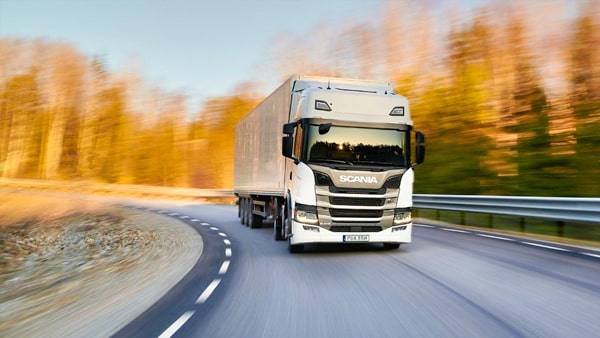
Compared with passenger cars traveling at the same speed, tractor-trailers generally:

When sharing the road with a truck, it is important to remember that, in general, trucks:
  1. A. Need a longer distance to stop
  2. B. Need less time to pass on a downgrade
  3. C. Use a smaller turning radius
  4. D. Accelerate more quickly on an incline

Correct answer: A. – Need a longer distance to stop

Tractor-trailers generally require more stopping distance than passenger cars traveling at the same speed. Do not merge closely in front of a truck and then slow down. After passing, wait until you can see the truck’s cab in your rearview mirror before returning to its lane, while maintaining your speed and signaling.

Source: Missouri Driver Guide — Ch. 4, “Sharing the Road With Large Trucks”

Question 6

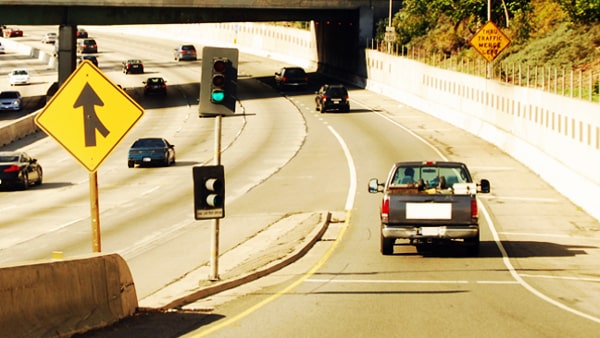
When entering a controlled-access highway through an acceleration lane, you should try to:

When entering a freeway entrance that allows you to accelerate to merge, you should drive at:
  1. A. Remain about 10 mph below highway traffic
  2. B. Match the speed of vehicles on the highway
  3. C. Stop before reaching the end of the ramp
  4. D. Travel faster than every vehicle on the highway

Correct answer: B. – Match the speed of vehicles on the highway

Use the entrance ramp and acceleration lane to increase your speed until it matches highway traffic. Signal, locate an adequate opening, and merge smoothly. Traffic already on the highway has the right-of-way, so do not force your way into a lane if an opening is unavailable.

Source: Missouri Driver Guide — Ch. 6, “Entering the Highway”