


Montana Drivers Ed Practice Test 8

5 out of 5 (35 votes)
80% Passing score
20 Questions
4 Mistakes allowed
Montana intersection questions are where a lot of permit-test prep gets a little too casual. Four-way stops, uncontrolled intersections, turns across traffic, merging into a lane that is already moving — none of this is obscure material, but it does require you to slow down and actually read the situation. This Montana DMV practice test keeps its focus there, with 20 multiple-choice questions built around the kinds of intersection decisions drivers make every day, not just the tidy examples that look obvious after someone has already explained them. A useful thing here, and it is worth saying plainly, is the visual setup. Many questions include images, so the practice feels closer to a real driving decision than a paragraph floating on a page. You can see which vehicle is where, who arrived first, what traffic is doing, and what the right-of-way rule means when it is no longer just a line in the Montana Driver Manual. That matters for the Montana permit practice test, but it also matters later, when the road is not giving you extra time to remember the exact wording from drivers ed. For teen applicants, this practice fits neatly into Montana’s Graduated Driver Licensing process. Montana has a Driver Ed Learning Permit for students who are at least 14½ and enrolled in a state-approved traffic education program, along with a Learner Permit path through a driver exam station for qualifying teens 15 and older. The manual also makes one detail fairly clear, in its official sort of way: a teen may get a non-commercial learner permit at 16, or at 15 after completing state-approved traffic education. Online courses do not satisfy that particular traffic education requirement, which is the kind of small licensing detail people tend to notice only after they needed it. Adults are not skipping the knowledge test either. Applicants 18 and older must pass the written test, vision test, and road test, and the written test comes before the driving test. New Montana residents have their own timing issue: with a valid out-of-state non-commercial license, the Montana licensing process generally needs to start within 60 days of moving, and a hard copy of that license can help avoid testing. So this free Montana drivers ed practice test is doing two jobs at once. It prepares you for the written test, yes, but it also sharpens the intersection judgment Montana expects before it hands over a license.
FREE DMV Practice Test App
Study for your Montana permit test or driver’s license with the NextDoorDriving app. 700+ DMV questions and answers, 100% free!
Download on the App Store

Sample Montana Permit Test Questions

Question 1

What does a broken yellow centerline generally allow?
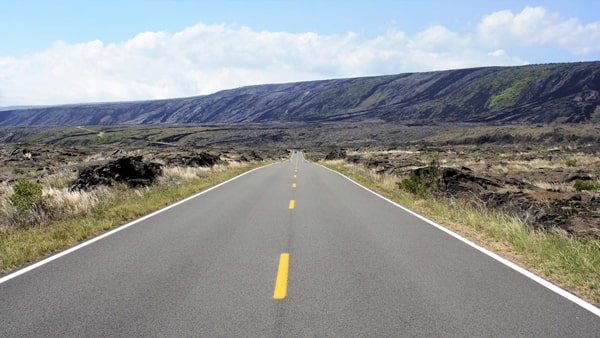
A broken yellow center line on the roadway means:
  1. A No passing in either direction
  2. B Crossing the centerline to pass when legal and safe
  3. C Parking along the left side of the road
  4. D Travel in either direction within the same lane

Correct answer: B – Crossing the centerline to pass when legal and safe

A broken yellow centerline separates traffic moving in opposite directions and may be crossed to overtake or pass. The Montana manual emphasizes that the driver must still judge whether enough clear space is available. A broken line permits consideration of a pass; it does not guarantee that passing conditions are safe.

Source: Montana Driver Manual — Ch. 3, “Road Markings”; Ch. 5, “Space for Passing”
Question 2

Which statement about properly worn safety belts is correct?

  1. A They are needed only during high-speed travel
  2. B They reduce survival by preventing occupants from being thrown clear
  3. C They make escape from every water-related crash impossible
  4. D They reduce the likelihood of being injured or killed in a crash

Correct answer: D – They reduce the likelihood of being injured or killed in a crash

The driver manual states that properly used safety belts greatly reduce the chances of being hurt or killed in a crash. Belts help keep occupants from striking the vehicle interior or other occupants. Both the lap and shoulder portions should be worn when the vehicle has a two-part belt system.

Source: Montana Driver Manual — Ch. 2, “Safety Belts Required”

Question 3

Which check should you complete immediately before moving into another lane?

  1. A Confirm only that your current lane is clear behind you
  2. B Check your mirrors and briefly look over your shoulder
  3. C Avoid looking toward the side you plan to enter
  4. D Rely only on the nearest side mirror

Correct answer: B – Check your mirrors and briefly look over your shoulder

Montana law requires a driver to determine that a lane movement can be made safely. The driver manual advises using the mirrors while preparing to change lanes and checking over the appropriate shoulder immediately before moving. The shoulder check covers the blind spot while the mirrors help monitor surrounding traffic.

Source: MCA § 61-8-328(1) – Driving on roadways laned for traffic, Montana Driver Manual — Ch. 5, “Scanning”

Question 4

How should you check an area beside your vehicle that is hidden from the mirrors?

  1. A Look only in the inside rearview mirror
  2. B Look repeatedly in the side mirror
  3. C Briefly look over the appropriate shoulder
  4. D Keep looking straight ahead

Correct answer: C – Briefly look over the appropriate shoulder

A blind spot is an area beside and slightly behind the vehicle that may not appear in the mirrors. Check it with a quick look over the appropriate shoulder immediately before changing lanes. Keep the glance brief because you must also continue monitoring traffic ahead and in the lane you intend to enter.

Source: Montana Driver Manual — Ch. 5, “Scanning”

Question 5

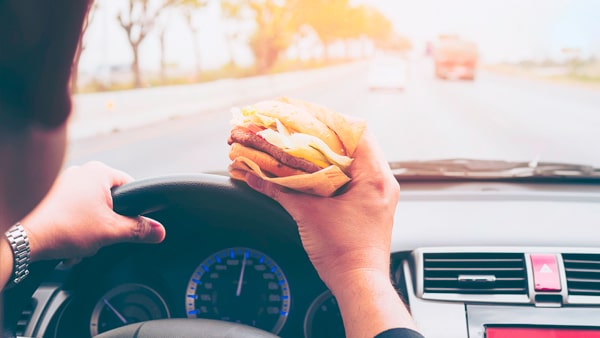
How can eating or drinking while driving affect safety?

Drivers who eat and drink while driving:
  1. A It eliminates ordinary driving errors
  2. B It automatically causes the vehicle to travel too slowly
  3. C It improves concentration by preventing hunger
  4. D It increases crash risk by distracting the driver

Correct answer: D – It increases crash risk by distracting the driver

Eating and drinking are identified as driving distractions. They may take a driver's eyes off the road, hands off the wheel, or mind away from the driving task. The driver manual warns that distractions increase the risk of a crash and endanger drivers, passengers, and bystanders.

Source: Montana Driver Manual — Ch. 5, “Don’t Be a Distracted Driver”

Question 6

In Montana, which lane should you enter when turning left from a two-way street onto a one-way street?

  1. A The far-right lane
  2. B Whichever lane has the fewest vehicles
  3. C The left-hand lane lawfully available
  4. D A position centered between the lanes

Correct answer: C – The left-hand lane lawfully available

For a left turn where traffic on the entering roadway is restricted to one direction, the turn must end as nearly as practicable in the left-hand lawful lane. This avoids changing across additional lanes while turning. A traffic-control device may require a different course, in which case the posted direction controls.

Source: MCA § 61-8-333(1)(c), (3) – Required position and method of turning at intersections