New Mexico Drivers Ed Practice Test 8

4.9 out of 5 (45 votes)
80% Passing score
20 Questions
4 Mistakes allowed
This New Mexico drivers ed practice test stays focused on intersections, which is where a lot of permit-test knowledge either holds up or starts to wobble. Four-way stops, left turns, yielding, right-of-way decisions, vehicles arriving at nearly the same time — all of it sounds straightforward when you read the rule once. Then the question adds one more car, one more sign, or one slightly inconvenient detail, and suddenly you need to know the rule instead of sort of remembering it. This eighth DMV practice test gives you 20 multiple-choice questions built around those intersection situations. It is designed to feel close to the real New Mexico driving test, not in a dramatic way, but in the practical way that matters: familiar wording, familiar traffic-law logic, and scenarios that make you slow down enough to choose the safest legal move. Use it as a New Mexico learners permit practice test, use it again after you miss a few, and do not treat a wrong answer like a disaster. Treat it like the test showing you the exact rule that needs another look. For teen drivers, this practice test also sits inside a larger licensing process. New Mexico’s graduated driver licensing program moves through three stages: instructional permit, provisional license, and full unrestricted driver license. A teen can apply for an instructional permit at 15, but that means being enrolled in or having completed a state-approved driver education program, passing the vision screening, and passing the written knowledge test unless an approved driver education school certificate covers that requirement. Driver education for applicants under 18 includes DWI prevention and education, too, because New Mexico builds that into the training instead of leaving it as some separate afterthought. The next step is not instant freedom, which, yes, is probably not the answer anyone wants. Before moving to a provisional license, a teen must be at least 15½, hold the instructional permit for at least 6 months, complete driver education, and log 50 supervised driving hours, including 10 at night. The provisional license still has passenger and nighttime restrictions. A full unrestricted license through the GDL path can come at 16½, after the required provisional period and clean-record conditions are met. Adult first-time applicants follow a more direct route, but they still need documents, vision screening, the written knowledge test, the road test unless exempt, and fees. Applicants ages 18 to 24 also need New Mexico’s None for the Road program before a first license. So keep the handbook nearby, review signs, and use this New Mexico free drivers ed practice test for what it does best: making intersection rules feel less slippery before the real exam.
FREE DMV Practice Test App
Study for your New Mexico permit test or driver’s license with the NextDoorDriving app. 700+ DMV questions and answers, 100% free!
Download on the App Store

Sample New Mexico Permit Test Questions

Question 1

In New Mexico, you approach a stationary vehicle displaying flashing hazard lights. What should you do?

  1. A Move left immediately and accelerate
  2. B Move over if reasonably safe; otherwise slow down and be prepared to stop
  3. C Stop in your lane until the vehicle leaves
  4. D Maintain your speed because the vehicle is off the roadway

Correct answer: B – Move over if reasonably safe; otherwise slow down and be prepared to stop

When reasonably safe, move into a lane that is not adjacent to the stationary vehicle, reduce speed, and proceed cautiously. If moving over is not reasonably safe, reduce to a reasonable and prudent speed, proceed with caution, and be prepared to stop. These duties apply to stationary vehicles displaying flashing emergency or hazard lights.

Source: NMSA 1978 § 66-7-332(B) – Operation of Vehicles on Approach of Moving Authorized Emergency Vehicles—Operation of Vehicles Approaching Stationary Vehicles

Question 2

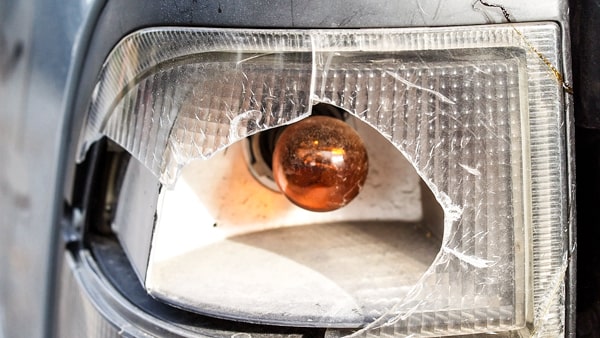
If a passenger car’s electric turn signals stop working, what may the driver use to signal a turn?

If your turn signals fail, you should use _____ to indicate you are turning.
  1. A The horn
  2. B The headlights
  3. C Hand-and-arm signals
  4. D The hazard-warning lights

Correct answer: C – Hand-and-arm signals

A required turn signal may generally be given with the hand and arm or with the vehicle’s signal device. Hand signals are made from the left side: horizontally for a left turn and upward for a right turn. Certain unusually large vehicles must use a signal lamp or mechanical device instead.

Source: NMSA 1978 § 66-7-326 – Signals by Hand and Arm or Signal Device, NMSA 1978 § 66-7-327 – Method of Giving Hand and Arm Signals

Question 3

On an undivided roadway, how far from a stopped school bus with its special signals operating must you stop?

When a school bus has its lights flashing and its Stop arm extended, you must:
  1. A At least 10 feet before reaching the bus
  2. B Only until the children leave the roadway
  3. C Directly beside the rear bumper
  4. D No stop is required if you approach from the front

Correct answer: A – At least 10 feet before reaching the bus

In New Mexico, traffic approaching or overtaking the bus from either direction must stop at least 10 feet away. Drivers must remain stopped until the signals turn off, the bus moves, or the bus driver signals them to proceed. Traffic on a physically separate roadway generally does not have to stop for a bus on the other roadway.

Source: NMSA 1978 § 66-7-347(A), (C) – Overtaking and Passing School Bus

Question 4

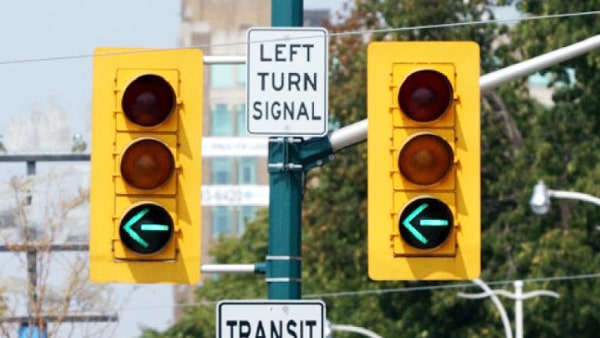
What does a green left-turn arrow authorize you to do?

On the intersection, if you see a green arrow pointing to the left, you can:
  1. A Travel in any direction
  2. B Turn left in the arrow’s direction after yielding to anyone still in the intersection
  3. C Turn left or continue straight from any lane
  4. D Wait for a separate circular green signal

Correct answer: B – Turn left in the arrow’s direction after yielding to anyone still in the intersection

A green arrow permits movement in the direction shown and normally provides a protected turn. Before moving, the driver must still avoid conflicts with any vehicle, bicyclist, or pedestrian remaining in the intersection. The arrow does not authorize travel in another direction.

Source: New Mexico Driver Manual — “Traffic Signals”

Question 5

Which statement about a posted New Mexico highway construction or maintenance zone is correct?

  1. A Obey temporary controls; speeding assessments double when workers are present
  2. B Reduce speed only when a worker is visible in your lane
  3. C Temporary traffic-control devices are optional
  4. D Normal speeding assessments always apply

Correct answer: A – Obey temporary controls; speeding assessments double when workers are present

Drivers must obey official traffic-control devices, including temporary signs and signals used in work zones. The penalty assessment for speeding in a posted construction or maintenance zone is doubled when workers are present. Drivers must also select a speed that is reasonable for the actual roadway and traffic conditions.

Source: NMSA 1978 § 66-7-104 – Obedience to and Required Traffic-Control Devices, NMSA 1978 § 66-8-116 – Penalty Assessment Misdemeanors—Definition—Schedule of Assessments

Question 6

Under normal driving conditions, what following interval should you maintain at minimum?

  1. A Twenty feet
  2. B One car length for every 10 mph
  3. C Three seconds
  4. D Five seconds

Correct answer: C – Three seconds

Use a sign, pole, or other fixed point to measure your following interval. After the vehicle ahead passes it, count three seconds; if you reach the point sooner, increase your distance. A longer interval is appropriate on slippery roads, behind motorcycles or emergency vehicles, and when carrying a heavy load or towing.

Source: New Mexico Driver Manual — “Sharing Space—Space Ahead”