Rhode Island DMV Permit Test Practice 3

4.8 out of 5 (58 votes)
80% Passing score
20 Questions
4 Mistakes allowed
If you are getting ready for the Rhode Island DMV written test, this RI DMV practice test gives you a useful way to review before you make the trip to Cranston. It includes 20 questions on road signs, traffic laws, road safety, distracted-driving rules, and the kinds of judgment calls Rhode Island drivers need to make in regular traffic. You need 16 correct answers to pass this practice round, but there is no time limit, and you can retake it as often as you need. That part matters, because repetition is usually where the awkward little details start to stick. The real Rhode Island computerized knowledge exam is given by reservation at the DMV headquarters in Cranston. The standard computerized exam is available in English, Spanish, and Portuguese, while other foreign-language exams may be offered as printed tests if requested in advance. And, not to overstate the paperwork angle, but this is where people can get tripped up before they even reach the testing screen. Applicants using a printed foreign-language exam need to make the correct reservation, request the exam ahead of time, bring the appointment sheet, permit application, and required documents, and arrive early enough for the DMV to handle the setup. Once the exam begins, only the applicant is allowed in the room. There is also a vision screening built into the permit and licensing process. Rhode Island usually gives the vision test at the time of the computerized knowledge exam. If an Eye Exam Card is used, it may record visual acuity, visual fields, color vision, diplopia, and whether corrective lenses are required. Glasses or contacts can be used when needed, though a corrective-lens restriction may be added if that is how you meet the standard. Before test day, the document checklist deserves a real look, not a quick glance while standing by the door. Rhode Island applicants generally need the completed LI-1 License/ID/Permit Application, proof of identity, a Social Security number or ineligibility letter, two proofs of Rhode Island residency, name-change documents if applicable, and the correct fee. Applicants under 18 also need the original driver education certificate for the required 33-hour course, along with parent or guardian involvement through presence or signature. This free Rhode Island DMV permit practice test will help you handle the knowledge side with more confidence. The rest of the process — reservation, documents, vision screening, and fees — still needs your attention, but studying the rules first gives you a much cleaner start.
FREE DMV Practice Test App
Study for your Rhode Island permit test or driver’s license with the NextDoorDriving app. 700+ DMV questions and answers, 100% free!
Download on the App Store

Sample Rhode Island Permit Test Questions

Question 1

At a Rhode Island intersection without operating signals, a pedestrian is crossing within a crosswalk on the driver’s half of the road. Who must yield?
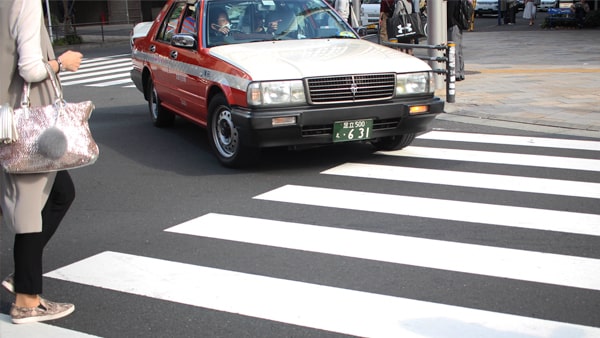
Who must yield when a driver is turning and a pedestrian is crossing without a traffic light?
  1. A Whichever road user entered last
  2. B The driver
  3. C The slower road user
  4. D The pedestrian in every case

Correct answer: B – The driver

When traffic signals are absent or not operating, the driver must yield to a pedestrian crossing within a crosswalk on the driver’s half of the roadway. The duty also applies when the pedestrian is approaching so closely from the opposite half as to be in danger. A pedestrian may not suddenly enter the path of a vehicle that is too close for the driver to yield.

Source: R.I. Gen. Laws § 31-18-3(a) – Right-of-way in crosswalk
Question 2

How far ahead should you normally search for developing hazards while driving?

  1. A Four to six seconds
  2. B Six to eight seconds
  3. C Twelve to fifteen seconds
  4. D Twenty to thirty seconds

Correct answer: C – Twelve to fifteen seconds

The manual’s orderly visual-search pattern directs drivers to evaluate the area they will reach in approximately 12 to 15 seconds. Drivers should also check the nearer four-to-six-second range, mirrors, speedometer, and gauges. Searching well ahead helps identify changes at intersections, driveways, parked vehicles, and other potential conflict points before they require a last-second response.

Source: Rhode Island Driver’s Manual — Ch. VII, “Systems for Safe, Courteous, and Defensive Driving”

Question 3

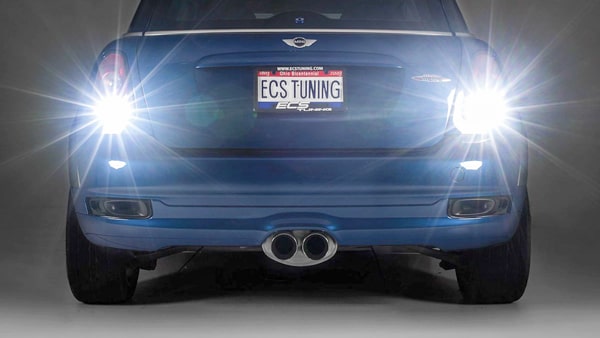
What is the recommended viewing position while backing a vehicle?

When backing up your car, you should:
  1. A Watch only the inside rearview mirror
  2. B Turn partially and look over your right shoulder while backing slowly
  3. C Look only over your left shoulder
  4. D Face forward and rely on a backup camera

Correct answer: B – Turn partially and look over your right shoulder while backing slowly

While backing, partially turn your body and look over your right shoulder while maintaining control of the vehicle. When backing straight, periodically check all mirrors for vehicles, pedestrians, or obstacles entering the path. Mirrors and camera systems can assist, but the recommended procedure requires direct observation rather than relying exclusively on those devices.

Source: Rhode Island Driver’s Manual — Ch. III, “Proper Backing Procedures”

Question 4

Which visual habit gives you the best overall picture of the road ahead?

  1. A Look beyond the vehicle directly ahead
  2. B Stare at the rear of the vehicle ahead
  3. C Focus continuously on the right lane line
  4. D Focus continuously on the left lane line

Correct answer: A – Look beyond the vehicle directly ahead

Drivers should look beyond the vehicle immediately ahead and search the larger area into which they are traveling. The manual recommends looking well ahead while also moving your eyes among the roadway, roadside areas, and mirrors. Fixating on one vehicle or one lane boundary can prevent you from noticing developing traffic conflicts and changing road conditions.

Source: Rhode Island Driver’s Manual — Ch. VII, “Systems for Safe, Courteous, and Defensive Driving”

Question 5

When entering a freeway from an acceleration lane, your speed should generally be:

  1. A Much slower than freeway traffic
  2. B The maximum posted speed regardless of conditions
  3. C Slow enough to stop at the end of the ramp
  4. D Close to the speed of traffic in the lane you will enter

Correct answer: D – Close to the speed of traffic in the lane you will enter

The Rhode Island manual states that an acceleration lane allows entering motorists to accelerate to the speed of freeway traffic. Before moving into the travel lane, signal, check the mirrors, look over your shoulder, and verify that the intended lane is clear. These steps help you enter the traffic flow without an abrupt speed difference.

Source: Rhode Island Driver’s Manual — Ch. III.L, “Freeway/Highway Driving Limited Access Highway”, Rhode Island Driver’s Manual — Ch. III.H, “Starting from the Curb or Making a Safe Lane Change”

Question 6

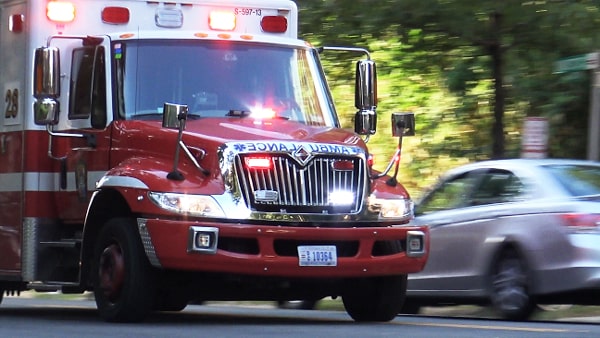
An emergency vehicle approaches from behind with flashing emergency lights and an audible siren. If you are clear of an intersection, what must you do?

When you hear the siren or see the flashing red light of a closely approaching emergency vehicle, and you are not in the intersection, you should:
  1. A Continue slowly in the right lane
  2. B Accelerate until you find a wider shoulder
  3. C Pull as close as possible to the right edge and stop
  4. D Stop immediately in your current lane

Correct answer: C – Pull as close as possible to the right edge and stop

Rhode Island law requires other drivers to yield, move parallel and as close as possible to the right-hand edge or curb, and stop clear of an intersection. Remain stopped until the emergency vehicle passes unless a police officer directs otherwise. The emergency-vehicle driver still has a duty to operate with due regard for everyone’s safety.

Source: R.I. Gen. Laws § 31-17-6(a), (b) — Yielding to emergency vehicle