Florida DMV Permit Test Simulator

4.7 out of 5 (5259 votes)
80% Passing score
50 Questions
10 Mistakes allowed
The Florida permit test looks simple on paper: 50 multiple-choice questions, 40 correct answers to pass, and a handbook full of rules you are supposed to somehow remember once the screen is staring back at you. That is where people get a little too comfortable. Ten missed questions sounds like a cushion, but it disappears fast when the exam starts asking about right-of-way, lane markings, school zones, traffic signals, and those road signs everyone swears they know until they have to pick the exact answer. This Florida permit practice test follows the same basic shape as the real Class E Knowledge Exam, with 50 questions and an 80% passing score. It covers Florida traffic laws, safe driving practices, road signs, and traffic controls, which is the official mix pulled from the Florida Driver License Handbook. The questions rotate each time, so you are not just memorizing a tidy little answer pattern and calling it studying. Cute, but no. The real Florida DMV learners permit test expects you to understand the rules well enough to use them, including when the wording gets dry, fussy, and weirdly specific. For teen drivers, the permit process has a few extra pieces attached. You need to be at least 15, complete the required driver education course, pass the vision and hearing checks, pass the Class E Knowledge Exam, and bring the right identity, Social Security, and Florida address documents. Adults take a different route. First-time drivers 18 or older may not need to get a learner’s license before applying for a Class E driver license, but they still have to know the same rules and usually complete the 4-hour TLSAE course first. Different doorway, same room full of questions. The simulator gives you some breathing room while you study. If a question gets tricky, there are hints. If you miss one, you get an explanation instead of just a judgmental wrong-answer moment. Some questions include images too, which helps for visual learners.   Use this Florida FLHSMV practice test when you have a spare stretch of time and a little patience. It is online 24/7, it follows the real permit test format, and it helps you get comfortable with the rules before Florida traffic starts offering its own, much louder version of the lesson.
FREE DMV Practice Test App
Study for your Florida permit test or driver’s license with the NextDoorDriving app. 700+ DMV questions and answers, 100% free!
Download on the App Store

Sample Florida Permit Test Questions

Question 1

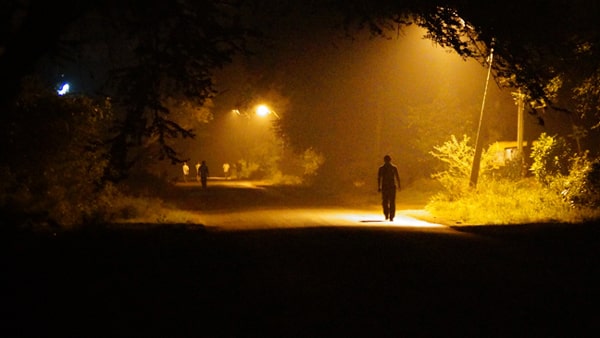
If bright oncoming headlights cause glare at night, where should you direct your vision?

  1. A Directly at the other vehicle’s headlights
  2. B Toward the lane lines used to guide your vehicle
  3. C Into the opposing traffic lane
  4. D At the center of the windshield without checking lane position

Correct answer: B – Toward the lane lines used to guide your vehicle

Glare from an approaching vehicle can temporarily reduce your ability to see. Do not look directly into the oncoming headlights; use the lane lines as visual guides and briefly check the other vehicle’s position. Continue maintaining control of your lane rather than responding with your own high beams.

Source: The Official Florida Driver License Handbook — Ch. 8, “Night Driving”
Question 2

If an approaching train is close enough or moving fast enough to be an immediate hazard, you must:

  1. A Slow down and cross cautiously
  2. B Stop 15 to 50 feet from the nearest rail and wait until the tracks are clear
  3. C Cross if the warning signals are not operating
  4. D Use another crossing without first stopping

Correct answer: B – Stop 15 to 50 feet from the nearest rail and wait until the tracks are clear

Florida law requires a stop between 15 and 50 feet from the nearest rail when a train’s speed or nearness creates an immediate hazard. Do not proceed until the tracks are clear and crossing can be completed safely. A first violation carries a $500 fine or 25 hours of community service and six points; a later violation carries a $1,000 fine and six additional points.

Source: Fla. Stat. § 316.1575(1)(c)–(d), (3)(b) – Obedience to traffic control devices at railroad-highway grade crossings

Question 3

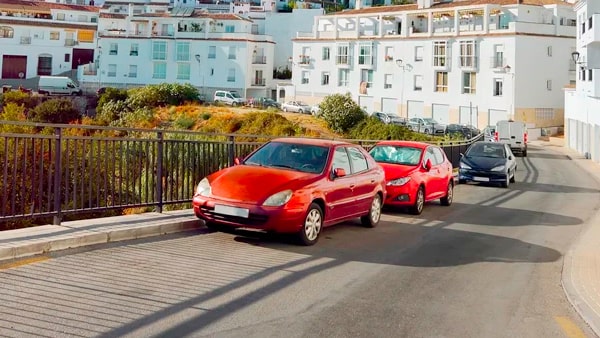
When parking uphill next to a curb, your front wheels should be turned:

When parking your vehicle facing uphill with a curb, you should point your front wheels:
  1. A Toward the curb
  2. B Away from the curb
  3. C In either direction
  4. D Straight ahead

Correct answer: B – Away from the curb

When facing uphill with a curb, turn the front wheels away from the curb. If the vehicle rolls backward, the front tire should contact the curb instead of allowing the vehicle to enter traffic. Set the parking brake and place an automatic transmission in Park or a manual transmission in First gear.

Source: The Official Florida Driver License Handbook — Ch. 7, “Parking on Hills”

Question 4

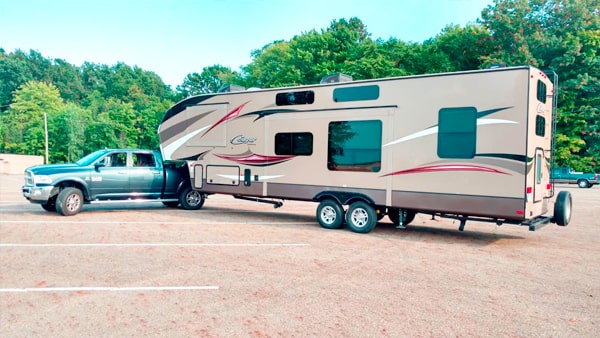
Under Florida’s weight-based rule, automatic breakaway brakes are required when a trailer’s gross weight exceeds:

Brakes that automatically stop a trailer if it breaks away from the towing vehicle are required on all trailers equal to or exceeding a weight of:
  1. A 2,000 pounds
  2. B 3,000 pounds
  3. C 5,000 pounds
  4. D 10,000 pounds

Correct answer: B – 3,000 pounds

A trailer or semitrailer with a gross weight exceeding 3,000 pounds must have brakes that apply automatically and promptly if it separates from the towing vehicle. Those brakes must act on all wheels and remain applied for at least 15 minutes. Trailers equipped with air- or vacuum-actuated brakes are also covered by the breakaway requirement regardless of this weight threshold.

Source: Fla. Stat. § 316.261(4) – Brake equipment required

Question 5

On a poorly lighted road at night, you should choose a speed that allows you to:

When driving in traffic at night on a dimly lit street, you should:
  1. A Stop within the distance you can see ahead
  2. B Use high beams while following other vehicles
  3. C Keep the instrument panel at maximum brightness
  4. D Drive continuously with hazard lights operating

Correct answer: A – Stop within the distance you can see ahead

At night, reduced visibility gives you less time and distance to identify hazards. Avoid overdriving your headlights by traveling slowly enough to stop within the roadway you can see ahead. High beams should not be used when they would create glare for nearby drivers.

Source: The Official Florida Driver License Handbook — Ch. 8, “Night Driving”
Question 6

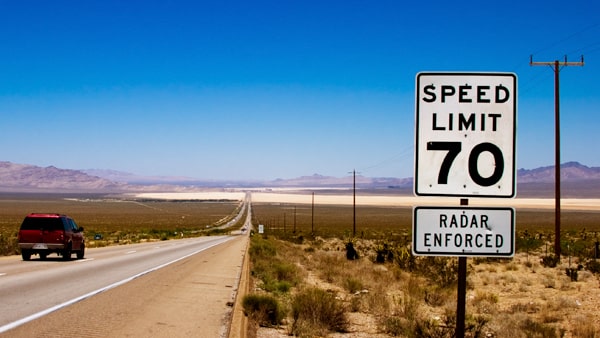
A posted speed limit indicates:

The posted speed limits show:
  1. A The minimum speed required on the roadway
  2. B The exact speed every vehicle must maintain
  3. C The fastest lawful speed under favorable conditions
  4. D A safe speed under every traffic and weather condition

Correct answer: C – The fastest lawful speed under favorable conditions

The Florida handbook describes a speed limit as the fastest speed permitted under favorable conditions. Drivers are responsible for adjusting their speed for traffic, weather, visibility, and roadway conditions. A speed below the posted limit may be necessary to maintain control and avoid a collision.

Source: The Official Florida Driver License Handbook — Ch. 7, “Speed Limits”