


Nevada DMV Permit Practice Test 6

4.9 out of 5 (302 votes)
80% Passing score
20 Questions
4 Mistakes allowed
This sixth Nevada DMV practice test is built for the part of studying where the handbook has started to blur together and you need to see whether the rules are actually sticking. It gives you 20 practice questions on Nevada driving laws, safe driving habits, turn signals, road awareness, and the ordinary little details that tend to matter more than people expect. Not because they are tricky for the sake of being tricky, but because driving rules are usually tested in the exact place where vague confidence starts getting expensive. The real Nevada Class C non-commercial knowledge test has 25 multiple-choice questions, and the passing score is 80%. In plain terms, you need 20 correct answers and can miss no more than 5. The test may stop once you reach 20 correct answers, or once you hit 6 wrong answers, which is a slightly brutal way of reminding you that the margin is not huge. This Nevada DMV practice permit test follows the same general feel, using multiple-choice and true/false-style questions so you can get used to reading the wording, sorting out distractors, and choosing the answer that is actually correct—not just the one that sounds familiar after a long study session. On this practice DMV test, you will need at least 16 correct answers out of 20 to pass, keeping the same 80% standard. Some questions include images, which helps with road signs, lane positions, maneuvers, and visual judgment calls where a written explanation can get a little clunky. There is also a clear focus on signaling correctly, because Nevada expects drivers to show their intentions before turning, changing lanes, merging, or pulling away from a curb. Basic, yes. Also one of those basics people mess up constantly. For teen drivers, the permit test is only the opening stretch. Nevada allows an instruction permit at 15½, but drivers under 18 must hold the permit for 6 months before taking the road test at 16. They also need 50 hours of supervised driving, including 10 at night, with a supervising driver who is at least 21 and has been licensed for at least 1 year. Driver education is required before a full under-18 license, though not before the instruction permit. And then, because licensing always has paperwork lurking nearby, bring the right documents: proof of identity, Social Security number, two proofs of Nevada residency, and name-change documents if needed. Minors also need a parent or guardian signature and DMV 301 Certification of Attendance. Use this Nevada DMV permit practice test as a serious rehearsal, and the real test starts to feel a lot less like a gamble.
FREE DMV Practice Test App
Study for your Nevada permit test or driver’s license with the NextDoorDriving app. 700+ DMV questions and answers, 100% free!
Download on the App Store

Sample Nevada Permit Test Questions

Question 1

Before opening the traffic-side door after parallel parking, what should you do?

  1. A Confirm that the vehicle is at least 2 feet from the curb
  2. B Turn the front wheels toward the curb
  3. C Check for approaching bicycles and other vehicles
  4. D Turn the steering wheel away from the curb

Correct answer: C – Check for approaching bicycles and other vehicles

Look carefully for bicyclists and other approaching traffic before opening a vehicle door. A door may not be opened on the traffic side unless doing so is reasonably safe and does not interfere with traffic. It also must not remain open longer than necessary to load or unload passengers.

Source: NRS 484B.153 — Boarding or alighting from vehicle; opening door of vehicle, Nevada Driver’s Handbook — Driving Safely, “Parking”
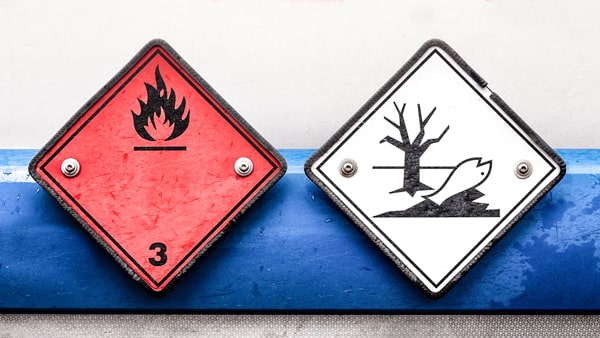
Question 2

A vehicle required to display hazardous-material placards must generally do what at a railroad grade crossing?

Which of the following is true about vehicles displaying a diamond-shaped sign (indicating a hazardous load)?
  1. A Avoid all freeway routes
  2. B Travel no faster than 35 mph
  3. C Stop between 15 and 50 feet from the nearest rail
  4. D Proceed before other vehicles

Correct answer: C – Stop between 15 and 50 feet from the nearest rail

Nevada law generally requires a vehicle carrying regulated hazardous materials to stop within 50 feet, but not less than 15 feet, from the nearest rail. The driver must look and listen in both directions and may proceed only when safe. Exceptions include certain crossings controlled by an officer or traffic-control device, abandoned or exempt crossings, and specified industrial or streetcar crossings.

Source: NRS 484B.560(1)–(4) — Certain vehicles required to stop at all railroad grade crossings; exceptions, Nevada Driver’s Handbook — Driving Safely, “Railroad Crossings”

Question 3

Which behavior most directly reduces the time available to avoid a rear-end collision?

  1. A Checking the rearview mirror regularly
  2. B Following the vehicle ahead too closely
  3. C Scanning the road far ahead
  4. D Keeping open space around the vehicle

Correct answer: B – Following the vehicle ahead too closely

Following too closely leaves insufficient time and distance to react when traffic ahead slows or stops. Nevada law requires a reasonable and prudent following distance based on speed, traffic, and roadway conditions. The handbook recommends using a timed interval and increasing that interval at highway speeds or when visibility and traction are reduced.

Source: NRS 484B.127(1) — Following too closely, Nevada Driver’s Handbook — Driving Safely, “Defensive Driving Tips”

Question 4

When may a motor vehicle enter a marked bicycle lane in Nevada?

  1. A During heavy traffic whenever no cyclist is visible
  2. B Only under a listed exception, such as entering or leaving an alley or driveway
  3. C During the final 200 feet before every right turn
  4. D At any time after yielding to bicycles

Correct answer: B – Only under a listed exception, such as entering or leaving an alley or driveway

Motor vehicles generally may not enter, stop, stand, park, or drive in a bicycle lane. Statutory exceptions include entering or exiting an alley or driveway, operating a disabled vehicle, avoiding conflict with traffic, following police directions, performing official duties, or responding to an emergency. Outside an applicable exception, the driver must remain out of the lane.

Source: NRS 484B.270(3)–(4) — Vehicles, bicycles, electric bicycles, electric scooters and pedestrians: Driver’s duty of due care

Question 5

If your Nevada driving privilege is revoked and you have not received a restricted license or other authorized privilege, you may:

  1. A Drive only during an emergency
  2. B Drive directly to work or school
  3. C Not drive
  4. D Drive when accompanied by a licensed adult

Correct answer: C – Not drive

A driver whose license or driving privilege is revoked may not operate a motor vehicle unless a valid restricted license or other authorized driving privilege applies. Permission to drive to work, school, or during an emergency is not automatic. Driving while the license is revoked is generally a misdemeanor under NRS 483.560.

Source: NRS 483.510 — Operation in this State under foreign license during suspension or revocation prohibited, NRS 483.560 — Driving while license cancelled, revoked or suspended; exception; penalties

Question 6

From which position should a driver normally approach and complete a right turn?

  1. A The lane nearest the center of the street
  2. B The left side of the roadway
  3. C The designated right-turn lane or extreme right lane
  4. D A position beyond the center of the intersection

Correct answer: C – The designated right-turn lane or extreme right lane

Nevada law requires both the approach and the right turn to be made from a designated right-turn lane, if one is provided, or from the extreme right lane. The handbook also directs drivers to enter the right-hand lane or another lane specifically designated for the turn. Change lanes later only when safely away from the intersection.

Source: NRS 484B.400(1) — Required position and method of turning at intersections, Nevada Driver’s Handbook — Driving Safely, “Turning”