Tennessee Permit Practice Test 3

4.8 out of 5 (742 votes)
80% Passing score
20 Questions
4 Mistakes allowed
TN permit test practice should do more than run you through a few familiar road signs and call it preparation. This third Tennessee permit practice test is built around the kind of material new drivers actually need to understand before they walk into a Driver Services Center, or, for eligible applicants ages 15 to 17, take the online knowledge test with a parent or legal guardian using Tennessee’s proctoring setup. That sounds a little procedural, because it is. Licensing in Tennessee is part rules, part paperwork, part patience, and the knowledge test sits right in the middle of all of it. This practice test for permit preparation includes 20 questions covering Tennessee driving laws, safe-driving decisions, traffic signs, and state-specific details, including the handheld mobile-device law. The questions are not trying to be cute. They are meant to make you slow down and notice the sort of wording that shows up when the state wants to know whether you understand the rule, not whether you skimmed it once. You may run into situations that feel closer to real Tennessee driving, too — heavier traffic around Nashville, winding roads near the Smokies, sudden weather shifts, rural highways where decisions have to be made without much drama but with plenty of consequence. The permit process itself matters here. First-time Tennessee applicants must meet the vision standard, generally 20/40 visual acuity, though some drivers may qualify with restrictions such as corrective lenses or outside mirrors. Applicants also need the required identity, Social Security, residency, and, for minors, school attendance and parent or guardian documents. Passing the knowledge test is important, obviously, but it does not magically finish the licensing process. There are still documents to verify, fees to pay, a permit to be issued, and later, a road skills test to schedule. After completing this TN permit practice test, you can review your answers with explanations and hints, especially for the questions you missed. That review is where the useful correction happens. A wrong answer is not just a scorecard bruise; it is a small warning light telling you what to study before the real thing. Written and reviewed by experienced driving instructors, this Tennessee DMV practice test gives you a grounded way to prepare for the permit exam and for the learner-permit rules that follow, including driving only with a licensed driver age 21 or older in the vehicle. It is practice, yes — but it is practice with the licensing process in mind.
FREE DMV Practice Test App
Study for your Tennessee permit test or driver’s license with the NextDoorDriving app. 700+ DMV questions and answers, 100% free!
Download on the App Store

Sample Tennessee Permit Test Questions

Question 1

Which check must you make before moving into another lane on a multi-lane highway?
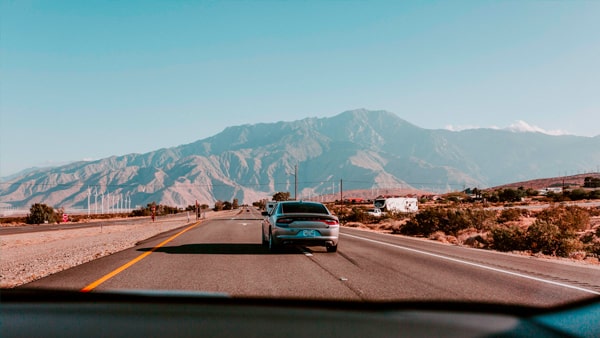
Before changing lanes on a multi-lane highway you should:
  1. A. Sound the horn
  2. B. Switch on the high-beam headlights
  3. C. Brake sharply
  4. D. Check the mirrors and look over your shoulder for traffic in the blind spot

Correct answer: D. – Check the mirrors and look over your shoulder for traffic in the blind spot

Before changing lanes, check the available space ahead and behind, examine your mirrors, and signal. Look over your shoulder toward the lane you intend to enter because a vehicle, motorcycle, or bicycle may be hidden in a blind spot. Move only after confirming that the lane has enough clear space.

Source: Tennessee Comprehensive Driver License Manual — “Changing Lanes”

Question 2

On Tennessee roads, which color separates traffic moving in opposite directions?

  1. A. White
  2. B. Red
  3. C. Black
  4. D. Yellow

Correct answer: D. – Yellow

Yellow pavement markings separate traffic traveling in opposite directions. They may be broken or solid depending on whether passing is permitted from a particular side. White lines generally separate lanes carrying traffic in the same direction or mark the roadway's right edge.

Source: Tennessee Comprehensive Driver License Manual — “Pavement Markings”

Question 3

When other traffic may be affected by your turn, Tennessee law requires you to signal continuously for at least:

When you are planning to make a turn, you should activate your turn signals:
  1. A. One car length before turning
  2. B. The time needed to enter the intersection
  3. C. 50 feet before turning
  4. D. Two seconds after you begin braking

Correct answer: C. – 50 feet before turning

A driver must first make sure the movement can be completed safely. When another vehicle may be affected, the turn signal must be plainly visible and given continuously for at least 50 feet before the turn or other material change of course. Signaling communicates your intention but does not give you the right-of-way.

Source: T.C.A. § 55-8-143(a), (c) – Signals for Turns, Tennessee Comprehensive Driver License Manual — “Turning,” “How to Make a Left Turn”

Question 4

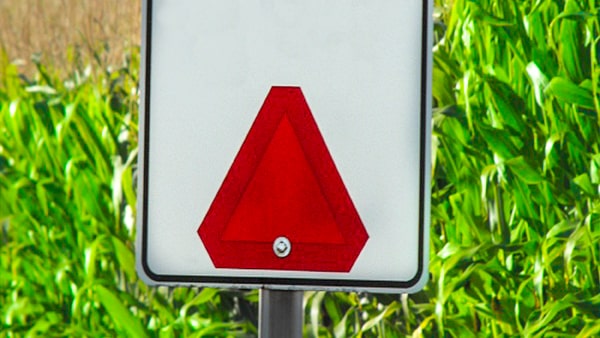
A fluorescent orange triangle with a red reflective border on the rear of a vehicle identifies:

An orange and red sign of this shape always means:
  1. A. A vehicle yielding to cross traffic
  2. B. A vehicle with priority over other traffic
  3. C. A slow-moving vehicle
  4. D. An approaching emergency vehicle

Correct answer: C. – A slow-moving vehicle

The orange-and-red triangular emblem identifies a slow-moving vehicle. It is commonly displayed on farm machinery, animal-drawn vehicles, and certain road-maintenance equipment that cannot travel at normal highway speeds. The Tennessee manual advises drivers to recognize the emblem, reduce speed, and use caution when approaching.

Source: Tennessee Comprehensive Driver License Manual — Ch. C-3, “Sharing the Road with Slow-Moving Vehicles and Farm Machinery”

Question 5

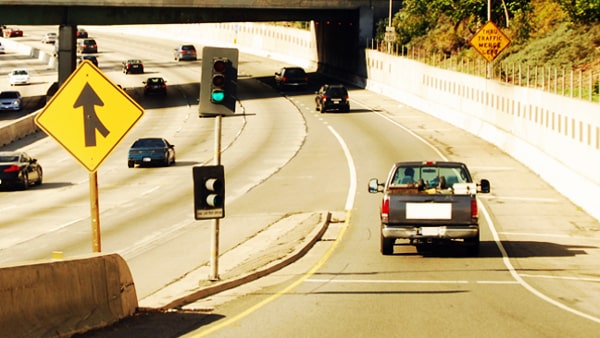
While using an acceleration lane to enter an interstate, you should normally reach:

When entering a freeway entrance that allows you to accelerate to merge, you should drive at:
  1. A. A speed about 10 mph below nearby traffic
  2. B. Approximately the speed of traffic in the lane you will enter
  3. C. The maximum posted speed regardless of traffic conditions
  4. D. A speed greater than all interstate traffic

Correct answer: B. – Approximately the speed of traffic in the lane you will enter

Use the acceleration lane to adjust your speed to approximately that of interstate traffic. Signal, check your mirrors and blind spot, and identify a safe opening before merging. Traffic already traveling on the interstate has the right-of-way, so adjust your speed and yield when necessary.

Source: Tennessee Comprehensive Driver License Manual — “Interstate Driving,” “Entering an Interstate Highway”

Question 6

What color combination is normally used for highway guide signs?

  1. A. Orange with black lettering
  2. B. Green with white lettering
  3. C. Yellow with black lettering
  4. D. Red with white lettering

Correct answer: B. – Green with white lettering

Highway and expressway guide signs normally have green backgrounds with white lettering, symbols, or borders. They help drivers locate routes, destinations, and exits. Orange is associated with work zones, while yellow is generally used for warning signs and red is commonly reserved for stop or prohibition messages.

Source: Tennessee Comprehensive Driver License Manual — “Traffic Signs,” “Guide Signs”