Colorado Practice Permit Test

4.8 out of 5 (151 votes)
80% Passing score
20 Questions
4 Mistakes allowed
Colorado is not exactly the easiest state to start driving. Between Denver traffic, mountain weather that can change its mind halfway up the pass, rural highways, ski-town congestion, and the occasional tourist who suddenly forgets what a lane is, you need more than a vague memory of the handbook. This Colorado DMV practice test gives you a sharper way to study for the Colorado Class D knowledge test and real roads without rereading the manual three times.   The practice test includes 20 multiple-choice questions covering the rules that actually show up in day-to-day driving and on the permit test: traffic signals, road signs, right-of-way, lane use, safe following distance, and the basic licensing rules Colorado expects you to understand before it hands you a permit. The real Colorado knowledge test has 25 questions, and you need 20 correct answers to pass, so this shorter round works nicely as a gut check. Not a magic trick, not a shortcut, just a clean way to find out whether the information is sticking or only feels familiar because you saw it once in bold print. And yes, the licensing details are worth paying attention to, especially for teen drivers. Colorado’s learner’s permit starts at age 15, but the education rules depend on your age when you apply. Drivers under 18 generally need to hold the permit for 12 full months, log 50 supervised driving hours, include 10 hours at night, and then deal with the first-year minor-license rules after they pass the road test. That means passenger limits, a midnight-to-5 a.m. curfew with a few specific exceptions, and no texting or talking on a phone while driving under 18 unless it is an emergency call to police. Small rules, big consequences if you ignore them. Adults have fewer hoops, though not zero hoops. If you have never had a license, or your license has been expired or canceled for more than 12 months, Colorado still requires an instruction permit before a driver license. The nice part is that adults are not tied to the teen 12-month permit period or driving log. So while you are getting your documents, fees, appointment details, and other licensing pieces in order, this Colorado permit practice test can keep the rules fresh in your mind.  The best part is that when you finish the test, the review shows what you missed and explains why, which is where the real studying happens. So if you're ready to get behind the wheel, let's get started.
FREE DMV Practice Test App
Study for your Colorado permit test or driver’s license with the NextDoorDriving app. 700+ DMV questions and answers, 100% free!
Download on the App Store

Sample Colorado Permit Test Questions

Question 1

In Colorado, you must switch from high beams to low beams when following another vehicle within:

  1. A 200 feet
  2. B 300 feet
  3. C 500 feet
  4. D 100 feet

Correct answer: A – 200 feet

When following another vehicle within 200 feet, a driver must use a beam other than the uppermost, or high-beam, setting unless actively overtaking and passing. High beams reflected through the vehicle ahead can interfere with that driver’s vision. The handbook also directs drivers to turn off fog lights in this situation.

Source: C.R.S. § 42-4-217(1)(b) — Use of multiple-beam lights, Colorado Driver Handbook — “Night Driving”
Question 2

On a Colorado highway divided into separate roadways by a clearly marked painted median, a school bus stops with red lights flashing on the opposite roadway. What are you required to do?

If a school bus stops to unload children on a divided highway with a dividing barrier, vehicles traveling in the opposite direction are:
  1. A Stop until the red lights are turned off
  2. B Stop, then pass the bus cautiously
  3. C Pull onto the shoulder before proceeding
  4. D You are not required to stop

Correct answer: D – You are not required to stop

A driver meeting a school bus on a different roadway of a divided highway is not required to stop. For this rule, separate roadways may be divided by a depressed, raised, or painted median or another clearly indicated intervening space. Drivers traveling on the bus’s roadway must obey its flashing red signals.

Source: C.R.S. § 42-4-1903(1)(a), (4) — School buses - stops - signs - passing

Question 3

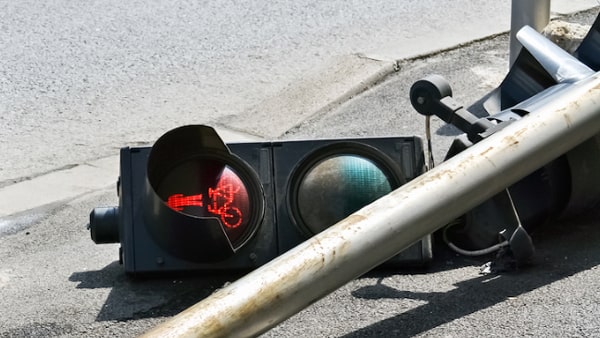
What should you do at a Colorado intersection when its traffic signal is inoperative?

When a traffic signal light is not working, you should:
  1. A Stop only when another road user is present
  2. B Slow down but continue without stopping
  3. C Stop, yield as required, and proceed when it is safe
  4. D Drive through as though the signal were green

Correct answer: C – Stop, yield as required, and proceed when it is safe

An inoperative signal at an intersection is treated under the rules for entering a through street from a stop-controlled approach. Come to a complete stop, observe traffic and pedestrians, and yield before entering. This rule applies until an officer directs traffic or the signal returns to normal operation.

Source: C.R.S. § 42-4-612(1)(a) — When signals are inoperative or malfunctioning - penalty

Question 4

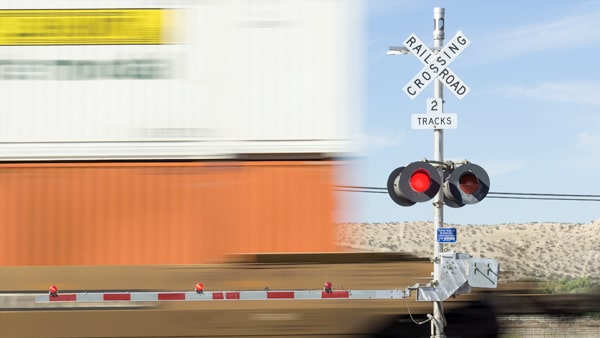
Before crossing railroad tracks immediately after a train passes, what should you do?

After a train has passed, you should:
  1. A Wait for a green traffic light at every crossing
  2. B Start across as soon as the last railcar passes
  3. C Sound the horn and begin crossing
  4. D Check that every track is clear of additional trains

Correct answer: D – Check that every track is clear of additional trains

The Colorado handbook warns that multiple-track crossings may have a second train approaching. After one train clears, look in both directions and verify that every track is clear before moving. If the crossing has gates or flashing lights, remain stopped until the gates rise and the lights stop flashing.

Source: Colorado Driver Handbook — “Railroad Crossing”

Question 5

Before passing another vehicle on a two-lane highway, what must you verify?

  1. A That you can exceed the speed limit until the pass is complete
  2. B That the left side is clear far enough to complete the pass safely and legally
  3. C That a solid yellow line is on your side of the roadway

Correct answer: B – That the left side is clear far enough to complete the pass safely and legally

Do not begin a pass unless the left side is clearly visible and free of oncoming traffic for enough distance to complete the maneuver safely. Passing does not permit you to exceed the posted speed limit. Solid yellow markings and restricted-visibility areas may prohibit moving left of center.

Source: C.R.S. § 42-4-1005 — Limitations on overtaking on the left, Colorado Driver Handbook — “Passing”

Question 6

What background color identifies highway guide signs that provide directions and mileage?

  1. A Yellow
  2. B Black
  3. C Red
  4. D Green

Correct answer: D – Green

Guide signs use a green background and provide directional or mileage information for particular destinations. Colorado drivers may encounter them before exits, interchanges, and route junctions. Yellow signs generally warn of hazards, while red is commonly associated with stop or prohibited movements.

Source: Colorado Driver Handbook — Traffic Signs and Signals, “Guide signs”