Kentucky Permit Practice Test 9

4.9 out of 5 (298 votes)
80% Passing score
20 Questions
4 Mistakes allowed
School bus rules deserve their own KY DMV practice test because Kentucky treats them as more than a tiny handbook detail. Drivers are expected to know exactly what to do when a bus stops, when the lights come on, and when children are getting on or off near the roadway. This practice test keeps that focus tight: 20 questions, a passing score of 16, and enough repetition to make the rule stick instead of floating around as something you vaguely remember from a chart. And, honestly, this is where a Kentucky permit practice test earns its keep. The school bus section is not difficult in the dramatic sense, but it can get picky. You need to recognize when traffic must stop, how the rule applies around loading and unloading, and why the safest answer is usually the one that gives children more space, more time, and fewer assumptions from impatient drivers. That is the part the real KY DMV written test cares about. Not your confidence. Your actual command of the rule. You can retake this practice permit test as often as needed, which is not a fancy feature so much as a practical one. First attempt, you find the weak spots. Second attempt, you notice the wording. After that, the details start becoming automatic, and that is what you want before test day. Pair it with the Kentucky driver’s handbook, road sign review, and any other KY driving test practice you are using, because the written test pulls from the full set of rules, not just the ones that feel obvious. The licensing process matters too, since studying for the KY learner’s permit practice test is only one piece of getting licensed. Kentucky applicants can apply for an instruction permit at 15 after passing the written knowledge test and vision screening. Drivers under 18 enter the Graduated Driver Licensing program, where they must hold the permit for at least 180 days, complete 60 supervised driving hours with 10 at night, and drive with a licensed driver age 21 or older in the front passenger seat. They also face restrictions on late-night driving, young passengers, alcohol, and phone use. Adults still have to clear the written test and permit stage. Ages 18 to 20 hold the permit for 180 days; applicants 21 and older hold it for at least 30 days. Bring the right identity, Social Security, residency, and name-change documents if they apply. Paperwork first, practice often, and learn the bus rules like they might actually matter, because they do.
FREE DMV Practice Test App
Study for your Kentucky permit test or driver’s license with the NextDoorDriving app. 700+ DMV questions and answers, 100% free!
Download on the App Store

Sample Kentucky Permit Test Questions

Question 1

In which situation should you activate your emergency flashers?
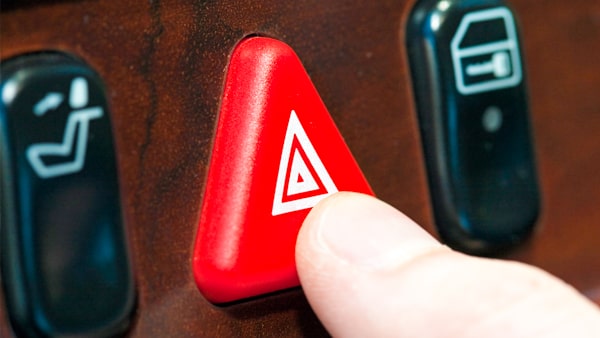
You should always use your emergency flashers when:
  1. A. While double-parked in a travel lane
  2. B. While driving normally through heavy fog
  3. C. When your vehicle breaks down on the highway
  4. D. Whenever you become tired while driving

Correct answer: C. – When your vehicle breaks down on the highway

If your vehicle breaks down, pull completely off the roadway to the right when possible and stop where the vehicle can be seen. Activate the emergency flashers to show that the vehicle is disabled. The Kentucky manual also recommends raising the hood and, when available, placing emergency flares behind the vehicle.

Source: Kentucky Driver Manual — Section Nine, “Vehicle Breakdown & Emergency Signals”
Question 2

While slowly backing from an angled parking space, where should you direct your primary view?

  1. A. Only into the inside rearview mirror
  2. B. Through the rear window while also checking the front and sides
  3. C. Toward a person standing outside the vehicle

Correct answer: B. – Through the rear window while also checking the front and sides

The Kentucky manual directs drivers to look through the rear window while backing because mirrors may not show the area immediately behind the vehicle. Keep the vehicle’s speed slow. When backing while turning, make quick checks to the front and sides and continue looking toward the rear until stopped.

Source: Kentucky Driver Manual — Section Five, “Backing Up”, Kentucky Driver Manual — Section Seven, “Exiting a Perpendicular or Angle Parking Space”

Question 3

In Kentucky, driving while a prescription, over-the-counter, or other drug impairs your driving ability is:

  1. A. Allowed when the drug was prescribed by a medical professional
  2. B. Allowed when the drug is sold without a prescription
  3. C. Prohibited by law
  4. D. Prohibited only when you do not carry the prescription

Correct answer: C. – Prohibited by law

Kentucky prohibits operating or physically controlling a motor vehicle while under the influence of any substance that impairs driving ability. Legal entitlement to use the substance generally is not a defense, although the statute contains a limited prescription-related evidentiary rule. A first offense within ten years carries a $200–$500 fine, 48 hours to 30 days in county jail, or both.

Source: KRS 189A.010(1)(c), (4), (5)(a) – Operating motor vehicle with alcohol concentration of or above 0.08, or of or above 0.02 for persons under age twenty-one, or while under the influence of alcohol, a controlled substance, or other substance which impairs driving ability prohibited -- Admissibility of alcohol concentration or controlled substance test results -- Presumptions -- Penalties -- Aggravating circumstances

Question 4

A motorist preparing to turn must signal continuously for at least the final:

  1. A. 50 feet before the turn
  2. B. 100 feet before the turn
  3. C. 300 feet before the turn
  4. D. 400 feet before the turn

Correct answer: B. – 100 feet before the turn

A motor-vehicle turn signal must be given continuously for at least the final 100 feet traveled before turning. The movement also must be capable of being made with reasonable safety. Kentucky requires motor vehicles to use signal lamps or mechanical signal devices rather than hand signals.

Source: KRS 189.380(1), (2), (4) – Signals, Kentucky Driver Manual — Section Eight, “Signaling Your Movements”

Question 5

For the greatest protection in a crash, seat belts should be used by:

Seat belts can be most effective as injury preventive devices when they are worn by:
  1. A. Only the driver
  2. B. Passengers only on long trips
  3. C. Everyone only when traveling on an expressway
  4. D. The driver and every passenger on every trip

Correct answer: D. – The driver and every passenger on every trip

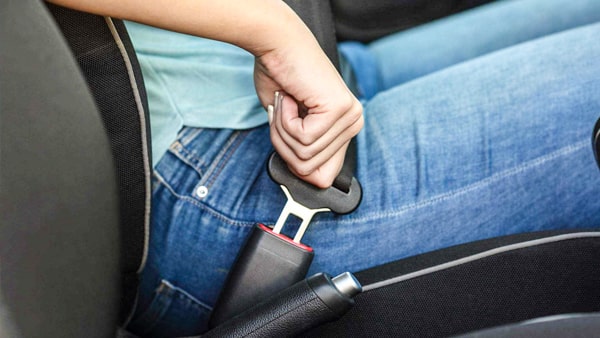
Seat belts provide the greatest protection when the driver and every passenger use them on every trip. Kentucky law generally prohibits operating a motor vehicle manufactured after 1981 unless the driver and passengers are properly restrained, subject to child-restraint rules and specified exceptions. Properly worn belts reduce the risk of injury, death, and ejection during a crash.

Source: KRS 189.125(1), (3), (6) – Requirements of use of seat belts, child restraint systems, and child booster seats -- Exceptions, Kentucky Driver Manual — Section Four, “Using Safety Belts”

Question 6

In addition to the required nighttime hours, when should you turn on your headlights?

When should you use your headlights while driving?
  1. A. Only immediately after sunset
  2. B. When weather or other conditions substantially reduce visibility
  3. C. Beginning 30 minutes before sunset
  4. D. Only when another driver flashes their headlights

Correct answer: B. – When weather or other conditions substantially reduce visibility

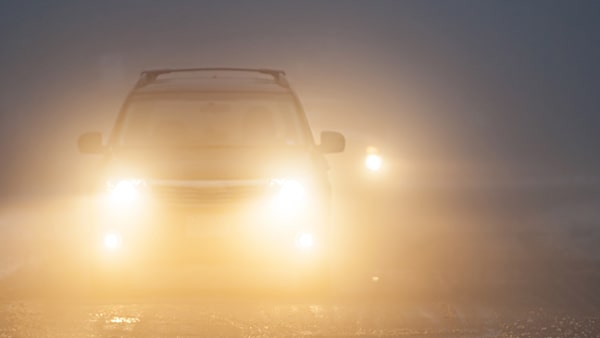
Kentucky requires headlights from one-half hour after sunset until one-half hour before sunrise. They are also required when atmospheric conditions reduce visibility to a level as low as ordinarily occurs during those nighttime hours. The driver manual recommends using headlights on rainy, snowy, or foggy days and whenever you have trouble seeing other vehicles.

Source: KRS 189.030(1) – Time when lights must be on, Kentucky Driver Manual — Section Eight, “Use headlights”