Kentucky Driving Test Practice 5

4.8 out of 5 (550 votes)
80% Passing score
20 Questions
4 Mistakes allowed
The Kentucky permit knowledge test is the written exam you take before getting an instruction permit, and for most new drivers, it is tied to the standard Class D Operator’s License. That matters because the test is not built around random driving trivia. It is based on the Kentucky Driver Manual, and it checks whether you understand the rules Kentucky expects you to know before you start driving with more independence. This KY DMV practice test is designed around that same purpose. It gives you 20 multiple-choice questions that reflect the kinds of topics and wording used on the official Kentucky drivers license test, while keeping a stronger focus on DUI rules, blood alcohol content limits, and impaired driving. Those topics deserve the extra attention. Alcohol and drugs affect reaction time, judgment, coordination, and vehicle control, and Kentucky’s permit test treats impaired driving as part of basic driver responsibility, not as some separate legal lecture tacked onto the end. The real Kentucky written permit test covers more than DUI regulations, though, so this practice test still sits inside the larger permit-test picture. You should expect material connected to Kentucky traffic laws, rules of the road, highway signs, traffic signals, pavement markings, sharing the road, vehicle equipment, and safe driving procedures. The DUI section overlaps with all of that more than people sometimes realize — because a question about BAC limits is still a question about whether you understand risk, responsibility, and what the law expects from you behind the wheel. The official Kentucky permit test is multiple choice and is commonly reported as a 40-question exam. A passing score is 80%, which means 32 correct answers and no more than 8 missed questions. This fifth KY drivers permit practice test does not claim to show the confidential DMV questions, because nobody honest should be claiming that. It does, however, give you a realistic way to check whether the material is sticking before you sit for the real exam. Since the practice test is not timed, take advantage of that. Read carefully, notice the answer choices that look almost correct, and use the explanations to clean up weak spots. Kentucky allows applicants to return the next available day after failing the written test, but it is better to treat that as a backup, not a study plan.
FREE DMV Practice Test App
Study for your Kentucky permit test or driver’s license with the NextDoorDriving app. 700+ DMV questions and answers, 100% free!
Download on the App Store

Sample Kentucky Permit Test Questions

Question 1

Which driving behavior is most directly associated with being unable to avoid a rear-end crash when traffic stops?

  1. A Checking the rearview mirror periodically
  2. B Remaining within a marked traffic lane
  3. C Following the vehicle ahead too closely
  4. D Reducing speed for poor road conditions

Correct answer: C – Following the vehicle ahead too closely

Following too closely limits your view and may leave insufficient time to react when the vehicle ahead stops. The driver manual recommends maintaining at least a four-second following interval under ordinary conditions. Kentucky law also requires a following distance that is reasonable and prudent for the speed, traffic, and highway conditions.

Source: KRS § 189.340(9)(a) – Overtaking vehicles, bicycles, or electric low-speed scooters -- Traffic lanes -- Following vehicles -- Exemption for commercial motor vehicle platoon trailing vehicle, Kentucky Driver Manual — Section Eight, “Space in Front”
Question 2

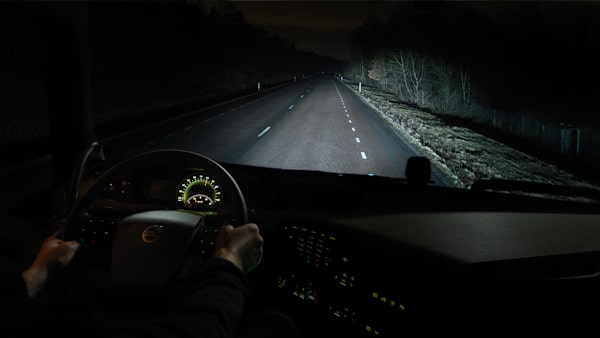
During night driving, which road user can be especially difficult to see and should be included in your visual search?

At night, it is hardest to see:
  1. A Reflective roadway signs
  2. B Pedestrians
  3. C Vehicles displaying headlights
  4. D Illuminated traffic signals

Correct answer: B – Pedestrians

Nighttime visibility is limited to the area illuminated by your headlights, and the manual advises searching ahead for dark shapes on the roadway. It also specifically identifies pedestrians as difficult to see. Drive at a speed that allows you to stop within your visible distance and continue scanning for people near the roadway.

Source: Kentucky Driver Manual — Section Eleven, “Night Driving”, Kentucky Driver Manual — Section Ten, “Pedestrians”

Question 3

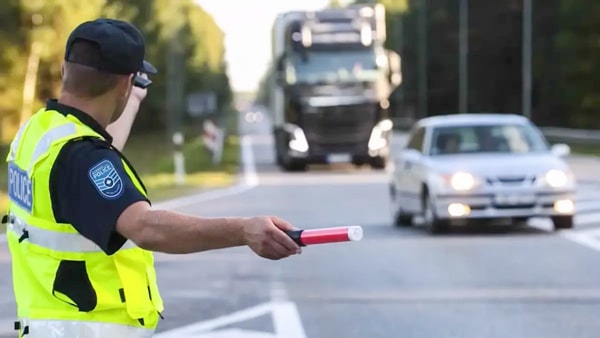
At a Kentucky intersection, a police officer directs you through a red light. What should you do?

A traffic light is red, but a police officer is telling you to go ahead anyway. What should you do?
  1. A Remain stopped until the signal turns green
  2. B Change lanes and wait for other traffic to move
  3. C Follow the officer's direction carefully
  4. D Wait until the officer approaches your window

Correct answer: C – Follow the officer's direction carefully

Drivers must follow the directions of an officer who is controlling traffic, even when those directions differ from a traffic signal or sign. Disregarding the officer's signal in a manner that interferes with or endangers traffic, pedestrians, or the officer is prohibited. Proceed carefully as directed while continuing to watch surrounding traffic.

Source: KRS § 189.393 – Complying with traffic officer's signal, Kentucky Driver Manual — Section Six, “Traffic Control Devices”

Question 4

What is the proper basic procedure when backing a passenger vehicle?

When backing up your car, you should:
  1. A Watch only the inside and outside mirrors
  2. B Look directly through the rear window and back slowly, while also checking the mirrors
  3. C Look only over the left shoulder while accelerating
  4. D Turn rapidly from side to side without looking through the rear window

Correct answer: B – Look directly through the rear window and back slowly, while also checking the mirrors

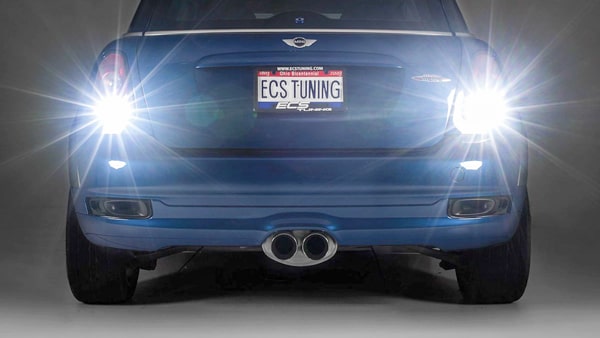
Before backing, check behind the vehicle for children, objects, and other hazards. Turn your body and look directly through the rear window while moving slowly and smoothly. Use the mirrors as additional aids, but remember that mirrors may not show the area immediately behind the vehicle.

Source: Kentucky Driver Manual — Section Five, “Backing Up”

Question 5

On a Kentucky road posted at 45 mph, surrounding traffic is moving at 50 mph. How fast may you legally drive?

  1. A At least 50 mph to match traffic
  2. B Any speed between 45 and 50 mph
  3. C No faster than 45 mph, and slower when conditions require

Correct answer: C – No faster than 45 mph, and slower when conditions require

A posted 45 mph limit remains the maximum lawful speed even when other drivers are traveling faster. State law also requires every driver to use a reasonable and prudent speed for the traffic and road conditions. Rain, limited visibility, congestion, or other hazards may require a speed below the posted limit.

Source: KRS § 189.390(2), (4) – Speed -- Secretary authorized to increase speed limit in certain areas by official order -- Parking, Kentucky Driver Manual — Section Eight, “Speed Management”

Question 6

Which type of drug may affect a person's ability to drive safely?

What kinds of drugs, other than alcohol, can affect your driving ability?
  1. A An over-the-counter allergy medicine
  2. B An illegal impairing drug
  3. C An over-the-counter cold remedy
  4. D All of these choices

Correct answer: D – All of these choices

Cold and allergy medicines can cause drowsiness and affect driving. Illegal drugs may impair reflexes, judgment, vision, and alertness, while some prescription medicines can produce similar effects. Read medication warnings and ask a doctor or pharmacist when you are unsure whether it is safe to drive after taking a drug.

Source: Kentucky Driver Manual — Section Three, “Other Impairing Drugs and Driving”