Kentucky Drivers Ed Practice Test 8

4.8 out of 5 (368 votes)
80% Passing score
20 Questions
4 Mistakes allowed
Kentucky’s knowledge test rewards drivers who know how the rules actually work in traffic, especially at intersections, where a lot of “I think I remember this” studying starts to wobble. This Kentucky drivers ed practice test stays in that lane on purpose. It focuses on right-of-way decisions, four-way stops, turning situations, intersection etiquette, and the small judgment calls that show up in the manual but feel much less tidy once several vehicles are involved. The real KY permit test includes 40 questions, and you need 32 correct answers to pass. That is an 80% passing score, with room to miss 8 questions, which sounds generous for about three seconds. Then you remember that the missed questions are usually not the ones asking what a stop sign means. They are the ones about who proceeds first, what a driver should do when timing and lane position matter, or how Kentucky expects you to handle a situation that seems obvious until the choices start splitting hairs. This KY permit practice test gives you 20 multiple-choice questions based on the official Kentucky Driver Manual, so the practice stays tied to the same source used for the real DMV test. The study tools are built for learning, not just clicking through answers and hoping for a decent score. Hints are there when a question starts to feel a little too close, and explanations after missed answers help pin down the rule behind the correct choice. That matters with intersection questions because memorizing one sample answer does not help much when the next version changes the order of arrival, the road layout, or the vehicle making the turn. Many sample permit test questions also include images, which is quietly helpful—actually, more than quietly—because right-of-way and lane-use rules are often easier to understand when you can see the setup instead of trying to stage the whole thing in your head. For teen drivers, passing the knowledge test is the start of Kentucky’s graduated licensing process, not the finish line. You can apply for a permit at 15, then drivers under 18 must hold it for 180 days and complete 60 hours of supervised driving, including 10 at night, with a licensed driver age 21 or older in the front passenger seat. The intermediate stage adds another 180-day period, a 4-hour GDL course, and restrictions like no driving from midnight to 6 a.m. and no more than one unrelated passenger under 20. Adults have timelines too: ages 18 to 20 must hold a permit for 180 days, while drivers 21 and older hold it for 30 days. Kentucky also requires a vision screening, generally 20/40, plus the right identity, residency, and Social Security documents. So, yes, there is paperwork. There always is. But the part you can sharpen today is the test itself, and this free drivers ed practice test gives you a focused, Kentucky-specific way to do it.
FREE DMV Practice Test App
Study for your Kentucky permit test or driver’s license with the NextDoorDriving app. 700+ DMV questions and answers, 100% free!
Download on the App Store

Sample Kentucky Permit Test Questions

Question 1

Traffic is backed up beyond an intersection, leaving no room for your vehicle on the other side. What should you do?

  1. A Enter slowly and wait inside the intersection
  2. B Follow the vehicle ahead as closely as possible
  3. C Wait before the intersection until there is space to cross
  4. D Use the horn to encourage traffic to move

Correct answer: C – Wait before the intersection until there is space to cross

Remain outside the intersection until there is a large enough opening to get completely across. Entering without enough space can leave your vehicle blocking cross traffic or a crosswalk. Even after receiving a green light, check that the path ahead is clear before proceeding.

Source: Kentucky Driver Manual — Section Seven, “Intersections”
Question 2

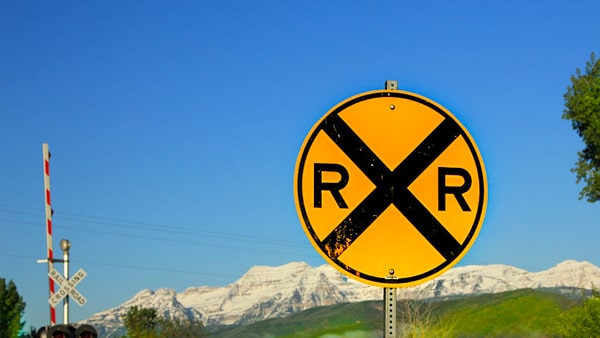
A round yellow sign marked with a black “X” and “RR” warns that you are approaching:

This sign is a warning that you are approaching:
  1. A A highway intersection
  2. B A pedestrian crossing
  3. C A railroad grade crossing
  4. D A work-zone blasting area

Correct answer: C – A railroad grade crossing

The round yellow sign is an advance warning for a highway-railroad grade crossing. Slow down and look and listen for an approaching train or railroad vehicle. Be prepared to stop before the tracks when necessary.

Source: Kentucky Driver Manual — Section Six, “Railroad Crossing Warning Signs”

Question 3

During which period is driving generally more hazardous because the distance visible ahead is limited by headlights?

  1. A Morning daylight
  2. B Afternoon daylight
  3. C Nighttime
  4. D All periods are equally hazardous

Correct answer: C – Nighttime

Night driving is more difficult and hazardous than daytime driving because headlights limit how far ahead you can see. Reduced visibility provides less time to identify and respond to hazards. Drivers should adjust their speed and increase following distance under nighttime conditions.

Source: Kentucky Driver Manual — Section Eleven, “Night Driving”

Question 4

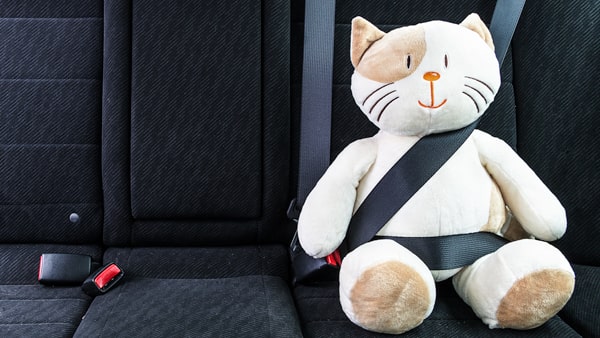
Which statement correctly describes Kentucky’s seat-belt requirement?

You must use your seat belt:
  1. A Seat belts are optional in vehicles manufactured before 2000
  2. B Only front-seat occupants must be restrained
  3. C Drivers and passengers in covered vehicles must buckle up, and a violation may result in a fine
  4. D Seat belts are required only on interstate highways

Correct answer: C – Drivers and passengers in covered vehicles must buckle up, and a violation may result in a fine

A motor vehicle manufactured after 1981 generally may not be operated on public roadways unless the driver and every passenger are properly belted or a child is secured as required. Limited medical and postal-worker exceptions apply. A violation of the seat-belt provision carries a fine of up to $25 and is not added to the person’s driving history.

Source: KRS 189.125(6)–(7) – Requirements of use of seat belts, child restraint systems, and child booster seats -- Exceptions, KRS 189.990(26) – Penalties

Question 5

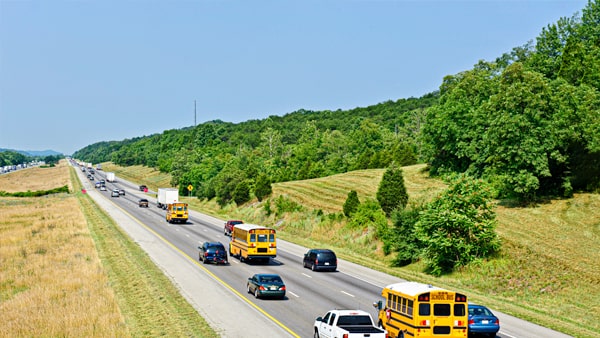
In Kentucky, a school bus stops with its stop arm and signal lights activated on a four-lane highway separated only by a four-foot paved strip. What must opposing traffic do?

If a school bus stops to unload children on a four-lane highway, divided by a four-foot paved strip, vehicles traveling in the opposite direction are:
  1. A Stop and remain stopped until the bus finishes unloading and begins moving
  2. B Stop briefly, then proceed with caution
  3. C Move onto the shoulder and pass slowly
  4. D Continue because opposing traffic never stops on a four-lane highway

Correct answer: A – Stop and remain stopped until the bus finishes unloading and begins moving

Opposing traffic is exempt only on a highway of four or more lanes divided by an elevated barrier or an unpaved median. A paved strip does not satisfy that exception, so opposing drivers must stop until passenger loading or unloading is complete and the bus is moving. A first conviction carries a $200–$500 fine, 30–60 days in jail, or both, plus at least six points.

Source: KRS 189.370(1) – Passing stopped school or church bus prohibited -- Application to properly marked vehicles -- Rebuttable presumption as to identity of violator, KRS 189.990(5) – Penalties

Question 6

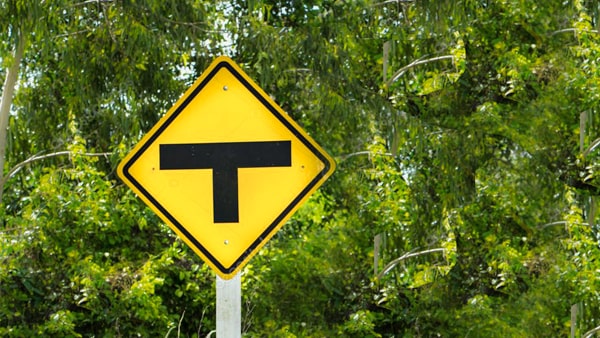
A yellow diamond sign displays a vertical road ending at a horizontal road, forming a “T.” What does it warn of?

This sign shows one type of:
  1. A A right turn only
  2. B A T-intersection ahead
  3. C A lane change ahead
  4. D A winding roadway

Correct answer: B – A T-intersection ahead

This sign warns of a T-intersection ahead, where the roadway being traveled ends at another roadway. A yellow diamond sign identifies a possible hazard or special roadway condition. Reduce speed and be prepared to respond to traffic controls and vehicles on the crossing road.

Source: Kentucky Driver Manual — Section Six, “Traffic Signs—Warning Signs”