Louisiana DMV Test Evaluation

4.6 out of 5 (312 votes)
80% Passing score
10 Questions
2 Mistakes allowed
A Louisiana DMV practice test should do more than check if you know what a Stop sign means. This one is built as a quick 10-question evaluation, but the standard is still the one that matters: 8 correct answers out of 10, matching the 80% passing score used on the official Louisiana Class E learner’s permit knowledge test. The real test is longer—40 multiple-choice questions, with at least 32 correct answers required—so this shorter version is best treated as a sharp little checkpoint, not the whole job. The material comes from the Louisiana Class D & E Driver’s Guide, which is also where the official OMV knowledge test gets its questions. So, yes, you’ll see the familiar permit-test subjects: traffic laws, road signs, signals, pavement markings, right-of-way rules, safe driving habits, alcohol laws, emergencies, and sharing the road. And the Louisiana-specific pieces matter more than people tend to think. Road sign questions, for example, are part of the regular Class E knowledge test; there is not a separate road-sign-only exam for a standard learner’s permit, which is one of those details that seems minor until someone studies the wrong way. This practice DMV permit test also fits neatly into the larger Louisiana licensing process. Teen drivers usually start with the Temporary Instructional Permit before driver education, knowledge testing, behind-the-wheel instruction, or the road skills test. A learner’s permit can be issued at 15, after the required steps are completed, including the vision screening and the knowledge exam. Adults have their own route, usually through either the 38-hour driver education course or the shorter pre-licensing course with behind-the-wheel instruction. Different path, same need to actually know the rules. After the test, spend a minute with the answer explanations. That part is easy to skip because, well, people like scores and dislike being corrected by a practice quiz. But the explanations are where weak spots show up: a misunderstood sign, a fuzzy right-of-way rule, a law you sort of remembered but not quite. Passing this quick evaluation is a good sign. It means you’re moving in the right direction. Just keep practicing until the Louisiana rules feel familiar enough that the official 40-question DMV permit test feels like review, not discovery.
FREE DMV Practice Test App
Study for your Louisiana permit test or driver’s license with the NextDoorDriving app. 700+ DMV questions and answers, 100% free!
Download on the App Store

Sample Louisiana Permit Test Questions

Question 1

A fluorescent yellow-green, five-sided sign showing an adult and child walking warns of:
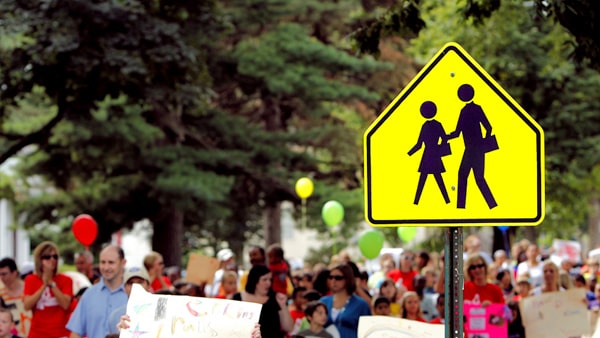
This road sign means:
  1. A. A stop sign ahead
  2. B. A school crossing or school area ahead
  3. C. A shopping district ahead
  4. D. A roadway closed to pedestrians

Correct answer: B. – A school crossing or school area ahead

The five-sided school warning sign alerts drivers to a school area or school crossing ahead. School warning signs may have a fluorescent yellow-green background to attract attention. Reduce speed as appropriate and watch carefully for children and crossing activity.

Source: Class D & E Driver’s Guide — Ch. 3, “Warning Signs”
Question 2

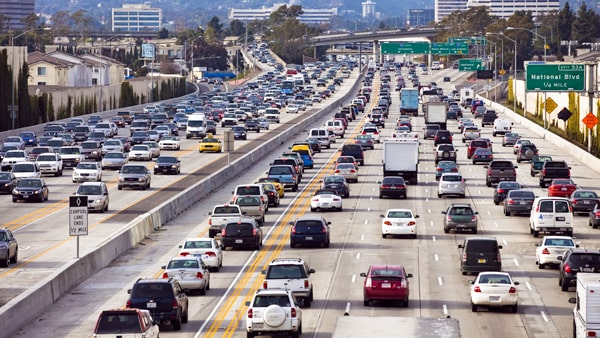
What must you do before moving into another traffic lane?

Before changing lanes in traffic, you need to:
  1. A. Check only the inside rearview mirror
  2. B. Sound the horn and move immediately
  3. C. Check the mirrors and look over your shoulder for traffic in the blind spot
  4. D. Signal, which gives you the right-of-way

Correct answer: C. – Check the mirrors and look over your shoulder for traffic in the blind spot

Before changing lanes, check the rearview and side mirrors and look over your shoulder for vehicles in the blind spot. Signal your intention, but do not treat the signal as permission to enter an occupied lane. Louisiana law permits a lane movement only when it can be made with reasonable safety.

Source: La. R.S. 32:104(A), (D) – Turning movements and required signals, Class D & E Driver’s Guide — Ch. 6, “Lane Changing”

Question 3

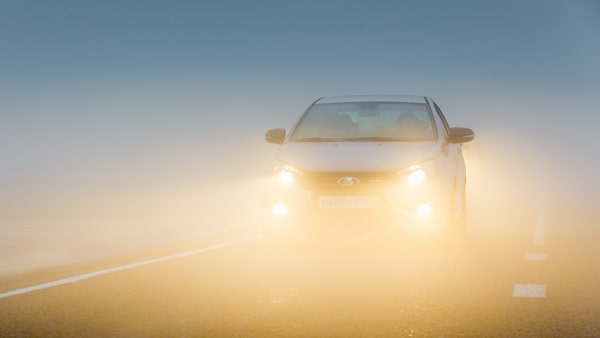
When driving in heavy fog, you should reduce speed and use your:

When it is very foggy, you should slow down and turn on your:
  1. A. Low-beam headlights
  2. B. High-beam headlights
  3. C. Parking lights only
  4. D. Emergency flashers continuously

Correct answer: A. – Low-beam headlights

Use low-beam headlights and reduce speed when driving in fog. High beams can reflect from the moisture and create glare, making the roadway more difficult to see. If the fog is dense enough to impair your vision, the driver’s guide advises against continuing to drive except to reach a safe place off the highway.

Source: La. R.S. 32:301(A)(2) – When lighted lamps are required, Class D & E Driver’s Guide — Ch. 8, “Weather Changes”

Question 4

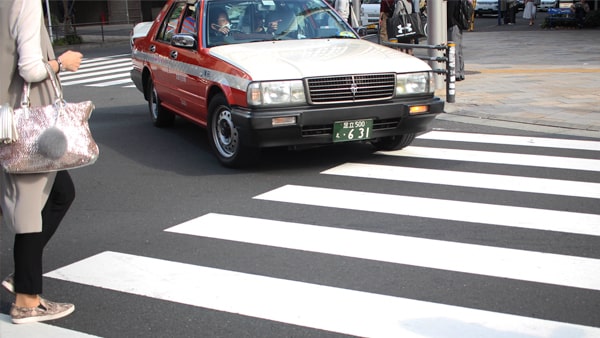
At an intersection without operating traffic signals, a driver is turning onto a road where a pedestrian is crossing within the crosswalk. Who must yield?

Who must yield when a driver is turning and a pedestrian is crossing without a traffic light?
  1. A. The person who entered the intersection last
  2. B. The driver
  3. C. The slower road user
  4. D. The pedestrian in every situation

Correct answer: B. – The driver

Louisiana law requires the driver to stop and yield when a pedestrian is within a crosswalk on the roadway the vehicle is traveling on or turning onto. The pedestrian also may not suddenly enter the path of a vehicle that is too close for the driver to yield. Drivers must remain prepared to avoid a collision.

Source: La. R.S. 32:212(A), (B) – Pedestrians right-of-way in crosswalks, La. R.S. 32:214 – Drivers to exercise due care

Question 5

A pedestrian is crossing within an unmarked crosswalk at an intersection with no traffic signals. What must an approaching driver do?

  1. A. Stop and yield to the pedestrian
  2. B. Proceed because only marked crosswalks count
  3. C. Sound the horn and maintain speed
  4. D. Yield only if the pedestrian is directly in front of the vehicle

Correct answer: A. – Stop and yield to the pedestrian

An unmarked crosswalk at an intersection is covered by the crosswalk right-of-way rule. The driver must stop and yield when the pedestrian is crossing the roadway on which the vehicle is traveling or the roadway it is entering. The pedestrian may not suddenly step into the path of a vehicle that is too close to yield.

Source: La. R.S. 32:212(A), (B) – Pedestrians right-of-way in crosswalks, La. R.S. 32:213(A) – Crossing at other than crosswalks

Question 6

When is it appropriate to use high-beam headlights at night?

  1. A. Only while driving inside a city
  2. B. While following another vehicle within 200 feet
  3. C. On a dark road when no oncoming vehicle is within 500 feet and no vehicle ahead is within 200 feet
  4. D. Whenever you are driving through dense fog

Correct answer: C. – On a dark road when no oncoming vehicle is within 500 feet and no vehicle ahead is within 200 feet

Louisiana requires drivers to dim their upper beams when approaching an oncoming vehicle within 500 feet or following another vehicle within 200 feet. High beams can be useful on dark roads when those restrictions do not apply. Use low beams in fog, heavy rain, or similar conditions because high-beam light can reflect back and create glare.

Source: La. R.S. 32:322(A)–(C) – Use of multiple beam road lighting equipment, Class D & E Driver’s Guide — Ch. 8, “At Night”