Louisiana DMV Sign Test 3

5 out of 5 (50 votes)
80% Passing score
20 Questions
4 Mistakes allowed
A Louisiana road signs test is where a lot of permit prep gets more practical, and a little less forgiving. The signs themselves may look familiar but the real issue is whether you can recognize the shape, meaning, and driving action without overthinking it. This Louisiana road signs test gives you 20 questions on the signs you’ll be expected to know for the Louisiana DMV knowledge test, and you’ll need 16 correct answers to pass. That number is not random trivia, either. Louisiana requires at least 80% accuracy on the knowledge exam, so a practice test built around that same standard is a decent way to see whether you’re actually ready or just sort of nodding along because a red octagon feels familiar. And, well, plenty of people do exactly that. They know the obvious signs, then lose points on warning signs, lane-use signs, school-zone signs, or the quiet little details that matter once you’re driving outside Baton Rouge, through New Orleans traffic, near Shreveport, or on those longer stretches where the signs are doing more work than you realize. For younger drivers, this fits into a larger Louisiana licensing process. A Class E learner’s permit begins at age 15, and applicants under 18 must complete the 38-hour driver education course: 30 hours in the classroom and 8 hours behind the wheel. The knowledge test comes after the classroom portion. Before moving on to an intermediate license, a teen driver must hold the learner’s permit for at least 180 days, complete 50 hours of supervised driving, including 15 at night, and pass the road skills test. Adults have a slightly different path, though the testing still matters. First-time applicants age 18 or older may complete the 38-hour driver education course or the 14-hour pre-licensing course, which includes 6 hours of classroom instruction and 8 hours of behind-the-wheel training. They still need the vision screening, Class E knowledge test, and road skills test. Use this Louisiana DMV practice test as focused sign practice, not as a quick skim before the appointment. Retake it, miss a few, learn why, and take it again. That is the unflashy part of getting ready, but it is also the part that keeps the real test from feeling like a guessing game with a state seal on it.
FREE DMV Practice Test App
Study for your Louisiana permit test or driver’s license with the NextDoorDriving app. 700+ DMV questions and answers, 100% free!
Download on the App Store

Sample Louisiana Permit Test Questions

Question 1

What action is required at the pictured stop sign?
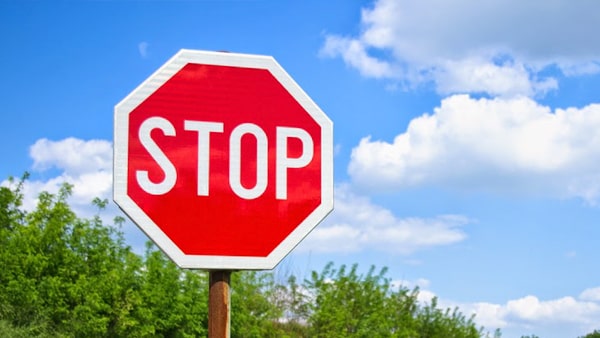
When you see this sign, you must:
  1. A Come to a complete stop and yield to pedestrians and conflicting traffic
  2. B Reduce speed without stopping if the road appears clear
  3. C Stop and wait for a green traffic signal
  4. D Slow down and check only for vehicles

Correct answer: A – Come to a complete stop and yield to pedestrians and conflicting traffic

At a stop sign, the driver must stop at the marked stop line or at the legally required location when no line is present. After stopping, the driver must yield to vehicles already in the intersection or approaching closely enough to present an immediate hazard. A complete stop is required even when no conflicting traffic is visible.

Source: La. R.S. § 32:123(B) – Stop signs and yield signs; penalties for violations, Louisiana Class D & E Driver’s Guide — Ch. 3, “Regulatory Signs”

Question 2

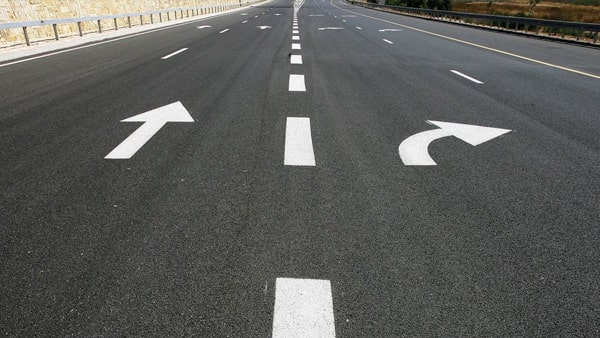
What does a broken white line separating two lanes indicate?

A broken white center line on the roadway means:
  1. A Turns from either lane are prohibited
  2. B Drivers must reduce speed before crossing it
  3. C The roadway is a no-passing zone
  4. D Drivers may change lanes when the movement can be made safely

Correct answer: D – Drivers may change lanes when the movement can be made safely

A broken white line separates lanes traveling in the same direction. It may be crossed when a lane change can be completed safely. State law requires a driver to remain within a single lane until the driver has first determined that moving from it can be done safely.

Source: La. R.S. § 32:79(1) – Driving on roadway laned for traffic, Louisiana Class D & E Driver’s Guide — Ch. 3, “Lane Markings”

Question 3

Which pavement marking identifies the right edge of a roadway?

  1. A A broken yellow centerline
  2. B A yellow edge line
  3. C A white edge line
  4. D A double white lane line

Correct answer: C – A white edge line

A white edge line marks the right edge of the roadway. On divided streets and highways, a yellow edge line may mark the left edge. These edge markings help drivers identify the limits of the traveled roadway, particularly when visibility is reduced.

Source: Louisiana Class D & E Driver’s Guide — Ch. 3, “Lane Markings”” ” “Lane Markings””?? Actually malformed. Need fix JSON? I need output valid. Let's regenerate whole final carefully.

Question 4

What may you do when facing a steady circular green signal?

  1. A Stop and wait for a flashing signal
  2. B Enter immediately without checking the intersection
  3. C Proceed if permitted, after yielding to traffic and pedestrians already in the intersection
  4. D Continue straight, but never turn

Correct answer: C – Proceed if permitted, after yielding to traffic and pedestrians already in the intersection

Louisiana permits traffic facing a circular green signal to proceed straight or turn unless a sign prohibits the turn. Drivers must first yield to vehicles and pedestrians lawfully within the intersection or an adjacent crosswalk. A green signal does not authorize entering an intersection that is not clear.

Source: La. R.S. 32:232(1)(a) – Traffic-control signals

Question 5

What does a yellow diamond-shaped sign with a black symbol generally indicate?

A yellow and black diamond-shaped sign:
  1. A A warning about a roadway or traffic condition ahead
  2. B Directions to a city or route
  3. C A traffic law that must be obeyed
  4. D A highway work zone

Correct answer: A – A warning about a roadway or traffic condition ahead

Yellow diamond-shaped signs warn drivers of approaching conditions such as curves, side roads, or changes in traffic flow. Diamond signs used in construction areas are orange rather than yellow. Regulatory and route signs use other shapes and color patterns.

Source: Class D & E Driver’s Guide — Ch. 3, “Traffic Signs”

Question 6

On a standard vertical traffic signal, what is the color order from top to bottom?

From top to bottom, the following is the proper order for traffic lights:
  1. A Red, yellow, green
  2. B Red, green, yellow
  3. C Green, red, yellow
  4. D Green, yellow, red

Correct answer: A – Red, yellow, green

A standard vertical signal displays red at the top, yellow in the middle, and green at the bottom. On a horizontal signal, the same sequence runs from left to right. Knowing the position of each light can help a driver identify the indication even when visibility or color recognition is limited.

Source: Class D & E Driver’s Guide — Ch. 3, “Traffic Signals”