


Louisiana DMV Permit Test Simulator

4.7 out of 5 (142 votes)
80% Passing score
40 Questions
8 Mistakes allowed
A good Louisiana permit practice test should feel close enough to the real thing that nothing about test day feels brand-new. The actual Class E learner’s permit knowledge exam has 40 questions, and you need an 80% score to pass, which means at least 32 correct answers. That number matters. Miss more than 8, and you are not walking out with the result you wanted. This Louisiana permit practice test is built to match that structure closely, using 40 randomly selected questions each time so the practice does not turn into memorizing the same neat little loop of answers. You will see material that reflects the official Louisiana Class D & E Driver’s Guide, including traffic laws, signs and signals, pavement markings, safe driving habits, driver responsibility, alcohol laws, emergencies, vehicle requirements, and those rules of the road that can feel perfectly simple until the answer choices start splitting hairs. And, yes, Louisiana driving has its own flavor. Baton Rouge traffic is not the same as a quiet parish road, and a sunny drive can become a heavy-rain situation faster than anyone appreciates. This practice test keeps that in mind without turning the whole thing into a weather lecture. You will work through questions on right-of-way, lane use, speed limits, seat belts, DUI rules, insurance, registration, sharing the road, and driving safely when visibility, water, or general road chaos decides to join the trip. It also helps to understand where the test fits in the licensing process. Teen drivers usually begin with a Temporary Instructional Permit, or TIP, before driver education, behind-the-wheel instruction, the knowledge test, or the road skills test. A learner’s permit may be issued at age 15, and Louisiana’s graduated licensing program moves from learner’s permit to intermediate license and then to a full Class E license. Adult first-time applicants follow a different path, usually through a 38-hour driver education course or a pre-licensing option with behind-the-wheel training. After each practice attempt, you can review the answers you missed and read the explanations. That is the part people skip and then regret, mildly or dramatically. The goal is not just to pass a Louisiana DMV practice test once. It is to know the material well enough that the real Louisiana permit test feels familiar, manageable, and much less like a guessing exercise.
FREE DMV Practice Test App
Study for your Louisiana permit test or driver’s license with the NextDoorDriving app. 700+ DMV questions and answers, 100% free!
Download on the App Store

Sample Louisiana Permit Test Questions

Question 1

When turning left from a one-way street onto another one-way street, which approach lane should you use?

  1. A. The extreme left lane legally available
  2. B. Any lane with a clear path
  3. C. The lane nearest the right curb
  4. D. Whichever lane has the least traffic

Correct answer: A. – The extreme left lane legally available

Louisiana requires a driver making this turn to approach from the extreme left-hand lane lawfully available. After entering the intersection, the driver must complete the turn into the safest lane lawfully available on the roadway being entered. Posted signs may direct a different course.

Source: La. R.S. 32:101(A)(3), (B) – Required position and method of turning at intersections
Question 2

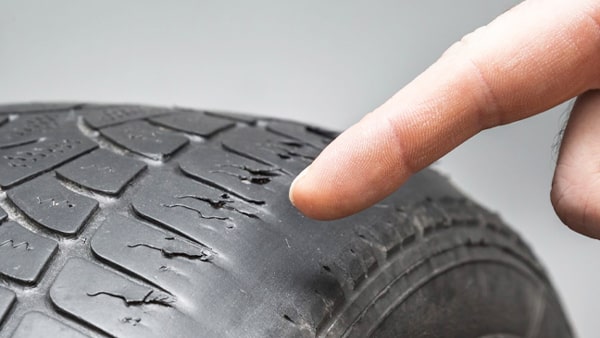
Why are badly worn tires especially hazardous on a wet roadway?

Worn or bald tires:
  1. A. They make hydroplaning more likely
  2. B. They improve traction only at low speeds
  3. C. They shorten braking distance
  4. D. They eliminate the need to reduce speed

Correct answer: A. – They make hydroplaning more likely

Good tire tread helps reduce the danger of hydroplaning on wet roads. The driver’s guide advises maintaining proper tire pressure, replacing worn tires, slowing down, and avoiding puddles. Worn tires should be replaced rather than treated as suitable for continued wet-weather driving.

Source: Class D & E Driver’s Guide — Ch. 8, “Skids”

Question 3

How should your front wheels be positioned when parking downhill beside a curb?

  1. A. Turned toward the curb
  2. B. Turned away from the curb
  3. C. Pointed straight ahead
  4. D. Turned in either direction

Correct answer: A. – Turned toward the curb

When facing downhill beside a curb, turn the front wheels toward the curb. Always set the parking brake and place an automatic transmission in park or a manual transmission in the appropriate gear. This positioning helps keep the vehicle out of traffic if the brakes do not hold.

Source: Class D & E Driver’s Guide — Ch. 5, “Parking on Hills”

Question 4

Tailgating another vehicle:

  1. A. Is permitted whenever traffic is moving slowly
  2. B. Leaves too little time to avoid a possible crash
  3. C. Prevents other drivers from entering your lane
  4. D. Improves the flow of congested traffic

Correct answer: B. – Leaves too little time to avoid a possible crash

The driver’s guide warns that following too closely does not leave the time needed to avoid a possible crash. Louisiana law requires a following distance that is reasonable and prudent for the vehicles’ speed, traffic, and highway conditions. Maintain enough space to respond safely if the vehicle ahead slows or stops.

Source: La. R.S. 32:81(A) – Following vehicles; exceptions, Class D & E Driver’s Guide — Ch. 5, “Defensive Driving Techniques”

Question 5

Driving substantially slower than normal traffic without a safety reason:

  1. A. Can create danger and unlawfully impede traffic
  2. B. Is always the safest driving technique
  3. C. Is required when using the left lane
  4. D. Has no effect on surrounding traffic

Correct answer: A. – Can create danger and unlawfully impede traffic

Louisiana prohibits driving so slowly that you impede the normal and reasonable movement of traffic, unless a special hazard requires the lower speed. The driver’s guide also warns that unusually slow driving can be dangerous because impatient motorists may take unnecessary chances to pass. Drive at a lawful speed appropriate for existing conditions.

Source: La. R.S. 32:64(A), (B) – General speed law, Class D & E Driver’s Guide — Ch. 6, “Traffic Laws and Regulations”

Question 6

Which statement follows Louisiana child-restraint law?

  1. A. A child younger than 13 must ride in the rear seat when one is available and be properly restrained
  2. B. A child younger than two may face forward after reaching 20 pounds
  3. C. A child no longer needs a booster seat after turning six
  4. D. Child restraints are optional when the vehicle is moving slowly

Correct answer: A. – A child younger than 13 must ride in the rear seat when one is available and be properly restrained

La. R.S. 32:295(A)(5) requires a child younger than 13 to ride properly restrained in the rear seat when one is available. Children younger than two must remain rear-facing until reaching the restraint manufacturer’s height or weight limit. Under Subsection I, fines are $100 for a first offense, $250–$500 for a second, and $500 plus court costs for a third or subsequent offense, subject to the statute’s age-or-size-restraint limitation.

Source: La. R.S. 32:295(A)(1), (5), (6), (I) – Child passenger restraint system