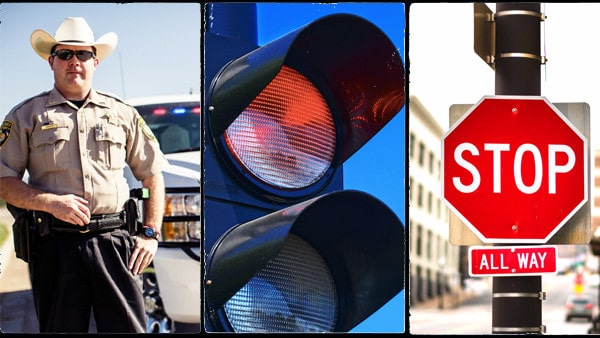
Maryland MVA Permit Practice Test 6

4.8 out of 5 (145 votes)
80% Passing score
20 Questions
4 Mistakes allowed
This Maryland MVA permit practice test is the sixth test in the series, and it stays close to one of those topics drivers think they already understand: turn signals. That sounds simple enough, maybe even too simple, but Maryland’s knowledge test is not only checking whether you know that a blinking light exists on the steering column. It is checking whether you understand when to signal, why it matters, how it affects lane changes and turns, and how your choices give other drivers enough warning to react without everyone doing that tiny, irritated brake-tap dance. The real Maryland learner’s permit knowledge test is administered by MDOT MVA and is based on the Maryland Driver’s Manual. It covers traffic laws, road signs and signals, safe driving rules, defensive driving, sharing the road, and Rookie Driver / graduated licensing requirements. For learner’s permit applicants, the test uses 25 multiple-choice questions, allows 20 minutes, and requires 22 correct answers to pass. So, yes, the margin is thin. You can miss only three, which is a small number in the deeply unromantic world of permit testing. This MD MVA driving test practice gives you 20 multiple-choice questions designed to help you study the same general material in a more focused way. It is not the official test, and it does not replace the Driver’s Manual or a required driver education course. Still, it is a useful checkpoint, especially because each answer includes immediate feedback and an explanation. That part matters more than people admit. Memorizing an answer can get you through one question; understanding why the answer is right helps when the MVA phrases the same rule in a slightly different, more fussy way later. This Maryland MVA practice permit test is useful for first-time drivers, teen applicants, adult beginners, renewing drivers, and older drivers who want a careful refresher before dealing with the real thing. Teen applicants in Maryland may apply for a learner’s permit at 15 years and 9 months, and applicants under 16 have additional school attendance or identity-verification paperwork. Adult first-time drivers are still part of Maryland’s Rookie Driver process, too, though some supervised driving and permit-holding requirements vary by age. Use this practice test as a study tool with a little bite to it: read the explanation, notice the rule behind the question, and keep going until signaling feels automatic rather than vaguely familiar.
FREE DMV Practice Test App
Study for your Maryland permit test or driver’s license with the NextDoorDriving app. 700+ DMV questions and answers, 100% free!
Download on the App Store

Sample Maryland Permit Test Questions

Question 1

At an all-way stop, you arrived before the driver on your right. Once the intersection is clear, what should you do?

  1. A Wave the other driver through regardless of arrival order
  2. B Proceed first after verifying that it is safe
  3. C Remain stopped until every other vehicle has left

Correct answer: B – Proceed first after verifying that it is safe

Right-of-way rules provide an orderly sequence at intersections. A driver should yield to a vehicle that is already at the intersection or arrived first; the driver on the right has priority when both arrive at the same time. Even when it is your turn, check that other road users are yielding before proceeding.

Source: Maryland Driver’s Manual — § 3.B, “Right-of-Way”
Question 2

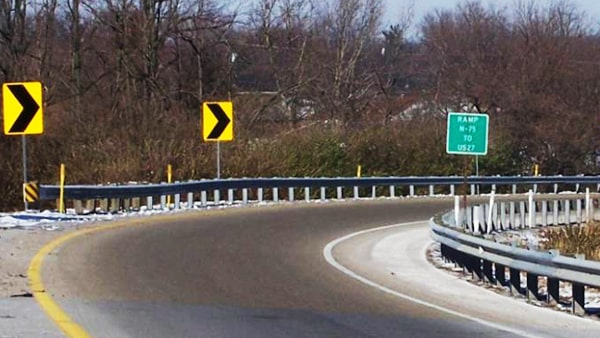
When an exit ramp curves downhill, when should you reduce to a safe speed?

If you exit a freeway with a ramp that curves downhill, you should:
  1. A After completing the curve
  2. B Only after entering the curve
  3. C Before entering the curve
  4. D After accelerating into the curve

Correct answer: C – Before entering the curve

Begin reducing speed in the deceleration lane and continue toward the posted ramp speed. Slow to a safe speed before entering the curve because braking during a curve can make a skid more likely. A downhill grade can also cause vehicle speed to increase, requiring careful speed control.

Source: Maryland Driver’s Manual — § 6.J, “Interstate Driving and Limited Access Highways”, Maryland Commercial Driver’s License Manual — § 2.6.3, “Speed and Curves”

Question 3

A police officer directs you to proceed even though the traffic signal is red. Which instruction must you follow?

Which of the following must you obey over the other three?
  1. A The steady red signal
  2. B The police officer’s lawful direction
  3. C A nearby stop sign
  4. D The pavement markings

Correct answer: B – The police officer’s lawful direction

A person may not willfully disobey a lawful order or direction from a police officer. The driver’s manual also identifies police directions as an exception to the normal requirement to follow traffic-control devices. Follow the officer’s direction even when it differs from a signal, sign, or pavement marking.

Source: Md. Code, Transp. § 21-103(a)(1) – Disobedience of Lawful Orders or Direction of Police Officers Prohibited, Maryland Driver’s Manual — § 4, “Signs, Signals and Pavement Markings”

Question 4

Which practice helps other road users understand what you intend to do?

  1. A Communicating with signals, brake lights, flashers, or the horn when appropriate
  2. B Ignoring nearby drivers and pedestrians
  3. C Using side roads whenever traffic is heavy
  4. D Avoiding all driving during peak travel periods

Correct answer: A – Communicating with signals, brake lights, flashers, or the horn when appropriate

Safe driving includes letting other road users know what you plan to do. Turn signals communicate intended turns and lane movements, while brake lights show that you are slowing. Emergency flashers and the horn can also provide warnings when used appropriately, but they do not replace careful observation or right-of-way rules.

Source: Maryland Driver’s Manual — § 3.A, “Risk Management”, Md. Code, Transp. § 21-604(c)–(f) – Use of Signals Required to Indicate Turns, Lane Changes, and Starts or Stops of Vehicles

Question 5

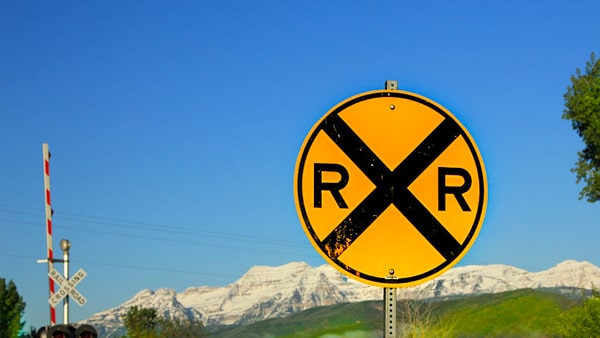
A round yellow sign with a black X and the letters “RR” warns that you are approaching:

This sign is a warning that you are approaching:
  1. A A four-way intersection
  2. B A pedestrian crossing
  3. C A railroad crossing
  4. D A blasting area

Correct answer: C – A railroad crossing

A round warning sign indicates that a railroad crossing is ahead. It is an advance warning rather than the marker at the tracks themselves. Watch for trains, crossing gates, flashing signals, and vehicles that may be required to stop before the tracks.

Source: Maryland Driver’s Manual — § 4.B, “Colors & Shapes”, Maryland Driver’s Manual — § 6.G, “Railroad Crossings”

Question 6

What do orange traffic signs normally warn drivers about?

  1. A Construction or maintenance work areas
  2. B Food, fuel, and lodging services
  3. C Recreational and cultural sites
  4. D Railroad crossings

Correct answer: A – Construction or maintenance work areas

Orange signs warn of construction and maintenance work areas. Work zones may include workers, equipment, temporary traffic-control devices, lane shifts, closures, detours, or uneven surfaces. Pay close attention and be prepared for unexpected changes in the normal traffic pattern.

Source: Maryland Driver’s Manual — § 4.B, “Colors & Shapes”, Maryland Driver’s Manual — § 6.H, “Work Zone Safety”