Maryland Road Signs Test

4.7 out of 5 (164 votes)
80% Passing score
10 Questions
2 Mistakes allowed
Maryland’s learner’s permit knowledge test is broader than a road signs quiz, and that matters when you are deciding how to study. The MDOT MVA bases the noncommercial learner’s permit test on the Maryland Driver’s Manual, so road signs and signals are in there, yes, but they sit beside Maryland traffic laws, safe driving rules, defensive driving practices, sharing-the-road rules, and the Rookie Driver graduated licensing requirements. It is all one test. No separate road-sign-only exam for a standard learner’s permit, no neat little box where signs live by themselves. Convenient? Maybe. A little less tidy than people expect? Also yes. This Maryland MVA practice test is built around that actual setup. The real knowledge test uses 25 multiple-choice questions, and you need 22 correct answers to pass, which is an 88% score. That means you can miss up to three questions. Not four, not “almost enough,” not the kind of score that rewards casual skimming. You also have 20 minutes, so knowing the material before you sit down is doing yourself a favor in the most practical, unromantic sense. Use this Maryland permit practice test to get comfortable with the way the material can show up. Some questions may deal with regulatory signs, warning signs, guide signs, traffic signals, pavement markings, sign colors, sign shapes, lane-control signs, and right-of-way rules. Others may push into traffic laws or safe-driving decisions, because the MVA test is checking whether you can apply the rules, not just recognize a sign that you saw once on a flashcard. And, awkwardly but importantly, those two skills overlap more than people want them to. The questions here are written to resemble the format and feel of the real MVA permit test without copying official exam questions. That distinction matters. Memorizing a few canned answers can make you feel prepared while leaving weird gaps underneath, and those gaps tend to show up at the least charming moment. A stronger approach is to work through the practice questions, review the ones you miss, and notice what keeps repeating. If sign colors and shapes are shaky, stay there for a while. If Maryland traffic law questions slow you down, go back to the manual. The goal is not just passing the test; it is walking into the MVA with fewer surprises than you would have had otherwise.
FREE DMV Practice Test App
Study for your Maryland permit test or driver’s license with the NextDoorDriving app. 700+ DMV questions and answers, 100% free!
Download on the App Store

Sample Maryland Permit Test Questions

Question 1

Which centerline prohibits passing by traffic traveling in either direction?

  1. A A solid yellow line beside a broken yellow line
  2. B A single broken yellow line
  3. C Two solid yellow lines
  4. D A single broken white line

Correct answer: C – Two solid yellow lines

Two solid yellow centerlines separate opposing traffic and prohibit passing in both directions. This restriction concerns passing, not every crossing of the marking. The Maryland manual permits a driver to cross double solid yellow lines when making a left turn, such as into a driveway.

Source: Maryland Driver’s Manual — § 4.C, “Types of Line Markings”
Question 2

A steady yellow signal appears as you approach an intersection. What should you do?

  1. A Accelerate to enter before the light changes
  2. B Continue at the same speed after yielding
  3. C Stop if you can do so safely; otherwise continue carefully
  4. D Stop immediately even if hard braking is required

Correct answer: C – Stop if you can do so safely; otherwise continue carefully

A steady yellow signal warns that the related green movement is ending or that a red signal will appear next. Stop safely if you have enough time and distance. If you are too close to stop safely, continue through the intersection carefully rather than braking abruptly.

Source: Md. Code, Transp. § 21-202(g)(1), Maryland Driver’s Manual — § 4.A, “Vehicle Signals”

Question 3

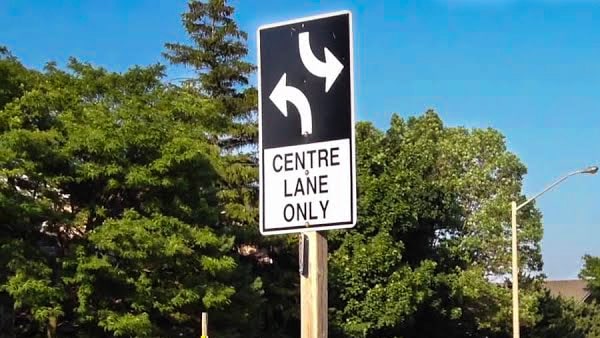
Under Maryland law, how may a driver use a two-way left-turn center lane?

From the center lane, what maneuvers can you perform?
  1. A To prepare for or make a left turn into or from the roadway, or a lawful U-turn
  2. B To continue driving while waiting for an opening
  3. C To pass slower traffic
  4. D To merge into a through-traffic lane

Correct answer: A – To prepare for or make a left turn into or from the roadway, or a lawful U-turn

A two-way left-turn lane may be entered when preparing for or making a left turn into or from the roadway or when preparing for or making a U-turn. The lane must be clear of opposing movement. A driver must travel in it only for the shortest practicable distance needed for the maneuver.

Source: Md. Code, Transp. § 21-309(g)–(i)

Question 4

Before crossing a broken white or yellow line, what must a driver determine?

  1. A The movement can be completed safely without interfering with traffic
  2. B The vehicle ahead is disabled
  3. C The turn signal has operated for a full minute
  4. D The roadway is one-way

Correct answer: A – The movement can be completed safely without interfering with traffic

Broken white lines generally permit lane changes between lanes moving in the same direction. Broken yellow centerlines may permit careful passing on a two-way roadway. Before leaving a lane, the driver must determine that the movement is safe, and a passing maneuver may not interfere with the safe operation of other vehicles.

Source: Md. Code, Transp. § 21-309(b), Maryland Driver’s Manual — § 3.F, “Lane Driving”; § 3.I, “Passing”, Maryland Driver’s Manual — § 4.C, “Types of Line Markings”

Question 5

What does the five-sided warning sign shown identify?

This road sign means:
  1. A A school crossing
  2. B A business district
  3. C A sidewalk-only area
  4. D A location where crossing is prohibited

Correct answer: A – A school crossing

A pentagon-shaped sign warns of a school zone or marks a school crossing. Be prepared for children entering or crossing the roadway. Drivers must also obey directions given by a uniformed school crossing guard.

Source: Maryland Driver’s Manual — § 4.B, “Colors & Shapes” and “Warning Signs”

Question 6

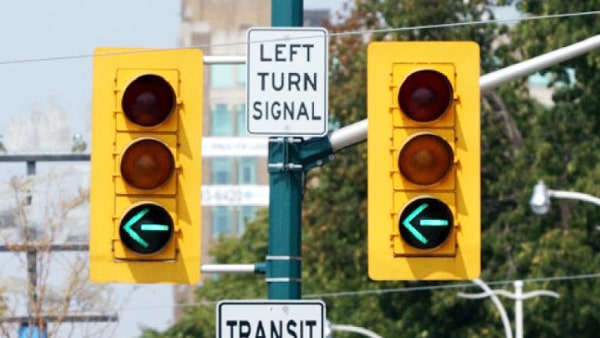
What movement does a steady green arrow pointing left permit?

On the intersection, if you see a green arrow pointing to the left, you can:
  1. A Travel in any direction
  2. B Turn left cautiously while yielding to lawful users of the intersection
  3. C Turn left or continue straight regardless of other signal indications
  4. D Turn left only after oncoming traffic receives a green signal

Correct answer: B – Turn left cautiously while yielding to lawful users of the intersection

Maryland law permits traffic facing a green arrow to cautiously enter the intersection for the movement shown by the arrow. A left-pointing arrow permits the indicated left turn. The turning driver must still yield to pedestrians, bicyclists, and other traffic lawfully using the intersection or adjacent crosswalk.

Source: Md. Code, Transp. § 21-202(d), (e)