Michigan DMV Sign Test 3

4.9 out of 5 (183 votes)
80% Passing score
20 Questions
4 Mistakes allowed
Michigan road signs are not the part of driving prep people usually brag about studying, which is fair. Nobody is framing a yield sign chart for the living room. Still, for the Michigan permit test, signs matter in a very real way, especially if you are 18 or older and going through the adult licensing process. The official knowledge test includes a separate Signs segment, not just a few sign questions tossed in for decoration, so this Michigan road signs test is meant to give that section the attention it quietly demands. This Michigan DMV sign test gives you 20 focused questions on the shapes, colors, symbols, and meanings you are expected to recognize without turning every answer into a long internal debate. The real adult Signs segment has 25 questions, and you need 20 correct to pass. So, yes, you can miss a few. Five, to be exact. That sounds generous until you realize how quickly one confusing lane-use sign and one oddly familiar warning sign can start eating into that cushion. Adults age 18 and older have to pass both parts of the written knowledge exam before Michigan will issue a Temporary Instruction Permit, or TIP. The Operator section takes about 45 minutes, while the Signs segment takes about 15 minutes, which is just long enough to punish the “I’ll recognize them when I see them” approach. After the TIP is issued, an adult first-time driver still needs at least 30 days of supervised practice with a licensed adult before scheduling the road skills test. Also, the TIP is valid for 180 days, so it is not something to toss into a drawer and rediscover during a cleaning spree. Teen drivers deal with road signs earlier, through Segment 1 driver education. That path starts as young as 14 years and 8 months and includes classroom instruction, behind-the-wheel driving, observation time, and a written exam before the Level 1 Learner’s License stage. From there, Michigan’s Graduated Driver Licensing program adds supervised hours, Segment 2, nighttime driving, and the usual “prove you can handle this responsibly” requirements. Use this Michigan permit practice test as a rehearsal, not a one-and-done victory lap. Run through it, notice what you miss, go back to the Michigan Driver’s Handbook, and then do it again. The point is not memorizing cute little sign trivia. It is getting fast enough and sure enough that when a sign shows up on the road, your brain does not hold a committee meeting before deciding what it means.
FREE DMV Practice Test App
Study for your Michigan permit test or driver’s license with the NextDoorDriving app. 700+ DMV questions and answers, 100% free!
Download on the App Store

Sample Michigan Permit Test Questions

Question 1

Which centerline marking prohibits passing another motor vehicle in either direction?

  1. A A broken white line
  2. B Two solid yellow lines
  3. C A broken yellow line
  4. D A solid white line

Correct answer: B – Two solid yellow lines

In Michigan, yellow centerlines separate opposing traffic. Two solid yellow lines mean motorists traveling in either direction may not enter the opposing lane to pass another motor vehicle. A broken yellow line permits passing only when it is beside your lane and the maneuver is otherwise lawful and safe.

Source: MCL § 257.640 – No-passing zones; determination; signs or markings; traffic control devices; violation as civil infraction, What Every Driver Must Know — Ch. 5, “Yellow lines”
Question 2

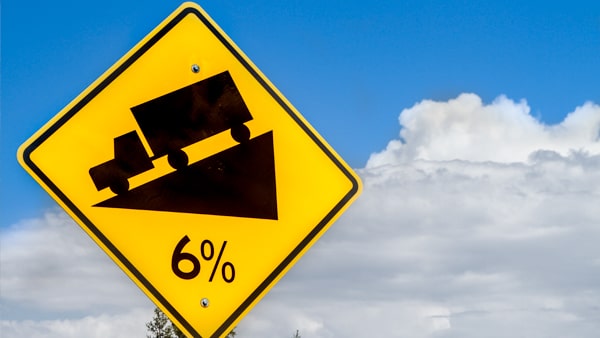
A yellow diamond sign shows a truck descending a steep slope. What does it warn of?

This sign means:
  1. A A weight restriction for trucks
  2. B A steep downslope ahead
  3. C A truck service area ahead
  4. D A roadway closed to trucks

Correct answer: B – A steep downslope ahead

The HILL warning sign indicates that a steep downslope is ahead. Drivers should prepare for the descent, and the official manual advises checking that brakes are working properly and using a lower gear if necessary, especially in large vehicles. It is not a truck-weight or truck-route sign.

Source: What Every Driver Must Know — Ch. 5, “Traffic sign challenge answers,” Hill

Question 3

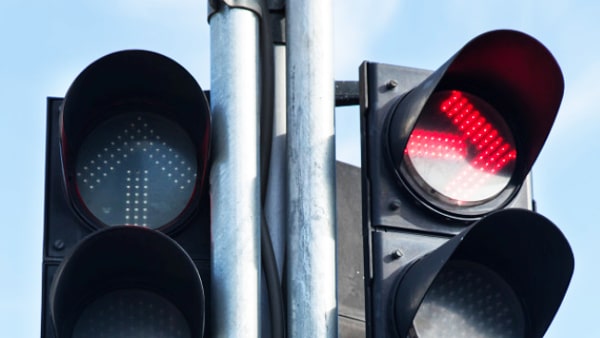
What must you do when facing a steady red arrow pointing right?

A red arrow pointing to the right on a traffic light means you may:
  1. A Stop, then turn if the roadway is clear
  2. B Stop and wait until the signal permits the turn
  3. C Slow down and turn without stopping
  4. D Turn if vehicles behind you are waiting

Correct answer: B – Stop and wait until the signal permits the turn

In Michigan, a red arrow applies to the movement indicated by the arrow. You must stop, and the official driver manual states that you cannot make the indicated turn until the signal changes. This differs from a right turn made after stopping at a steady circular red signal when that turn is not prohibited.

Source: MCL § 257.612(1), (1)(c) – Traffic control signals; red arrow indications; colors, What Every Driver Must Know — Ch. 5, “Flashing yellow arrow left-turn signal head”

Question 4

What color pavement lines normally separate traffic moving in opposite directions?

  1. A White
  2. B Red
  3. C Black
  4. D Yellow

Correct answer: D – Yellow

Yellow lines separate lanes carrying traffic in opposite directions. They may be broken, solid, or used in combinations that communicate whether passing is permitted. White lines generally separate lanes moving in the same direction or mark the right edge of the roadway.

Source: What Every Driver Must Know — Ch. 5, “Yellow lines”, What Every Driver Must Know — Ch. 5, “White lines”

Question 5

You plan to turn left when a green arrow changes to a circular green light. What must you do?

  1. A Yield to oncoming traffic and lawful crosswalk users before turning
  2. B Proceed straight because left turns are no longer allowed
  3. C Turn immediately because the turn remains protected
  4. D Stop and wait for the next red light

Correct answer: A – Yield to oncoming traffic and lawful crosswalk users before turning

In Michigan, a circular green signal permits a left turn unless a sign prohibits it. Unlike a green arrow, the circular green light does not indicate that oncoming traffic is stopped. Before turning, yield to oncoming vehicles and to pedestrians or bicyclists lawfully within the intersection or adjacent crosswalk.

Source: MCL § 257.612(1)(a) – Traffic control signals; colors, What Every Driver Must Know — Ch. 5, “Steady green arrow”

Question 6

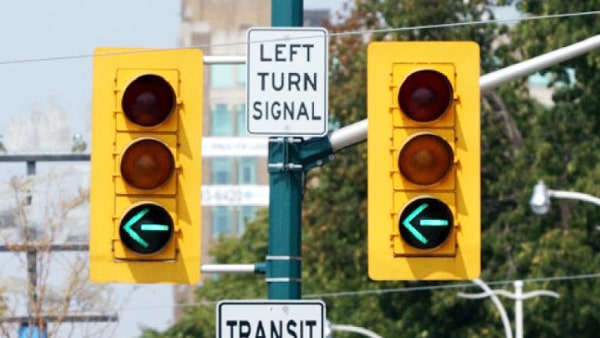
What does a steady green left arrow authorize?

A green arrow pointing to the left on a traffic light means you may:
  1. A A left turn or straight movement from any lane
  2. B A left turn only after first stopping
  3. C A protected left turn in the arrow’s direction
  4. D A left turn without checking the intersection

Correct answer: C – A protected left turn in the arrow’s direction

A steady green arrow permits movement in the arrow’s direction and indicates that oncoming traffic is stopped. This is commonly called a protected turn. Enter cautiously and yield to pedestrians, bicyclists, or other traffic lawfully remaining within the intersection or adjacent crosswalk.

Source: MCL § 257.612(1)(d) – Traffic control signals; green arrow indications; colors, What Every Driver Must Know — Ch. 5, “Steady green arrow”