


Nebraska DMV Test Evaluation

4.7 out of 5 (66 votes)
80% Passing score
10 Questions
2 Mistakes allowed
A Nebraska DMV practice test should do more than toss a few road sign questions at you and call it preparation. This one is built as a quick, practical check on whether the basics are actually sticking: traffic laws, right-of-way rules, signs, signals, pavement markings, railroad crossings, safe driving habits, and the alcohol-and-driving material that tends to show up because, well, it matters. The format is short on purpose. You get 10 random questions, untimed, so there is room to slow down and read like a person who is trying not to miss something obvious. Aim for at least 8 correct answers. That score is not a magic guarantee, and it should not be treated like one, but it is a decent signal that you are moving in the right direction before taking a longer Nebraska DMV permit practice test or reviewing the Driver’s Manual again. For the official Nebraska learner’s permit knowledge test, the practical benchmark to know is 25 questions, with 20 correct answers needed to pass. The test is based on the Nebraska Driver’s Manual, and it covers more than basic sign recognition. Road signs are included, yes, but Nebraska does not treat the standard Class O learner exam as a separate road-sign-only test. Signs sit inside the larger written knowledge test alongside rules of the road, speed laws, parking rules, sharing the road, night driving, bad-weather driving, and all those small details people swear they know until they have to choose between two almost-right answers. The licensing process is where Nebraska gets a little more layered. A School Learner’s Permit can begin at age 14, a regular Learner’s Permit at 15, and a Provisional Operator’s Permit at 16. Depending on the route, applicants may need a vision test, written test, driver safety course, 50-hour certification form, or supervised driving hours. Teens moving toward a POP have different requirements than adults applying for a first Class O license, and new residents have their own transfer rules. So use this Nebraska learners permit practice test as a first pass, not the whole study plan. It is best at showing where you are steady and where you are quietly guessing. Then go back through the manual, take more practice questions, and pay attention to the Nebraska-specific permit rules. Those details are not decorative. They are exactly the kind of thing that can separate “I studied” from “I’m ready.”
FREE DMV Practice Test App
Study for your Nebraska permit test or driver’s license with the NextDoorDriving app. 700+ DMV questions and answers, 100% free!
Download on the App Store

Sample Nebraska Permit Test Questions

Question 1

On a Nebraska road, a stopped school bus has flashing red lights and an extended stop arm. What must you do?
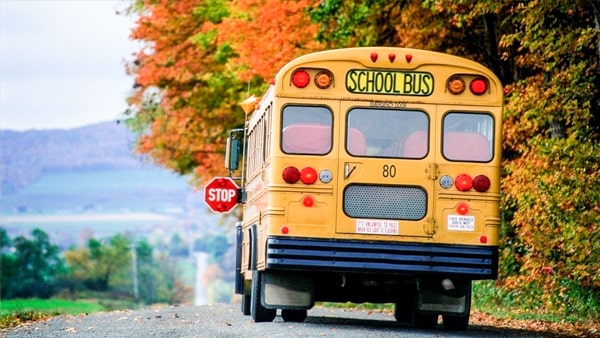
When a school bus has its lights flashing and its Stop arm extended, you must:
  1. A. Stop and remain stopped until the red lights are off, the arm is retracted, and the bus moves
  2. B. Pass as soon as all children have entered or left the bus
  3. C. Stop when approaching from the opposite direction on a divided highway
  4. D. Reduce speed and pass carefully

Correct answer: A. – Stop and remain stopped until the red lights are off, the arm is retracted, and the bus moves

Drivers meeting or overtaking the bus must stop and remain stopped until the red lights turn off, the stop arm retracts, and the bus resumes motion. Opposing traffic is exempt when the bus is on a different roadway of a divided highway. A violation is a Class IV misdemeanor carrying a $500 fine and three license points.

Source: Neb. Rev. Stat. § 60-6,175(1), (5) – School bus; safety requirements; use of stop signal arm; use of warning signal lights; violations; penalty., Neb. Rev. Stat. § 60-4,182(16) – Point system; offenses enumerated.
Question 2

When a circular traffic signal turns green, which response is correct?

  1. A. Wait exactly five seconds before moving
  2. B. Enter immediately even if your path is blocked
  3. C. Proceed when clear, yielding to anyone lawfully in the intersection or crosswalk
  4. D. Proceed because a green light gives an absolute right-of-way

Correct answer: C. – Proceed when clear, yielding to anyone lawfully in the intersection or crosswalk

A circular green signal allows a driver to proceed straight or make an otherwise permitted turn. The driver must yield to vehicles and pedestrians lawfully within the intersection or an adjacent crosswalk when the green indication appears. Enter only when the roadway is clear for the intended movement.

Source: Neb. Rev. Stat. § 60-6,123(1)(a) – Traffic control signals; meaning; turns on red signal, when; signal not in service; effect., Nebraska Driver’s Manual — § 3A-1, “Color and Types”

Question 3

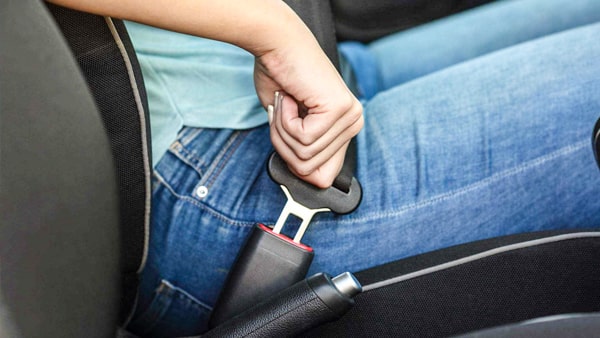
Seat belts provide the greatest protection when they are used by:

Seat belts can be most effective as injury preventive devices when they are worn by:
  1. A. Only the driver
  2. B. Passengers only on long trips
  3. C. Occupants only while traveling on an expressway
  4. D. The driver and every passenger on every trip

Correct answer: D. – The driver and every passenger on every trip

The safest practice is for every occupant to buckle up on every trip. Nebraska requires the driver and each front-seat occupant to wear properly adjusted restraints, while separate child-restraint requirements apply to passengers under 18. Violating the adult occupant-protection rule is a $25 traffic infraction, with no court costs or license points. Safety-belt use provides crash protection beyond the minimum legal requirements.

Source: Neb. Rev. Stat. § 60-6,270 – Occupant protection system; three-point safety belt system; use required; when; exceptions., Neb. Rev. Stat. § 60-6,272 – Occupant protection system; three-point safety belt system; violation; penalty., Nebraska Driver’s Manual — § 2B, “Air Bags – Child Restraints and Seat Belts”

Question 4

Which vehicle should you avoid following closely because it has a deep rear blind spot?

  1. A. A station wagon
  2. B. A large tour bus
  3. C. A standard passenger car
  4. D. All of the above have the same rear blind-spot area

Correct answer: B. – A large tour bus

Trucks and buses have deep rear blind spots, and the manual specifically warns drivers not to tailgate them. Staying far enough back to see the bus’s rearview mirrors also helps the bus driver see your vehicle. Maintain at least the general three-second following distance and increase it when adverse conditions require more space.

Source: Nebraska Driver’s Manual — § 6F-2, “No Zone”, Nebraska Driver’s Manual — § 5G-1, “Techniques”

Question 5

You are waiting to turn left at an intersection. An oncoming vehicle is close enough to be an immediate hazard. What must you do?

  1. A. Turn before the vehicle reaches the intersection
  2. B. Yield to the oncoming vehicle
  3. C. Proceed because a left-turning driver has priority
  4. D. Continue straight instead of completing the turn

Correct answer: B. – Yield to the oncoming vehicle

Nebraska law requires a driver turning left to yield to opposing traffic that is already in the intersection or close enough to be an immediate hazard. Wait until the turn can be completed safely. A turn signal communicates your intention but does not give you the right-of-way.

Source: Neb. Rev. Stat. § 60-6,147 – Vehicle turning left; yield right-of-way

Question 6

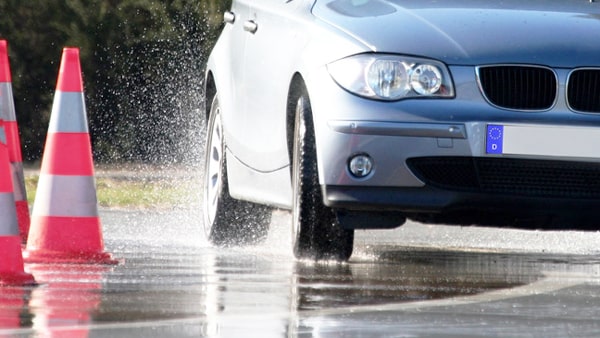
When can a wet roadway be especially slippery?

The road surface is most slippery:
  1. A. Only during a heavy downpour
  2. B. After rain has continued for several hours
  3. C. During the first moments after rain begins
  4. D. After the pavement has dried

Correct answer: C. – During the first moments after rain begins

A roadway can become especially slippery just after rain begins. Water mixes with oil left on the pavement, reducing available traction. Continued rainfall may eventually wash much of that oil away, but drivers should reduce speed as soon as rain starts.

Source: Nebraska Commercial Driver’s License Manual — § 2.6.2, “Identifying Slippery Surfaces”