


North Carolina DMV Permit Practice Test

4.7 out of 5 (2691 votes)
80% Passing score
20 Questions
4 Mistakes allowed
Getting ready for the North Carolina DMV permit test is one of those things that sounds simple until you realize, slightly too late, that the real test is not just “know what a stop sign is and try not to hit anything.” There’s a written knowledge test, a road signs test, and, for adult applicants, a vision test too. All of it happens in person at an NCDMV office — yes, an actual office, with actual waiting, because online permit testing is not part of the deal. This NC DMV practice test gives you a more useful way to study than just staring at the driver’s handbook and hoping your brain quietly absorbs traffic law by osmosis. The real written knowledge test has 25 multiple-choice questions covering North Carolina traffic laws and safe driving rules. You need 20 correct answers to pass, which works out to an 80% passing score. Not impossible, obviously. But also not something you want to stroll into completely cold, carrying only vibes and a half-remembered right-of-way rule. The practice questions are built around the same kinds of topics you’ll need for the official DMV knowledge test: traffic signals, lane use, speed control, defensive driving, right-of-way, and the everyday rules that suddenly feel very specific when someone at the DMV is asking you about them. And then there are signs. The road signs test asks you to identify signs by color and shape and explain what they mean, and you can miss no more than 3. So, yes, those yellow diamonds and red octagons and weirdly bossy rectangles deserve a little attention. There is no time limit on the official knowledge test, which is nice in theory, although nobody really wants to spend extra quality time at the DMV if they can help it. That is where this NC practice permit test comes in: it lets you practice before test day, figure out what you actually know, and notice the stuff you only thought you knew. Use this free DMV practice permit test before heading to the NC DMV office for your learner permit, license renewal, or driver’s license test. It is not flashy. It is not trying to be your new hobby. It is just a practical, low-pressure way to get sharper before the real thing.
FREE DMV Practice Test App
Study for your North Carolina permit test or driver’s license with the NextDoorDriving app. 700+ DMV questions and answers, 100% free!
Download on the App Store

Sample North Carolina Permit Test Questions

Question 1

At an intersection without traffic signals or painted crosswalk lines, a pedestrian is crossing within the unmarked crosswalk. What must a driver do?

  1. A Yield, slowing or stopping if necessary
  2. B Yield only if the pedestrian displays a green signal
  3. C Proceed because only marked crosswalks count
  4. D Proceed if the vehicle reached the intersection first

Correct answer: A – Yield, slowing or stopping if necessary

North Carolina requires a driver to yield to a pedestrian in a marked crosswalk or an unmarked crosswalk at or near an intersection when traffic signals are not operating or present. The driver must slow or stop if necessary to yield. A pedestrian crossing somewhere other than a marked or qualifying unmarked crosswalk generally must yield to vehicles.

Source: N.C. Gen. Stat. § 20-173(a) – Pedestrians' right-of-way at crosswalks, N.C. Gen. Stat. § 20-174(a), (e) – Crossing at other than crosswalks; walking along highway
Question 2

If your accelerator sticks while the vehicle is moving, what should you do?

  1. A Shift to neutral, brake firmly without locking the wheels, and move off the road
  2. B Accelerate repeatedly until the pedal releases
  3. C Apply the parking brake fully while remaining in gear
  4. D Continue driving until the accelerator releases by itself

Correct answer: A – Shift to neutral, brake firmly without locking the wheels, and move off the road

The driver handbook advises trying to free the accelerator by tapping or lifting the pedal. If necessary, shift into neutral and apply firm brake pressure without locking the wheels. Steer to a safe place completely off the road rather than continuing in traffic with the accelerator stuck.

Source: North Carolina Driver Handbook — Ch. 4, “Gas Pedal Sticks”

Question 3

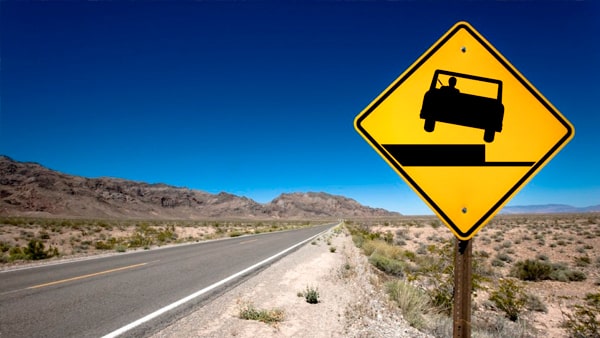
A warning sign shows a vehicle's right wheels dropping onto a lower shoulder. What hazard should concern you most?

What should you be most concerned about when you see this sign?
  1. A The headlights becoming misaligned
  2. B The engine stalling on the shoulder
  3. C Water entering the exhaust system
  4. D Losing control by braking or steering sharply after leaving the pavement

Correct answer: D – Losing control by braking or steering sharply after leaving the pavement

A low or uneven shoulder can affect vehicle control if the wheels leave the pavement. Do not immediately brake hard or steer sharply back onto the roadway; either action could cause a skid, loss of control, or rollover. Ease off the accelerator, steer straight, slow substantially, and return gradually when traffic permits.

Source: North Carolina Driver Handbook — Ch. 4, “Unusual Emergencies”, North Carolina Driver Handbook — Ch. 5, “Warning”

Question 4

An emergency vehicle using its warning lights and siren approaches from behind. What must you do?

  1. A Pull near and parallel to the right edge, clear of the intersection, and stop
  2. B Accelerate until you are ahead of surrounding traffic
  3. C Remain in your lane and reduce speed slightly
  4. D Stop immediately in your present lane

Correct answer: A – Pull near and parallel to the right edge, clear of the intersection, and stop

North Carolina requires drivers to move as near as possible and parallel to the right edge or curb when an approaching emergency vehicle gives the required light and audible warnings. Stop clear of any intersection and remain there until the emergency vehicle passes, unless a law enforcement or traffic officer directs otherwise.

Source: N.C. Gen. Stat. § 20-157(a) – Approach of law enforcement, fire department or rescue squad vehicles or ambulances; driving over fire hose or blocking fire fighting equipment; parking, etc., near law enforcement, fire department, or rescue squad vehicle or ambulance

Question 5

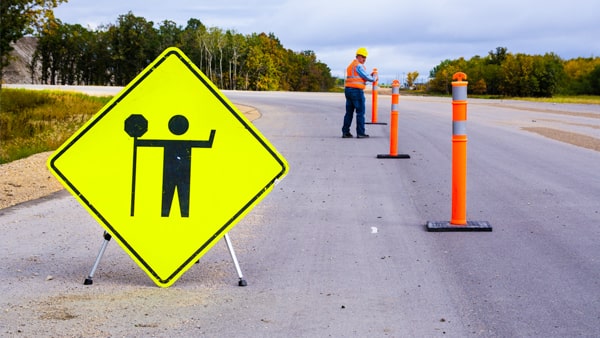
What does an orange diamond-shaped sign showing a person holding a flag indicate?

This sign means:
  1. A A pedestrian crossing is ahead
  2. B The work zone has ended
  3. C A school crossing is ahead
  4. D A flagger is controlling traffic ahead

Correct answer: D – A flagger is controlling traffic ahead

The flagger warning sign indicates that a worker ahead is directing traffic through a construction or maintenance area. A flagger may use a STOP/SLOW paddle to stop traffic or allow it to proceed. Stay alert, reduce speed as conditions require, and be prepared to stop and follow the flagger's directions.

Source: North Carolina Driver Handbook — Ch. 4, “Work Zones”

Question 6

A steady yellow arrow appears for your protected left-turn movement. What should you do?

  1. A Accelerate to enter the intersection before the signal changes
  2. B Stop immediately, even if you cannot stop safely
  3. C Prepare to stop and obey the signal that follows
  4. D Enter because the yellow arrow guarantees the right-of-way

Correct answer: C – Prepare to stop and obey the signal that follows

A steady yellow arrow warns that the related green turn signal is ending and a red indication is about to appear. Prepare to stop rather than accelerating to beat the signal. If you are already too close to stop safely, proceed cautiously through the intersection and obey the next displayed signal.

Source: N.C. Gen. Stat. § 20-158(b)(2a) – Vehicle control signs and signals, North Carolina Driver Handbook — Ch. 5, “Traffic Signals”