


North Carolina Road Signs Test

4.6 out of 5 (3187 votes)
80% Passing score
10 Questions
2 Mistakes allowed
Getting ready for the NC DMV permit test means making peace with road signs. Not just the obvious ones, either — stop signs, sure, everybody knows those — but the weirdly specific ones that show up right when your brain decides to take a little vacation. This NC road signs test gives you a chance to practice recognizing signs by color, shape, and meaning, which is exactly the sort of thing North Carolina expects you to handle on the real permit exam. The official NC permit exam includes a written knowledge test with 25 multiple-choice questions on traffic laws and safe driving. You need 20 correct answers to pass, which is 80%, and there’s no time limit, a small mercy from the DMV gods. But road signs get their own spotlight too. On the North Carolina road signs test, applicants must identify signs and explain what they mean, and you can miss no more than 3 questions. So, yes, “I’ve seen that one before” is not quite the same as actually knowing what to do when it appears. This North Carolina DMV practice test is built around that visual, practical side of driving. Road signs are not roadside decoration, although some of them do have the graphic-design energy of a stern cafeteria poster. They warn you about hazards, tell you what is allowed or not allowed, guide you through lane changes and curves and construction zones, and generally keep everyone from improvising their own traffic system, which would be terrible. Truly terrible. You’ll run into regulatory signs, warning signs, and informational signs, along with the broader traffic-control clues that matter on the road: pavement markings, traffic lights, and driver signals. The point is not just to memorize a shape and move on with your life. It’s to connect the sign with the action you’re supposed to take next — slow down, yield, merge, stop, watch for trouble, or maybe just quit drifting mentally for a second. Because road signs follow national standards, this NC DMV sign test helps beyond North Carolina too, which is nice, if mildly annoying because it means the signs really do expect you to know them everywhere. Use this NC practice permit test to catch your weak spots, get immediate feedback, and walk into the DMV road signs test feeling less like you’re guessing and more like you’ve actually been let in on the trick.
FREE DMV Practice Test App
Study for your North Carolina permit test or driver’s license with the NextDoorDriving app. 700+ DMV questions and answers, 100% free!
Download on the App Store

Sample North Carolina Permit Test Questions

Question 1

A white regulatory sign with an arrow passing to the right of an obstruction means:
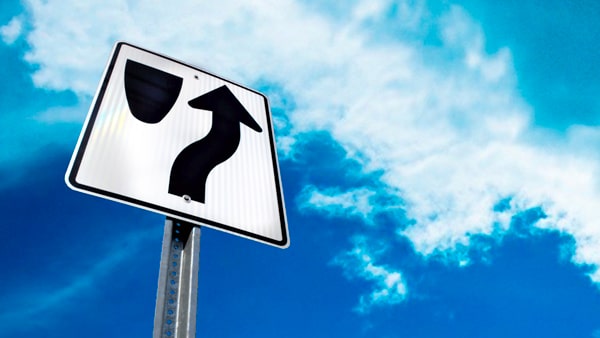
This white sign means:
  1. A Pass to the right of the obstruction
  2. B Yield before turning right
  3. C Move right only if driving slowly
  4. D Turn right at the next intersection

Correct answer: A – Pass to the right of the obstruction

This is a Keep Right regulatory sign. It directs traffic to travel on the right side of the divider, island, or other obstruction shown by the arrow. It does not require a right turn at an intersection.

Source: North Carolina Driver Handbook — Ch. 5, “Regulatory Signs”
Question 2

Which regulatory sign directs traffic to pass on the right side of an obstruction?

  1. A Divided Highway Ends
  2. B Keep Right
  3. C Sharp Left Turn
  4. D Lane Ends Ahead

Correct answer: B – Keep Right

The Keep Right sign contains an arrow that passes to the right of a dark obstruction symbol. Drivers must follow that indicated path. The other choices warn about changes in roadway alignment or lane configuration rather than directing traffic around an obstruction.

Source: North Carolina Driver Handbook — Ch. 5, “Regulatory Signs”
Question 3

In North Carolina, how should you determine the parking rule at a yellow-painted curb?

  1. A Read nearby signs or words marked on the curb
  2. B Assume passenger or freight loading is allowed
  3. C Treat the area as accessible parking
  4. D Assume parking is allowed without a time limit

Correct answer: A – Read nearby signs or words marked on the curb

North Carolina traffic-control devices must conform to the Uniform Manual. That manual recognizes that yellow curbs may be used for visibility or local purposes and recommends using standard signs or legible curb wording to communicate parking regulations. Do not assume that every yellow curb is a loading zone; read the posted restriction.

Source: G.S. 136-30(a)–(d) – Uniform signs and other traffic control devices on highways, streets, and public vehicular areas, Manual on Uniform Traffic Control Devices, 11th ed., Rev. 1 — § 3B.18, “Curb Markings for Parking Regulations”

Question 4

A steady yellow arrow appears while you are waiting in a right-turn-only lane. What should you do?

  1. A Prepare to obey the signal indication that appears next
  2. B Begin turning after checking only for pedestrians
  3. C Remain stopped regardless of the next signal
  4. D Accelerate before the arrow changes

Correct answer: A – Prepare to obey the signal indication that appears next

In North Carolina, a steady yellow arrow warns that the related green indication is ending or that a red indication is about to appear. The handbook notes that the next display may be a circular green, circular red, or red arrow. Watch the signal and be ready to respond to the next indication.

Source: G.S. 20-158(b)(2a) – Vehicle control signs and signals, North Carolina Driver Handbook — Ch. 5, “Traffic Signals”

Question 5

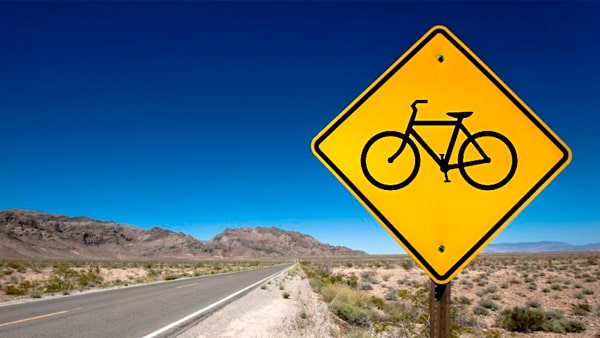
A yellow diamond sign displaying a bicycle warns of:

This sign means:
  1. A A playground beside the highway
  2. B A bicycle rental facility
  3. C A recreational park entrance
  4. D A bicycle crossing ahead

Correct answer: D – A bicycle crossing ahead

This is the Bike Crossing warning sign. It alerts drivers that bicyclists may cross the roadway ahead. Because it is a warning sign, drivers should watch the roadway and its edges carefully for bicycle traffic near the crossing area.

Source: North Carolina Driver Handbook — Ch. 5, “Warning Signs”

Question 6

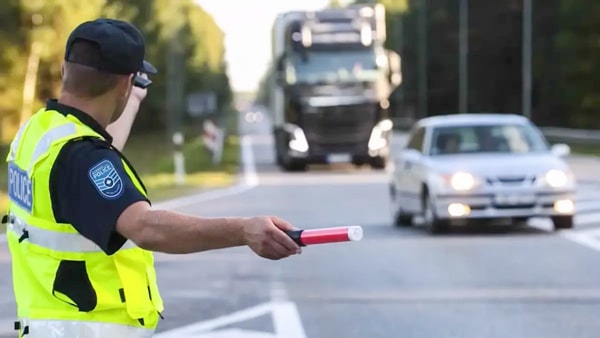
Your signal is red, but an authorized police officer directs you through the intersection. What must you do?

A traffic light is red, but a police officer is telling you to go ahead anyway. What should you do?
  1. A Wait until the signal turns green
  2. B Change lanes before proceeding
  3. C Follow the officer’s direction
  4. D Remain stopped until the officer approaches

Correct answer: C – Follow the officer’s direction

North Carolina law requires drivers to comply with lawful traffic directions given by an authorized law-enforcement or traffic-control officer. The officer’s direction controls your movement even when it differs from the normal signal indication. Proceed as directed while continuing to operate carefully.

Source: G.S. 20-114.1(a) – Willful failure to obey law-enforcement or traffic-control officer; firemen as traffic-control officers; appointment, etc., of traffic-control officers, North Carolina Driver Handbook — Ch. 5, “Traffic Officers”