


North Carolina Driving Test Practice 9

4.9 out of 5 (385 votes)
80% Passing score
20 Questions
4 Mistakes allowed
Getting ready for your NC drivers license test? Lovely. Nothing says “almost independent adult” quite like memorizing when a school bus makes everyone freeze in place like somebody hit pause on the road. This ninth NC practice drivers test is all about school bus safety, which sounds narrow, sure, but it is one of those topics North Carolina does not treat like a casual suggestion scribbled on a sticky note. This free NC permit practice test gives you 20 questions built around the kinds of school bus situations that actually make drivers hesitate. A bus stops. Lights flash. Kids may or may not appear from what feels like thin air. Do you stop? Does the other side of traffic stop? Can you keep moving if there’s a median? That sort of thing. The questions are multiple-choice and true-or-false, so the format feels familiar without turning the whole thing into a DMV-flavored endurance event. It also quietly helps with the broader stuff on the official North Carolina knowledge test, which has 25 multiple-choice questions covering traffic laws and safe driving. You need 20 correct answers to pass, or 80%, which is one of those numbers that sounds friendly until you realize five wrong answers is the entire cushion. Not a huge cushion. More like a folded towel. After you finish, you’ll get a summary showing what you missed and the correct answers, which is useful because “I was close” does not count at the DMV, emotionally or mathematically. The explanations help you figure out the rule instead of just memorizing a lucky guess and hoping the real test asks it in the same tone of voice. For younger drivers, this practice test fits nicely into Level 1 Limited Learner Permit prep. In North Carolina, Level 1 starts at age 15, but only after driver education. Under-18 applicants also need the school paperwork — the Driving Eligibility Certificate, the Driver’s Education Certificate, and yes, a parent or guardian has to be involved. Adults can skip driver ed, but not the rules. Sadly, adulthood does not make school buses less legally important. Before test day, bring proof of identity and date of birth, proof of Social Security number, one proof of North Carolina residency, and the permit or license fee. The test is available in several languages, and oral testing or free interpreter help can be requested. So, no, the DMV is not exactly glamorous. But being prepared does make the whole thing less weird.
FREE DMV Practice Test App
Study for your North Carolina permit test or driver’s license with the NextDoorDriving app. 700+ DMV questions and answers, 100% free!
Download on the App Store

Sample North Carolina Permit Test Questions

Question 1

A vehicle merges closely in front of you. If there is room to respond gradually, what should you do?
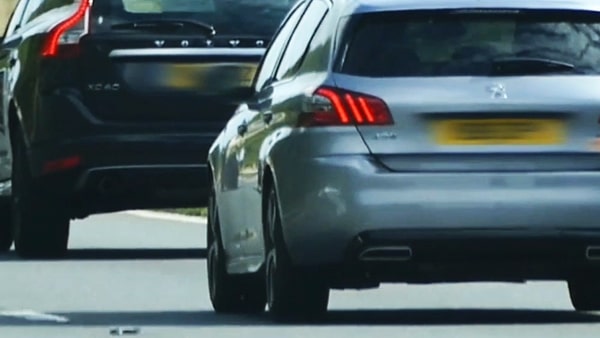
If another driver "cuts" in front of you, it would be better if you:
  1. A Ease off the accelerator and rebuild a safe following gap
  2. B Brake as suddenly as possible
  3. C Accelerate toward the vehicle
  4. D Maintain your speed and continuously sound the horn

Correct answer: A – Ease off the accelerator and rebuild a safe following gap

Slow down smoothly when another vehicle moves into the space ahead of you, provided an emergency stop is not required. The commercial manual notes that slowing down may prevent a crash when a vehicle cuts in front and that sudden braking or a quick lane change is more likely to cause a crash. Reestablish the safe following distance recommended in the regular driver handbook.

Source: North Carolina Commercial Driver License Manual — § 2.8.1, “Importance of Seeing Hazards”, North Carolina Driver Handbook — Ch. 4, “Following”
Question 2

The liver can process approximately the alcohol in one standard drink, such as a 12-ounce 5% beer, in about:

  1. A One hour
  2. B One day
  3. C Five minutes
  4. D Five hours

Correct answer: A – One hour

The official commercial driver manual states that the liver can handle about one standard drink per hour. It identifies a 12-ounce glass of 5% beer as approximately one drink. This is only an average processing rate, not a guarantee that a person is unimpaired or safe to drive; the manual emphasizes that only time, not coffee or a cold shower, sobers a drinker.

Source: North Carolina Commercial Driver License Manual — § 2.22.1, “Alcohol”

Question 3

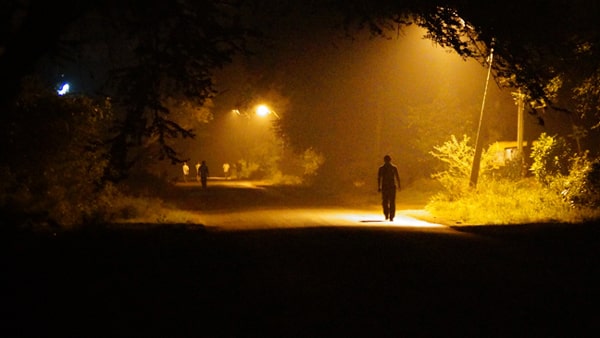
When driving at night on a poorly lit road with other traffic present, you should:

When driving in traffic at night on a dimly lit street, you should:
  1. A Travel slowly enough to stop within the distance you can see ahead
  2. B Use high beams directly behind other vehicles
  3. C Keep the instrument-panel lights at maximum brightness
  4. D Use emergency flashers instead of headlights

Correct answer: A – Travel slowly enough to stop within the distance you can see ahead

The North Carolina handbook directs drivers never to travel at a speed that prevents them from stopping within the visible distance ahead. Nighttime reduces how far hazards can be seen, especially when low beams must be used around traffic. Reduce speed as necessary and keep watching beyond the headlights for vehicles, pedestrians, animals, or debris.

Source: North Carolina Driver Handbook — Ch. 4, “Night Driving”

Question 4

When an adult’s seat is equipped with a lap-and-shoulder belt, the occupant should:

  1. A Use only the lap portion at low speeds
  2. B Fasten both the lap and shoulder portions on every trip
  3. C Use only the shoulder portion in heavy traffic
  4. D Choose either portion because both work equally well alone

Correct answer: B – Fasten both the lap and shoulder portions on every trip

North Carolina generally requires occupants to have a properly fastened seat belt while a vehicle is moving forward, subject to statutory exceptions. The driver handbook instructs adults to buckle both the lap and shoulder portions on every trip. The lap belt should fit low across the hips, while the shoulder belt should cross the collarbone and breastbone away from the neck.

Source: G.S. 20-135.2A(a) — Seat belt use mandatory, North Carolina Driver Handbook — Ch. 4, “Adult Safety Points”

Question 5

Which is not one of the factors identified in the driver manual as determining blood alcohol concentration?

  1. A Body weight
  2. B Amount of alcohol consumed
  3. C How quickly the drinks are consumed
  4. D Level of physical fitness

Correct answer: D – Level of physical fitness

The official commercial driver manual identifies three primary BAC factors: how much alcohol a person drinks, how quickly the alcohol is consumed, and the person’s weight. Drinking faster raises BAC because alcohol enters the bloodstream faster than the liver can process it. Physical fitness is not identified as a factor that lowers BAC or speeds alcohol processing.

Source: North Carolina Commercial Driver License Manual — § 2.22.1, “What Determines Blood Alcohol Concentration?”

Question 6

What color lines normally separate traffic moving in opposite directions?

  1. A White
  2. B Red
  3. C Black
  4. D Yellow

Correct answer: D – Yellow

The North Carolina handbook states that yellow pavement lines separate lanes traveling in opposite directions. White lines generally separate lanes moving in the same direction. A broken yellow centerline may permit passing when conditions are safe, while double solid yellow centerlines prohibit crossing to pass in either direction.

Source: North Carolina Driver Handbook — Ch. 5, “Pavement Markings”