Oklahoma DMV Sign Test 4

4.8 out of 5 (193 votes)
80% Passing score
20 Questions
4 Mistakes allowed
Oklahoma road sign knowledge is one of those things drivers are expected to keep sharp, whether they are renewing a license, preparing for the written exam, or trying to get through the licensing process without losing momentum over a question that should have been familiar. This Oklahoma DMV sign test gives you a focused way to review the signs you are actually expected to recognize: colors, shapes, symbols, warnings, directions, and those regulatory signs that do not leave much room for interpretation. The test includes 20 multiple-choice questions and can be completed online whenever you have time, which is handy because official licensing requirements already come with enough moving parts. You answer, get immediate feedback, and see a clear explanation instead of just being told you missed it. That part matters. A red sign, a yellow warning sign, a green guide sign—these are not decorative details. They tell you what the road is doing, what you are allowed to do, and sometimes what you had better notice before the shoulder disappears or traffic gets weird. For teen drivers, this practice fits into Oklahoma’s Graduated Driver License program, which moves through the Student Driver, Learner Permit, Intermediate License, and Unrestricted License stages. A student driver can begin at 15 through approved driver education, and a learner permit also starts at 15 for those enrolled and receiving instruction in an approved course. At 16, driver education is optional for the written exam, although completing it can affect the timeline for moving into later license stages. Before an intermediate license, Oklahoma requires at least 180 days with a learner permit, 50 supervised driving hours with 10 at night, no traffic convictions, the free Oklahoma Work Zone Safe Course if under 18, and a passed drive test. So, yes, the signs are only one part of the whole process—but they are a part you can practice without needing a parent, an appointment, or a clean stretch of daylight. Adults applying for a first Class D license have a more direct path, but the basics still count: study the Oklahoma Driver Manual, pass the written test unless it is waived, complete the vision test, pass the drive test, bring the required documents, and pay the fee. This Oklahoma road signs practice test helps make that written-test material feel less fuzzy. Score 16 out of 20 to pass, read the explanations, and keep running through it until the signs feel automatic.

FREE DMV Practice Test App
Study for your Oklahoma permit test or driver’s license with the NextDoorDriving app. 700+ DMV questions and answers, 100% free!
Download on the App Store

Sample Oklahoma Permit Test Questions

Question 1

Under normal conditions, what does an official NO STOPPING sign at the curb mean?

  1. A. Stopping, standing, and parking are prohibited
  2. B. Only commercial vehicles may park there
  3. C. The area is reserved for persons with disabilities

Correct answer: A. – Stopping, standing, and parking are prohibited

Oklahoma prohibits stopping, standing, or parking where an official sign prohibits stopping. Exceptions apply when stopping is necessary to avoid a traffic conflict or to comply with law, an officer, or another traffic-control device. A NO STOPPING sign does not designate commercial loading or accessible parking.

Source: 47 O.S. § 11-1003(A)(14) – Stopping, Standing or Parking Prohibited in Specified Places

Question 2

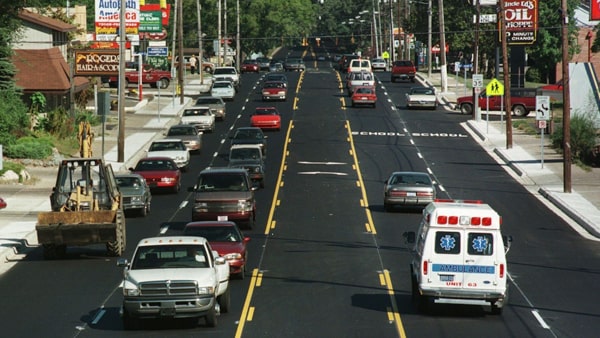
A center lane marked by parallel double yellow lines, with broken lines on the inside, is used for:

The center lane in the illustration is used for:
  1. A. Regular through travel
  2. B. Left turns in either direction
  3. C. Passing slower vehicles
  4. D. Emergency vehicles only

Correct answer: B. – Left turns in either direction

The distinctive markings identify a two-way left-turn lane. Oklahoma law reserves it for preparing for or making left turns into or from the roadway, not regular travel or passing. A vehicle turning left from the roadway is limited to 200 feet, while a vehicle turning onto the roadway may use the lane as a staging area before merging.

Source: 47 O.S. § 11-309(3) – Driving on Roadways Laned for Traffic

Question 3

At an intersection, what does a flashing yellow traffic signal direct you to do?

  1. A. Merge with traffic from the right
  2. B. Proceed carefully through the intersection
  3. C. Stop for pedestrians before continuing
  4. D. Come to a complete stop

Correct answer: B. – Proceed carefully through the intersection

Oklahoma law permits a driver facing a flashing yellow signal to proceed only with caution. Reduce your speed, check traffic conditions in both directions, and be prepared to stop if necessary. A flashing yellow signal does not have the same meaning as a stop sign.

Source: 47 O.S. § 11-204(A)(2) – Flashing Signals, Oklahoma Driver Manual — Ch. 4, “Traffic Signals”

Question 4

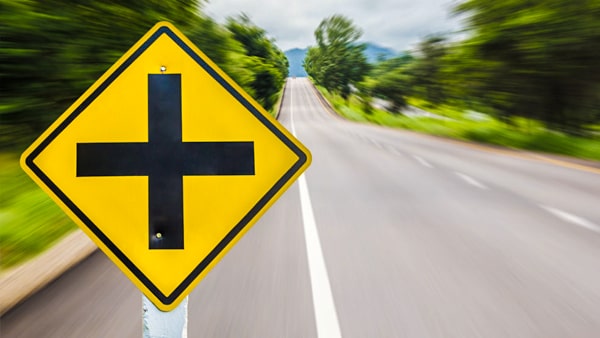
A yellow diamond sign displaying a black cross warns of:

This sign means:
  1. A. A church entrance
  2. B. A first-aid facility
  3. C. A crossroad ahead
  4. D. A railroad crossing

Correct answer: C. – A crossroad ahead

The cross-shaped symbol identifies a crossroad intersection ahead. Because traffic may enter from either side, watch for approaching vehicles and any traffic-control devices at the intersection. This is a warning sign rather than a regulatory or service sign.

Source: Oklahoma Driver Manual — Ch. 4, “Warning Signs”

Question 5

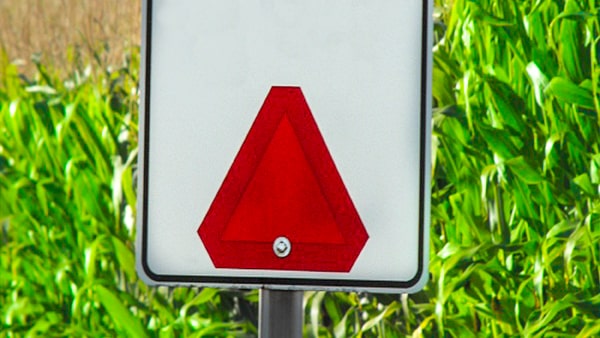
What does a triangular emblem with a yellow-orange center and red border identify?

An orange and red sign of this shape always means:
  1. A. A vehicle that must yield to cross traffic
  2. B. A vehicle with automatic right-of-way
  3. C. A slow-moving vehicle
  4. D. An emergency-response vehicle

Correct answer: C. – A slow-moving vehicle

This is the official slow-moving vehicle emblem. Oklahoma requires it on the rear of specified machinery, animal-drawn vehicles, and other vehicles designed to operate and operating at no more than 25 mph on a highway. Drivers who see the emblem should recognize that they may be closing on the vehicle quickly.

Source: 47 O.S. § 12-427 – Official Slow-Moving Vehicle Emblem

Question 6

After stopping at an intersection, where should you look before proceeding?

  1. A. Ahead and to the left
  2. B. Only to the left and right
  3. C. Left, right, and ahead
  4. D. Ahead and to the right

Correct answer: C. – Left, right, and ahead

Before entering the intersection, scan left, right, and ahead for approaching traffic and other hazards. Looking in only two directions may leave an important part of the intersection unchecked. Proceed only after confirming that your path is clear.

Source: Oklahoma Driver Manual — Ch. 5, “Crossing an Intersection”