North Dakota Permit Practice Test

4.7 out of 5 (449 votes)
80% Passing score
20 Questions
4 Mistakes allowed
North Dakota’s Class D permit test deserves a little more respect than people sometimes give it. It is the Rules of the Road knowledge test, based on the North Dakota Noncommercial Driver License Manual, and it covers the material the state expects new drivers to actually understand: traffic laws, signs, signals, pavement markings, right-of-way, safe driving habits, impaired-driving rules, emergencies, and the North Dakota-specific details that do not always show up in a generic study guide. This ND permit practice test is built around that same kind of knowledge. The real Class D knowledge test is commonly reported as 25 multiple-choice questions, with 20 correct answers needed to pass, which works out to 80%. That sounds manageable. Fine. But manageable is not the same thing as automatic, especially when the questions start mixing familiar rules with small wording differences, road sign meanings, or those little details about when a driver must yield, slow down, stop, or just use better judgment than they were planning to use. The practice test gives you a cleaner way to work through that material before test day. You will see questions on traffic signals, lane markings, regulatory and warning signs, alcohol and drug laws, vehicle control, sharing the road, railroad crossings, work zones, and safe driving in the kinds of conditions North Dakota drivers actually face. Snow, rural highways, farm equipment, livestock, long distances between towns — none of that is decorative background here. It is part of why the rules matter. It also helps that this practice permit test is not just a cold set of questions with a score slapped on at the end. When you are unsure, the hint feature can give you enough direction to keep thinking instead of simply guessing. When you miss something, the explanation helps pin down the rule, which is much more useful than memorizing an answer and hoping the DMV words it the same way later. And yes, road signs are included as part of the same North Dakota knowledge test, not treated like some separate little obstacle off to the side. Before getting a learner permit, applicants must pass the knowledge test and a vision screening. The test may be taken at a North Dakota Driver License office or online through KnowToDrive, although passing online still requires a visit to a license office to receive the physical permit. Fees, documents, age rules, supervised-driving requirements, and permit-holding periods can vary, especially for teen drivers. So the paperwork matters, but the first serious step is knowing the rules well enough to pass. This practice test is meant to make that step feel less like guesswork and more like preparation.

FREE DMV Practice Test App
Study for your North Dakota permit test or driver’s license with the NextDoorDriving app. 700+ DMV questions and answers, 100% free!
Download on the App Store

Sample North Dakota Permit Test Questions

Question 1

Under North Dakota law, when should a driver sound the vehicle’s horn?

  1. A Whenever approaching a bicyclist
  2. B When reasonably necessary for safe vehicle operation
  3. C Whenever traffic ahead is below the speed limit
  4. D To express frustration with another road user

Correct answer: B – When reasonably necessary for safe vehicle operation

A driver must use the horn when an audible warning is reasonably necessary for safe operation. At other times, horn use on a highway is prohibited. The horn should not be used merely because another vehicle is moving slowly or because the driver is angry or impatient.

Source: N.D.C.C. § 39-21-36.1 – Horn and Warning Device

Question 2

Which passenger situation presents an increased crash risk for a teenage driver?

  1. A Driving alone without distractions
  2. B Driving with an experienced adult supervisor
  3. C Carrying several teenage passengers
  4. D Driving without any passengers

Correct answer: C – Carrying several teenage passengers

The North Dakota driver manual identifies passengers as a high-risk condition for teen drivers. It states that teen crashes increase as the number of passengers increases and that teenage passengers can be a major distraction. They may also encourage speeding, showing off, or reduced attention to the driving task.

Source: North Dakota Noncommercial Driver License Manual — “Parent/Guardian Driver Coaching Tips,” “High-Risk Driving Conditions”

Question 3

Which action helps other road users recognize that you intend to turn or change lanes?

  1. A Signal before beginning the movement
  2. B Wait for others to guess your direction
  3. C Move first and signal afterward
  4. D Use your horn throughout the maneuver

Correct answer: A – Signal before beginning the movement

North Dakota requires an appropriate signal before turning, moving right or left, merging, or changing lanes. The signal must continue for at least the last 100 feet before the movement. Signaling clearly communicates your intended direction, but you must still verify that the movement can be made safely.

Source: N.D.C.C. § 39-10-38(1)–(2) – Turning Movements and Required Signals, North Dakota Noncommercial Driver License Manual — “Lane Changes”

Question 4

Under North Dakota law, if handling a cigarette impairs your driving and you commit another traffic offense, the activity is:

Preparing to smoke and smoking while driving:
  1. A Harmless because it does not involve a phone
  2. B A permitted method of staying alert
  3. C Distracted operation that may support a failure-to-maintain-control violation
  4. D Acceptable whenever traffic is moving slowly

Correct answer: C – Distracted operation that may support a failure-to-maintain-control violation

An activity does not have to involve an electronic device to qualify as a distraction. The law covers activities unnecessary to vehicle operation that actually impair, or reasonably could impair, safe driving. If that distraction accompanies another traffic offense, it may support a failure-to-maintain-control violation.

Source: N.D.C.C. § 39-08-25(1)(a), (3) – Failure to Maintain Control, North Dakota Noncommercial Driver License Manual — “Distracted Driving”

Question 5

What can happen if alcohol is combined with medicine that causes drowsiness?

  1. A The medicine cancels the alcohol’s effects
  2. B The alcohol makes the medicine safer
  3. C The combination can leave the driver unable to drive safely
  4. D The substances cannot affect each other

Correct answer: C – The combination can leave the driver unable to drive safely

Certain cold medicines and other drugs can cause drowsiness, while alcohol slows reactions and interferes with vision, concentration, and judgment. North Dakota prohibits driving when the combined influence of alcohol and other drugs makes a person incapable of safely operating a vehicle. Read medication directions and warnings carefully.

Source: N.D.C.C. § 39-08-01(1)(a)(4) – Persons Under the Influence of Intoxicating Liquor or Any Other Drugs or Substances Not to Operate Vehicle – Penalty, North Dakota Noncommercial Driver License Manual — “Drugs”

Question 6

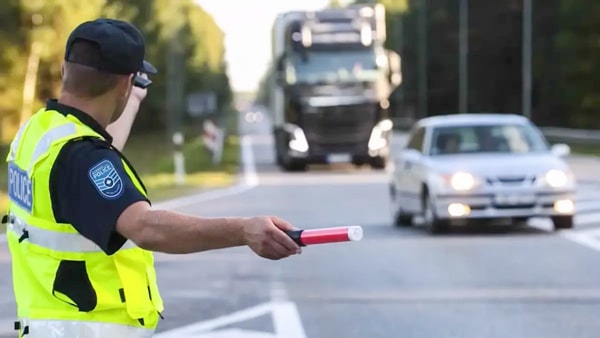
In North Dakota, a police officer lawfully directs you through a red signal. What should you do?

A traffic light is red, but a police officer is telling you to go ahead anyway. What should you do?
  1. A Remain stopped until the signal turns green
  2. B Change lanes before proceeding
  3. C Follow the officer’s direction
  4. D Wait for the officer to walk to your vehicle

Correct answer: C – Follow the officer’s direction

Drivers may not willfully refuse a lawful traffic direction given by an authorized police officer or firefighter. Follow the officer’s instruction even when it differs from the displayed traffic signal. Proceed carefully and remain alert for pedestrians, vehicles, and additional directions.

Source: N.D.C.C. § 39-10-02 – Obedience to Police Officer or Firefighter