Utah Practice Permit Test 4

4.9 out of 5 (193 votes)
80% Passing score
20 Questions
4 Mistakes allowed
A good Utah driver permit practice test should do more than toss random road trivia questions at you. It should help you understand the kind of thinking the real Utah learner permit knowledge test expects, especially around safety details that are easy to skim past when you are studying too quickly. The official test has 50 questions, and this 20-question Utah practice permit test gives you a focused way to work through child safety seat use, correct installation, and general driving rules before you take the real thing. Utah lets new drivers apply for a learner permit at 15, but that does not make the licensing process casual. For drivers ages 15 through 18, driver education is required. A 15-year-old permit holder has to keep that permit for 6 months and until turning 16, while 16- and 17-year-olds also have a 6-month permit holding period. Teen drivers need 40 hours of practice driving, including 10 after sunset, before moving toward a license. And once licensed, 16- and 17-year-old drivers still have Graduated Driver License restrictions, including limits on driving from midnight to 5 a.m. and rules about non-family passengers during the first months of licensure. It is a lot of structure, maybe more than people expect, but that is how Utah connects permit study with actual driving readiness. Adults have their own version of the process, and it is not quite the shortcut some applicants assume. An 18-year-old first-time applicant still needs a learner permit, the 50-question knowledge test, driver education, 40 practice hours, a driving skills test, and the Traffic Safety and Trends Exam if never licensed before. For applicants 19 and older, driver education becomes optional, but skipping it means holding the learner permit for 90 days. The practice hours still stay in the picture. After this Utah DMV practice test permit, you will see which questions you missed and what the correct answers should have been, which is where the real studying tends to happen. The hints and explanations are there for the moments when a question sounds familiar but not quite familiar enough. Use this Utah permit test practice alongside driver education, handbook review, and supervised driving, because getting licensed in Utah is not just about passing one test; it is about proving you are ready for the whole chain of steps that comes after it.
FREE DMV Practice Test App
Study for your Utah permit test or driver’s license with the NextDoorDriving app. 700+ DMV questions and answers, 100% free!
Download on the App Store

Sample Utah Permit Test Questions

Question 1

What may happen when alcohol is taken with prescription, over-the-counter, or illegal drugs?

  1. A The drug's effects may become unpredictable
  2. B Neither substance will affect driving
  3. C The medicine will cancel the alcohol
  4. D Alcohol will make the drug harmless

Correct answer: A – The drug's effects may become unpredictable

Alcohol and drugs should not be taken together because alcohol can have an unpredictable effect on other substances. Drugs may impair reflexes, judgment, vision, and alertness in ways similar to alcohol. A driver should not expect one substance to cancel or reduce the effects of the other.

Source: Utah Driver Handbook 2025–2026 — § 10, “Effects of Alcohol and Drugs”
Question 2

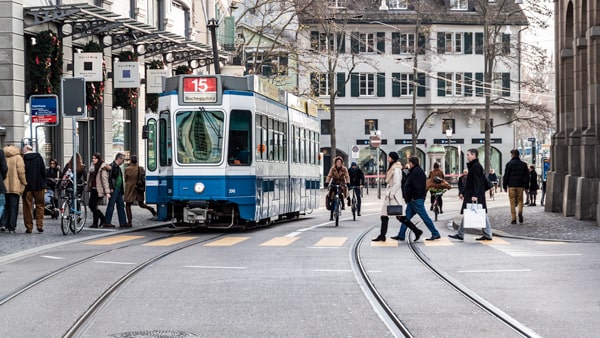
Where light rail shares streets and intersections with automobiles, what should a driver do?

Which of these statements is true about light rail vehicles?
  1. A Pay close attention to traffic signals and posted signs
  2. B Always pass the light rail vehicle on the right
  3. C Treat a flashing train-logo warning as a stop signal
  4. D Turn across the tracks before an approaching train

Correct answer: A – Pay close attention to traffic signals and posted signs

In Utah, light rail trains operate through some streets and intersections used by automobiles, requiring drivers to pay extra attention to signals and signs. At a grade crossing, wait until the gates are fully raised and flashing red lights have stopped. A flashing train-logo sign is an additional warning, not a stop signal by itself.

Source: Utah Driver Handbook 2025–2026 — § 14, “TRAX Light Rail and Streetcars”

Question 3

Which driving habit best helps you identify hazards before an abrupt maneuver becomes necessary?

  1. A Scan for hazards and check the mirrors frequently
  2. B Watch only the vehicle immediately ahead
  3. C Check surrounding traffic only at intersections
  4. D Concentrate mainly on the instrument panel

Correct answer: A – Scan for hazards and check the mirrors frequently

Drivers should continually scan for potential hazards and check their mirrors frequently. Before turning, changing lanes, or pulling from a curb, the handbook also directs drivers to make the appropriate head check. Regular observation provides more opportunity to recognize changing traffic conditions before beginning a maneuver.

Source: Utah Driver Handbook 2025–2026 — § 6, “Driving Skills Test”

Question 4

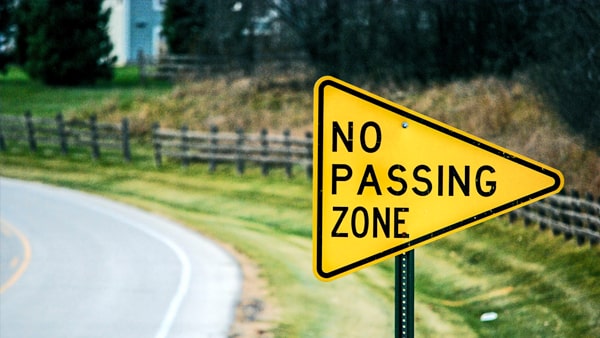
What does a yellow, pennant-shaped warning sign placed on the left side of the road identify?

The sign with this shape and color is a _____________ sign.
  1. A The beginning of a no-passing zone
  2. B Traffic moving in the wrong direction
  3. C A railroad crossing immediately ahead
  4. D A required stop

Correct answer: A – The beginning of a no-passing zone

The yellow pennant sign warns that a no-passing zone begins. It is placed on the left side of the roadway so it faces drivers approaching the restricted area. Drivers must obey the passing restriction indicated by the sign and associated pavement markings.

Source: Utah Driver Handbook 2025–2026 — § 9, “Warning Signs”, Utah Code § 41-6a-708(1)–(2) — Signs and markings on roadway -- No-passing zones -- Exceptions

Question 5

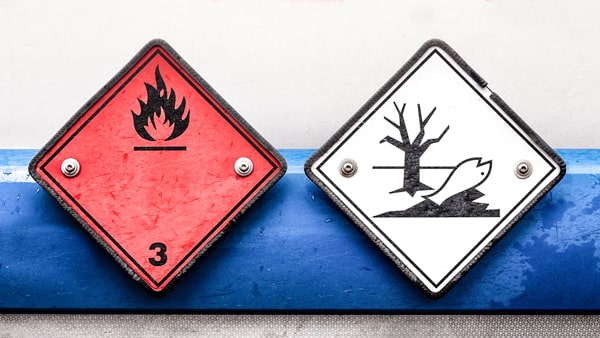
Which vehicle generally must stop before crossing railroad tracks?

Which of the following is true about vehicles displaying a diamond-shaped sign (indicating a hazardous load)?
  1. A A vehicle required to display hazardous-material placards
  2. B A passenger car carrying extra gasoline in its fuel tank
  3. C A recreational vehicle without a trailer
  4. D An empty pickup truck

Correct answer: A – A vehicle required to display hazardous-material placards

Utah applies special railroad-crossing requirements to vehicles described by federal regulation, including vehicles required to display hazardous-material placards. Unless an exception applies, the driver must stop 15 to 50 feet from the nearest rail, look and listen for rail traffic, and proceed only when crossing is reasonably safe.

Source: Utah Code § 41-6a-1205(2)–(3) — Railroad grade crossings -- Certain vehicles must stop -- Exceptions -- Rules, 49 C.F.R. § 392.10(a)(4) — Railroad grade crossings; stopping required

Question 6

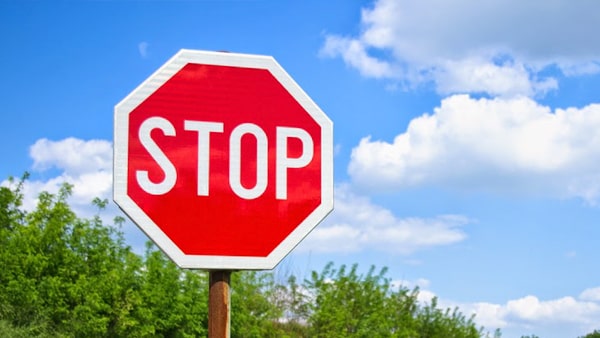
What must a driver do when approaching a stop sign?

When you see this sign, you must:
  1. A Stop at the required location and yield to pedestrians and hazardous cross traffic
  2. B Slow down and continue if no police officer is present
  3. C Stop and remain there until a traffic light turns green
  4. D Yield only to vehicles approaching from the left

Correct answer: A – Stop at the required location and yield to pedestrians and hazardous cross traffic

A driver must stop at the marked stop line or, if none exists, before the near crosswalk or at the nearest point with a view of intersecting traffic. After stopping, the driver must yield to pedestrians in the adjacent crosswalk and to vehicles that present an immediate hazard. Merely slowing down does not satisfy the stop requirement.

Source: Utah Code § 41-6a-902(2) — Right-of-way -- Stop or yield signals -- Yield -- Collisions at intersections or junctions of roadways -- Evidence