Utah Road Signs Test 2

4.9 out of 5 (96 votes)
80% Passing score
20 Questions
4 Mistakes allowed
If you are preparing for a Utah learner permit, road signs deserve their own study time, even though they are not tested on their own. For most first-time Class D applicants, Utah includes road sign questions inside the regular written knowledge test: a 50-question, closed-book exam given through the Utah Driver License Division and based on the Utah Driver Handbook. So the signs are part of a wider exam covering traffic laws, signals, right-of-way rules, safe driving, impaired driving, and the general responsibilities that come with being allowed to drive. Basic stuff, yes, but basic does not always mean automatic. This Utah DMV road sign practice test gives you a focused way to review that signs-and-signals material before it gets mixed into the larger permit test. You will answer 20 multiple-choice questions covering regulatory signs, warning signs, guide signs, lane-use signs, school zones, curves, crossings, “Yield,” “No U-turn,” and the shapes and colors that tell you what kind of message a sign is giving before you have read every word. Some of it is recognition. Some of it is judgment. And some of it is just learning to stop confusing signs that look annoyingly similar when you are moving through them too quickly. On the real Utah permit test, first-time learner permit applicants should expect 50 questions. A practical passing score is 40 correct answers, or 80%, which gives you a little room, but not so much that you can treat sign questions as easy points and move on. Utah allows applicants to test twice in one day, and after three failed attempts, a second fee is required. The permit and written-test score stay valid for 18 months, which is worth keeping in mind if your licensing timeline gets stretched out by school, work, driver education, or just the normal delays that seem to attach themselves to anything involving paperwork. This Utah practice permit test is useful for 15-year-olds starting the learner permit process, 16- and 17-year-olds working through driver education and required practice hours, 18-year-olds preparing for licensing, and adults 19 and older who may face different permit-holding rules depending on whether they complete driver education. It can also help transfer drivers review Utah expectations, since applicants with an out-of-state or out-of-country license may be asked to take a 25-question open-book knowledge test. And road signs do not disappear after the written exam. During the Utah driving skills test, you can be graded on how well you notice and obey traffic signs and signals in actual traffic. That is the real value of a DMV signs practice test like this: it helps you prepare for the permit test, but it also builds the quicker recognition you need when the sign is beside the road and the decision has to happen now, not after you think about it for ten seconds.

FREE DMV Practice Test App
Study for your Utah permit test or driver’s license with the NextDoorDriving app. 700+ DMV questions and answers, 100% free!
Download on the App Store

Sample Utah Permit Test Questions

Question 1

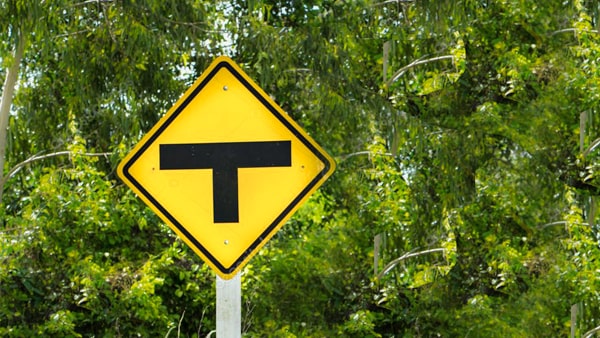
A yellow warning sign showing your road ending at a crossroad identifies a:

This sign shows one type of:
  1. A Required right turn
  2. B T-intersection
  3. C Lane change area
  4. D Roadway curve

Correct answer: B – T-intersection

The T-intersection sign warns that the roadway you are following ends where it meets a crossroad. You cannot continue straight through the junction. Approach at a controlled speed and prepare to turn left or right as permitted by signs, signals, and traffic conditions.

Source: Utah Driver Handbook — § 9, “Warning Signs”

Question 2

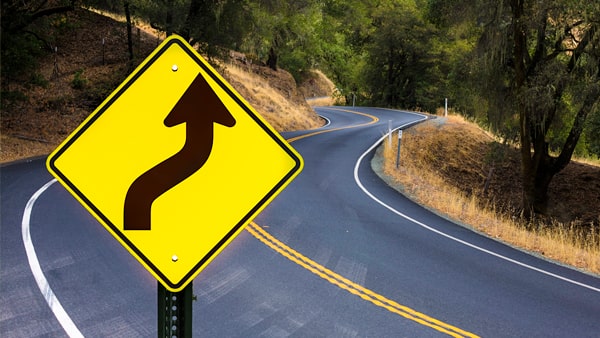
A yellow warning sign with an arrow bending right and then left indicates:

This sign means:
  1. A One sharp right turn
  2. B A reverse curve beginning to the right
  3. C A reverse curve beginning to the left
  4. D The end of paved roadway

Correct answer: B – A reverse curve beginning to the right

This warning sign shows two successive curves, with the roadway first bending right and then left. Reduce speed before entering the curves and remain within your lane. The sign describes the road’s alignment rather than directing you to turn at an intersection.

Source: Utah Driver Handbook — § 9, “Warning Signs”, Utah Driver Handbook — § 9, “Speed”

Question 3

A steady yellow arrow appears while you are waiting in a dedicated right-turn lane. What does it indicate?

  1. A The allowable movement is ending, so prepare for the next signal
  2. B You may turn after yielding to pedestrians
  3. C Right turns are prohibited until the signal is repaired
  4. D You should accelerate before the arrow changes

Correct answer: A – The allowable movement is ending, so prepare for the next signal

Utah law states that a steady yellow arrow warns that the allowable movement associated with a green signal is ending. Be prepared to obey the signal indication that follows. The yellow arrow is not an instruction to accelerate through the intersection.

Source: Utah Code § 41-6a-305(3)(a) — Traffic-control signal -- At intersections -- At place other than intersection -- Color of light signal -- Inoperative traffic-control signals -- Affirmative defense

Question 4

What color combination is generally used for freeway and expressway destination guide signs?

  1. A Orange background with black lettering
  2. B Green background with white lettering
  3. C Yellow background with black lettering
  4. D Red background with white lettering

Correct answer: B – Green background with white lettering

Utah’s traffic-control manual generally specifies a green background with white letters, symbols, arrows, and borders for freeway and expressway guide signs. This color scheme identifies directional and destination information. Orange is associated with work zones, while yellow generally identifies warnings.

Source: Utah Manual on Uniform Traffic Control Devices — § 2E.07, “Color of Guide Signs”

Question 5

Which color normally separates traffic lanes moving in the same direction?

  1. A Yellow
  2. B White
  3. C Red
  4. D Black

Correct answer: B – White

White pavement markings separate lanes carrying traffic in the same direction. Yellow markings separate opposing directions of travel on a two-way roadway. Whether a line is solid or broken provides additional instructions about crossing it, but the color identifies the direction of traffic being separated.

Source: Utah Driver Handbook — § 9, “Pavement Markings”

Question 6

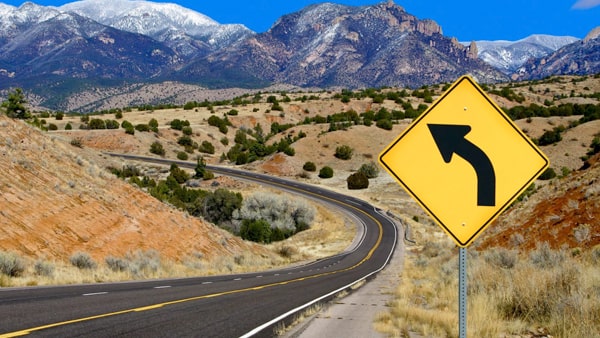
A yellow diamond sign with a black arrow curving to the left warns of:

This sign is used to warn drivers about:
  1. A An intersection ahead
  2. B A highway work zone
  3. C A left curve ahead
  4. D A change in the number of lanes

Correct answer: C – A left curve ahead

The sign warns that the roadway curves to the left ahead. Reduce speed before entering the curve and maintain proper lane position throughout it. This is a warning sign, not an instruction to make a left turn at an intersection.

Source: Utah Driver Handbook — § 9, “Warning Signs”, Utah Driver Handbook — § 9, “Speed”