


Alaska Practice Permit Test 4

4.9 out of 5 (59 votes)
80% Passing score
20 Questions
4 Mistakes allowed
Getting ready for the Alaska DMV permit test is not exactly anyone’s idea of a wild Friday night, but here we are, and honestly, it is better to know this material before you are staring at a real test screen wondering why “common sense” suddenly feels less common. This Alaska DMV permit practice test gives you 20 multiple-choice questions built around the rules new drivers actually need to understand, including general driving knowledge, road signs, Alaska licensing requirements, and yes, child passenger safety too. Because apparently the DMV expects you to know how to drive and protect small humans at the same time. Fair. Alaska lets teens apply for an instruction permit at 14, which sounds young until you remember how spread out the state is. To get that permit, you need to pass the written knowledge test and vision test, submit the right paperwork, bring the required identity and residency documents, get parental consent if you are under 18, and pay the permit fee. Glamorous? No. Important? Unfortunately, yes. Once you have the permit, you are not cruising around solo like the main character in a coming-of-age movie. A licensed driver at least 21 years old has to sit in the passenger seat, and that person needs at least one year of experience driving the type of vehicle you are using. This Alaska permit practice test also gives you a cleaner look at what comes after the permit stage. Teens can apply for a provisional license at 16, but only after holding the permit for at least six months, staying clear of recent traffic violations, and completing at least 40 hours of driving practice. Ten of those hours must happen in progressively challenging conditions, like nighttime driving or rough weather, which in Alaska is not exactly a rare bonus level. Icy roads, sudden weather swings, remote stretches, tourist-heavy Anchorage traffic — it all counts as real preparation, whether you enjoy it or not. Scoring at least 16 correct answers on this DMV learners permit practice test shows you are doing more than skimming a DMV test cheat sheet and hoping the universe feels generous. Adults 18 and older have a different path, without the teen provisional requirements, but they still need to pass the knowledge, vision, and road tests unless exempt. So whether you are a teen applicant, an adult first-timer, renewing, or just brushing up, this Alaska practice test for permit study gives you a practical way to walk into the DMV slightly less sweaty. Maybe even confident.
FREE DMV Practice Test App
Study for your Alaska permit test or driver’s license with the NextDoorDriving app. 700+ DMV questions and answers, 100% free!
Download on the App Store

Sample Alaska Permit Test Questions

Question 1

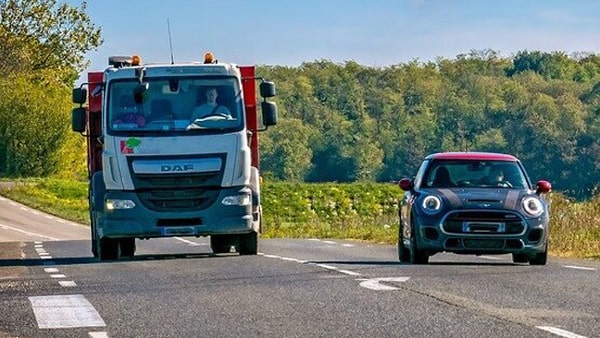
Which driving error directly increases the risk of striking the rear of the vehicle ahead?

  1. A Checking the rearview mirror periodically
  2. B Remaining in one lane
  3. C Following without enough space
  4. D Driving below the maximum speed

Correct answer: C – Following without enough space

Alaska requires a driver to remain at least two seconds behind and not follow more closely than is reasonable and prudent for roadway and traffic conditions. The driver manual recommends a four-second interval, increased to six seconds or more when towing or when the road is wet or slippery. Adequate space reduces the risk of a rear-end crash when traffic stops suddenly.

Source: 13 AAC 02.090(a) – Following too closely, Alaska Driver Manual — “How to Avoid Rear End Collisions”

Question 2

Under Alaska rules, when may you return to the right lane after passing another vehicle on the left?

After passing a car, it is safe to return to your driving lane when:
  1. A After signaling for at least 100 feet
  2. B When the other driver flashes the vehicle's headlights
  3. C When you are safely clear of the passed vehicle
  4. D As soon as your vehicle moves ahead of its front bumper

Correct answer: C – When you are safely clear of the passed vehicle

The passing driver must pass at a safe distance and may not return to the right lane until safely clear of the overtaken vehicle. The overtaken driver also has duties to give way after an audible signal and, when the pass uses an opposing-traffic lane, not increase speed until the pass is completed. Those duties do not remove the passing driver's responsibility to verify safe clearance.

Source: 13 AAC 02.065(a)–(b) – Overtaking a vehicle on the left - limitations

Question 3

At an uncontrolled Alaska intersection, two vehicles approach from different roads at approximately the same time. Who must yield?

  1. A Whichever driver is traveling more slowly
  2. B The driver on the left
  3. C The driver on the right
  4. D Neither driver

Correct answer: B – The driver on the left

When two vehicles approach or enter an uncontrolled intersection from different roadways at approximately the same time, the driver on the left must yield to the driver on the right. A driver who has stopped and yielded may proceed only when a safe interval exists, nearby traffic presents no immediate hazard, and the driver exercises caution. The right-side rule does not eliminate the duty to avoid a collision.

Source: 13 AAC 02.120(a)–(c) – Vehicle approaching or entering intersection or roundabout

Question 4

Which situation can divert a driver's attention from operating the vehicle?

  1. A Handling a problem involving children while moving
  2. B Reviewing directions while driving
  3. C Traveling with an unsecured pet
  4. D All of the above

Correct answer: D – All of the above

Each listed situation can distract a driver. The driver manual advises pulling over safely before addressing a situation involving children or reviewing directions and recommends securing pets before driving. Drivers should avoid activities that take their eyes or attention away from the road and concentrate on controlling the vehicle.

Source: Alaska Driver Manual — “Distracted Driving”

Question 5

On an Alaska road posted at 45 mph, surrounding traffic is moving at 50 mph. Under favorable conditions, what is the highest speed you may legally drive?

  1. A 50 mph, because that is the traffic flow
  2. B Any speed between 45 and 50 mph
  3. C 45 mph

Correct answer: C – 45 mph

A posted 45 mph limit establishes the maximum lawful speed at that location, even when other vehicles are traveling faster. The basic speed rule also prohibits driving faster than is reasonable and prudent for traffic, roadway, and weather conditions. Poor conditions may require a speed below 45 mph, but the traffic flow does not authorize exceeding the posted limit.

Source: 13 AAC 02.275(a)–(b) – Basic rule and maximum limits, 13 AAC 02.280(a) – Alteration of limits by state and municipalities

Question 6

In Alaska, how close may you come behind another vehicle at night before you must stop using high beams?

When approaching another vehicle from the rear at night, you must dim your bright headlights within:
  1. A 100 feet
  2. B 200 feet
  3. C 300 feet
  4. D 600 feet

Correct answer: C – 300 feet

When approaching another vehicle from behind, a driver may not use the highest distribution of headlight intensity within 300 feet. The driver manual describes this as changing to low beams at least 300 feet from a vehicle traveling in the same direction. This reduces glare in the other driver's mirrors.

Source: 13 AAC 04.020(e)(2) – Headlights, Alaska Driver Manual — “Lighting Law”