


California DMV Practice Permit Test 3

4.8 out of 5 (6510 votes)
80% Passing score
20 Questions
4 Mistakes allowed
The California DMV practice test on this page is for that oddly specific moment when you realize, yes, the real DMV written test is not just “common sense,” and no, guessing your way through road signs, GDL rules, and phone laws is probably not a life strategy. This California driving test practice gives you 20 questions based on the kinds of rules, signs, and safety details you’ll need to know for the actual permit test, with instant feedback after each answer so you can catch the stuff you almost knew—but, inconveniently, did not quite know. And California licensing has layers. Of course it does. If you’re under 18, you can apply for a provisional instruction permit at 15½, but only after completing an approved 30-hour driver education course. Even then, the permit does not become valid for driving until you start behind-the-wheel training and a certified instructor signs it. After that, you’ll need a California-licensed supervising driver who is at least 25 and sitting close enough to take control of the vehicle, which is a very official way of saying they should not be napping in the back seat. This California DMV permit practice test also brushes up against the Graduated Driver Licensing program, or GDL, which applies to drivers under 18. The path runs through three stages: provisional instruction permit, provisional driver license, and then a regular Class C driver license. Before a teen can take the road test at 16 or 17, they need to hold the permit for at least 6 months, log 50 supervised driving hours, including 10 at night, and finish 6 hours of professional behind-the-wheel training with a licensed driving school. A bit much? Maybe. Also, probably useful. Once a teen gets a provisional driver license, California keeps the leash on for the first 12 months: no driving between 11 PM and 5 AM without a licensed supervisor at least 25, and no passengers under 20 unless that supervisor is along. Drivers under 18 also cannot use a cell phone while driving, even hands-free, except for emergency services. To pass this California DMV practice test permit, you need 16 correct answers out of 20. You can retake the practice DMV test as many times as needed, which is good, because learning California’s rules usually takes a few messy rounds.
FREE DMV Practice Test App
Study for your California permit test or driver’s license with the NextDoorDriving app. 700+ DMV questions and answers, 100% free!
Download on the App Store

Sample California Permit Test Questions

Question 1

How must you yield to an approaching emergency vehicle using a siren and a visible red light?

  1. A Move to the right edge, clear of the intersection, and stop
  2. B Drive slowly in the right lane until it passes
  3. C Stop immediately, even within an intersection
  4. D Accelerate ahead of the emergency vehicle

Correct answer: A – Move to the right edge, clear of the intersection, and stop

California requires surrounding traffic to yield, move immediately to the right-hand edge or curb clear of an intersection, and stop until the emergency vehicle passes. If you are already in an intersection, continue through it before pulling right and stopping when safe. Follow any different direction given by a traffic officer.

Source: CVC § 21806(a)(1) ([leginfo.legislature.ca.gov](https://leginfo.legislature.ca.gov/faces/codes_displaySection.xhtml?lawCode=VEH§ionNum=21806&utm_source=openai)), California Driver’s Handbook — § 7, “Emergency Vehicles” ([qr.dmv.ca.gov](https://qr.dmv.ca.gov/portal/handbook/california-driver-handbook/laws-and-rules-of-the-road-cont1/))
Question 2

Red pavement reflectors shine toward your vehicle at night. What do they indicate?

  1. A A busy intersection is ahead
  2. B A stop sign is ahead
  3. C You are traveling in the wrong direction
  4. D You have entered a no-passing zone

Correct answer: C – You are traveling in the wrong direction

California uses red-facing pavement reflectors to warn drivers traveling in the wrong direction. The handbook specifically notes that red reflectors shining in your headlights indicate wrong-way travel. Do not continue against traffic; correct your direction as soon as it can be done safely.

Source: California MUTCD 2026 — § 3B.16, “Raised Pavement Markers Supplementing Other Markings” ([dot.ca.gov](https://dot.ca.gov/-/media/dot-media/programs/safety-programs/documents/ca-mutcd/2026/camutcd-2026-3b.pdf?utm_source=openai)), California Driver’s Handbook — § 7, “WRONG WAY Sign” ([dmv.ca.gov](https://www.dmv.ca.gov/portal/handbook/california-driver-handbook/laws-and-rules-of-the-road/?utm_source=openai))

Question 3

What colors are normally used on a California freeway guide sign showing an upcoming exit?

  1. A Yellow background with black lettering
  2. B Black background with white lettering
  3. C Red background with white lettering
  4. D Green background with white lettering

Correct answer: D – Green background with white lettering

Freeway guide signs that provide destination, route, and exit information normally use a green background with white lettering, symbols, and borders. Yellow and black are associated mainly with warnings, while red and white are commonly used for prohibitions or stop-related regulatory messages.

Source: California MUTCD 2026 — § 2A.05, “Standardization of Sign Color” ([dot.ca.gov](https://dot.ca.gov/programs/safety-programs/camutcd?utm_source=openai)), California MUTCD 2026 — Ch. 2E, “Guide Signs—Freeways and Expressways” ([dot.ca.gov](https://dot.ca.gov/programs/safety-programs/camutcd))

Question 4

At a California railroad crossing, your view during the last 100 feet of approach is obstructed so you cannot see 400 feet along the tracks in both directions. With no flagperson or active warning signal controlling the crossing, the speed limit is:

  1. A 25 mph
  2. B 10 mph
  3. C 15 mph
  4. D 20 mph

Correct answer: C – 15 mph

The applicable prima facie speed limit is 15 mph when the driver’s view during the last 100 feet of approach does not extend 400 feet in both directions along the railway. The statutory rule does not apply when a flagperson is present or a clearly visible crossing signal is installed and is not warning of an approaching train.

Source: CVC § 22352(a)(1) ([leginfo.legislature.ca.gov](https://leginfo.legislature.ca.gov/faces/codes_displayText.xhtml?article=1.&chapter=7.&division=11.&lawCode=VEH&utm_source=openai)), California Driver’s Handbook — § 7, “Near Railroad or Light Rail Tracks” ([dmv.ca.gov](https://www.dmv.ca.gov/portal/handbook/california-driver-handbook/laws-and-rules-of-the-road-cont1/?utm_source=openai))

Question 5

Which vehicle should prompt you to leave extra following room because it can substantially restrict your view ahead?

  1. A A station wagon
  2. B A large tour bus
  3. C A compact passenger car
  4. D All three restrict your view equally

Correct answer: B – A large tour bus

A large tour bus can block much more of the roadway ahead than an ordinary passenger vehicle. The handbook warns drivers not to follow large vehicles too closely, and its tailgating guidance explains that following too closely reduces both forward visibility and reaction time. Leave enough space to maintain a useful view and respond safely.

Source: California Driver’s Handbook — § 7, “Maneuvering” ([qr.dmv.ca.gov](https://qr.dmv.ca.gov/portal/handbook/california-driver-handbook/laws-and-rules-of-the-road-cont1/)), California Driver’s Handbook — § 8, “Tailgating (Following Too Closely)” ([dmv.ca.gov](https://www.dmv.ca.gov/portal/handbook/california-driver-handbook/safe-driving/?utm_source=openai))

Question 6

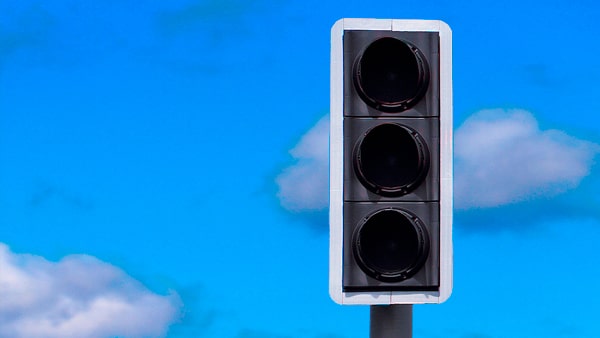
On a standard three-section vertical traffic signal, what is the order from top to bottom?

From top to bottom, the following is the proper order for traffic lights:
  1. A Red, yellow, green
  2. B Red, green, yellow
  3. C Green, red, yellow
  4. D Green, yellow, red

Correct answer: A – Red, yellow, green

California’s signal standard places red indications above yellow and green indications in a vertical signal face. On a standard three-section signal for through traffic, the sequence from top to bottom is red, yellow, and green. This standardized arrangement also helps drivers identify the indications by position.

Source: California MUTCD 2026 — § 4E.04, “Positions of Signal Indications Within a Vertical Signal Face” ([dot.ca.gov](https://dot.ca.gov/-/media/dot-media/programs/safety-programs/documents/ca-mutcd/2026/2026-camutcd-2026-4e-a11y.pdf))