California Road Signs Test Simulator

4.8 out of 5 (2051 votes)
80% Passing score
25 Questions
5 Mistakes allowed
This California road sign simulator is for the part of DMV prep that looks harmless, right up until a plain little sign makes you second-guess your entire understanding of shapes. California does not hand you a separate road signs test with its own neat little score and its own tidy little rules. That would be too convenient. Instead, road sign questions get mixed directly into the main California DMV knowledge test, along with traffic laws, road safety, DUI and substance abuse rules, and the other material pulled from the California DMV Driver’s Manual. So, yes, this CA DMV road sign practice test is still part of permit test prep — but the spotlight here is on signs. Their colors. Their shapes. Their symbols. Their annoyingly specific meanings. A yellow diamond is not just “something might happen, probably.” A red octagon is not open to interpretation. And those regulatory signs with the bossy black-and-white look? They are not making suggestions. The real test may ask what a sign means, what action you should take, or what the shape or color is warning you about, and it may do it in that very DMV-ish way where two answers feel close enough to be rude. Road sign questions count toward your overall score on the official California permit test. There is no separate road-sign-only missed-question limit, no little safety net just for signs. The overall DMV passing threshold is 80%, with applicants under 18 allowed to miss 8 total questions and applicants 18 and over allowed to miss 6 total questions on the full knowledge test. Not terrifying, exactly. But also not something to wander into with “I’ve seen roads before” as your whole study plan. The official California written test uses three answer choices — A, B, or C — which sounds easier than four until you meet the classic DMV setup: one answer is plainly wrong, one is sort of true in a weak, slippery way, and one is the answer the manual actually wants. This road sign simulator gives you a chance to practice that rhythm before it matters. Use it to get faster at recognizing California road signs, calmer with multiple-choice wording, and a little less likely to be personally offended by a triangle, diamond, circle, rectangle, or whatever else the DMV decides to throw at you.
FREE DMV Practice Test App
Study for your California permit test or driver’s license with the NextDoorDriving app. 700+ DMV questions and answers, 100% free!
Download on the App Store

Sample California Permit Test Questions

Question 1

On a two-way road, what color center line separates opposing traffic?

  1. A White
  2. B Red
  3. C Black
  4. D Yellow

Correct answer: D – Yellow

Yellow center lines are used between traffic streams traveling in opposite directions. They may be solid, broken, or combined, depending on whether crossing is restricted or permitted. White lines generally divide lanes moving in the same direction and may also mark the right roadway edge.

Source: California Driver’s Handbook — § 6, “Lane Markings”
Question 2

After stopping and before entering an intersection, where should you look for traffic and other road users?

  1. A Ahead and to the left
  2. B Left and right only
  3. C Left, right, and ahead
  4. D Ahead and to the right

Correct answer: C – Left, right, and ahead

Before entering an intersection, California’s handbook directs drivers to look left, right, and ahead for vehicles, bicyclists, and pedestrians. Continue checking as you move because conditions can change quickly. Be prepared to remain stopped or stop again if another road user occupies or enters your intended path.

Source: California Driver’s Handbook — § 7, “Intersections”

Question 3

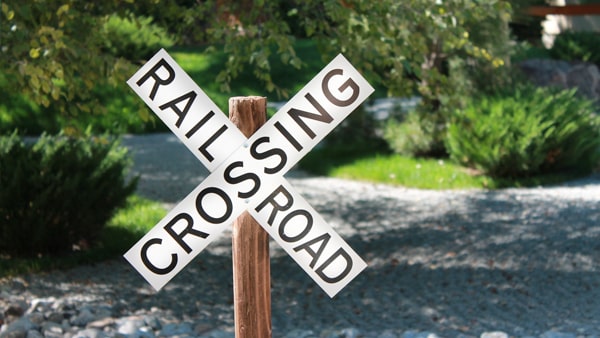
The pictured X-shaped sign identifies:

This road sign means:
  1. A A place to stop only when road traffic is approaching
  2. B A three-way intersection
  3. C A crossroad ahead
  4. D A railroad crossing

Correct answer: D – A railroad crossing

The X-shaped railroad sign identifies a grade crossing. The California handbook instructs drivers approaching a railroad crossing to slow down, look and listen for trains, and prepare to stop. Allow any train to pass before proceeding across the tracks.

Source: California Driver’s Handbook — § 7, “Yellow and Black Circular Sign or X-shaped Sign”

Question 4

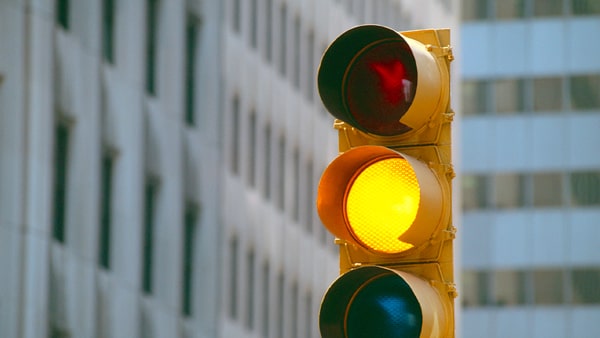
A traffic signal changes from green to steady yellow as you approach. What should you do?

As you near an intersection, the traffic light changes from green to yellow. Your best action would be to:
  1. A Accelerate to enter before the red light
  2. B Brake sharply regardless of traffic conditions
  3. C Plan to stop after entering the intersection
  4. D Stop before the intersection if you can do so safely

Correct answer: D – Stop before the intersection if you can do so safely

A steady yellow signal warns that the red signal is about to appear. Stop before entering the intersection if you can make the stop safely. If you are too close to stop safely, proceed through the intersection cautiously rather than braking abruptly.

Source: California Driver’s Handbook — § 7, “Solid Yellow Light”

Question 5

What must a driver do at a flashing yellow traffic signal?

  1. A Merge with traffic immediately
  2. B Slow down and proceed cautiously
  3. C Yield only to pedestrians
  4. D Make a full stop before proceeding

Correct answer: B – Slow down and proceed cautiously

A flashing yellow signal is a warning to proceed with caution. Slow down, remain alert, and check that the way is safe. Unlike a flashing red signal, a flashing yellow signal does not require every driver to stop.

Source: California Driver’s Handbook — § 7, “Flashing Yellow Light”

Question 6

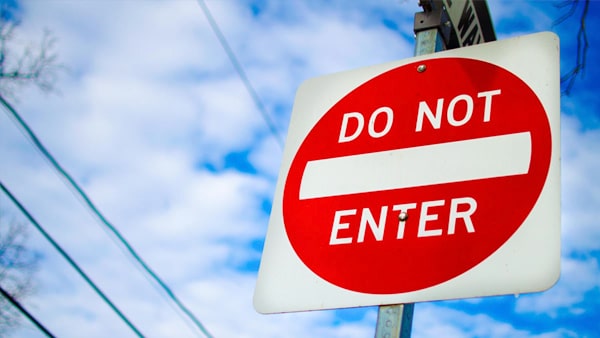
What instruction does this red-and-white sign give?

This sign means:
  1. A Come to a complete stop
  2. B Do not make a U-turn
  3. C Yield before proceeding
  4. D Do not enter the roadway or ramp

Correct answer: D – Do not enter the roadway or ramp

A DO NOT ENTER sign prohibits entering the road or ramp where it is posted. In California, these signs face traffic that might enter a one-way roadway, divided highway, or ramp in the wrong direction. A WRONG WAY sign may also be displayed with it.

Source: California MUTCD 2026 — § 2B.46, “DO NOT ENTER Sign (R5-1)”, California Driver’s Handbook — § 7, “Red and White Regulatory Sign”