California Road Signs Test

4.7 out of 5 (5116 votes)
80% Passing score
10 Questions
2 Mistakes allowed
Studying for the California driver’s license test is one of those things that sounds simple until you realize the DMV can ask about road signs in a surprisingly specific way. Not as a separate California road signs exam, though — that is the little twist. California does not run a standalone road signs test. Sign questions are tucked into the main California DMV knowledge test, mixed in with traffic laws, safe driving rules, and all the other stuff you are supposed to know before someone hands you a permit and says, essentially, please do not make this weird. This California road signs practice test gives you a cleaner way to review that slice of the exam without pretending road signs are just cute roadside art. They are not. Some signs tell you what you must do, some warn you that something awkward is about to happen up ahead, and some quietly point you toward hospitals, routes, lanes, crossings, or whatever else you need before you miss your turn and blame the sign. The questions focus on sign color, shape, meaning, and the action a driver should take in response, because the DMV is not just checking whether you can recognize an octagon. That would be too easy, and apparently we are not doing easy. You will get 20 multiple-choice questions drawn from the official California Driver Handbook and the kinds of traffic control signs reflected in MUTCD standards. On the real California permit test, road sign questions count toward your overall score. There is no separate “oops, but only for signs” allowance. Applicants under 18 may miss 8 total questions on the full knowledge test, while applicants 18 and older may miss 6 total questions. So, yes, signs are only part of the test, but they are still part of the score, which is the part that matters when you are sitting there at the DMV trying to look calm. After you answer, you will see immediate feedback showing what you got right, what went sideways, and why the correct answer makes sense on an actual road with actual drivers doing actual driver things. You can take this DMV practice test as many times as you need. First-time permit applicant, nervous refresher, person who forgot what half the yellow signs mean — fine, welcome. This is a low-pressure way to make California road signs feel a little less mysterious before test day.
FREE DMV Practice Test App
Study for your California permit test or driver’s license with the NextDoorDriving app. 700+ DMV questions and answers, 100% free!
Download on the App Store

Sample California Permit Test Questions

Question 1

A uniformed peace officer lawfully directs you through a red traffic signal. What should you do?
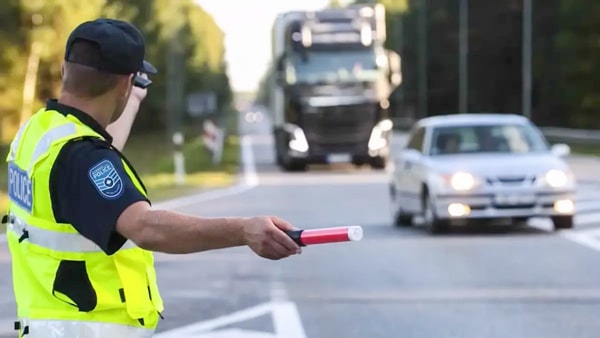
A traffic light is red, but a police officer is telling you to go ahead anyway. What should you do?
  1. A Remain stopped until the light turns green
  2. B Move into another lane before proceeding
  3. C Follow the officer’s direction
  4. D Wait for the officer to walk over to your vehicle

Correct answer: C – Follow the officer’s direction

California drivers must obey a lawful order, signal, or direction from a uniformed peace officer performing traffic duties. The driver’s handbook also instructs drivers to follow an officer’s orders even when they conflict with signs or signals. Proceed as directed while remaining alert to the officer and surrounding traffic.

Source: CVC § 2800(a), California Driver’s Handbook — § 7, “Emergency Vehicles”
Question 2

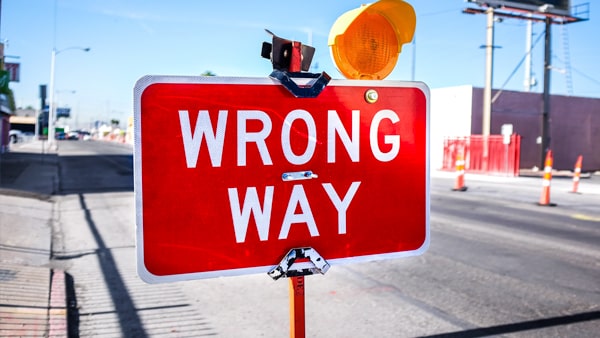
What does a red-and-white WRONG WAY sign indicate?

This red and white sign means:
  1. A You may enter after yielding to traffic
  2. B The roadway is closed in both directions
  3. C U-turns are prohibited at this location
  4. D Your vehicle is facing against the permitted traffic direction

Correct answer: D – Your vehicle is facing against the permitted traffic direction

A WRONG WAY sign warns that you have entered or are about to enter a roadway against traffic. California’s handbook instructs a driver in this situation to back out or turn around when it is safe. Red reflectors facing your headlights can provide an additional nighttime warning.

Source: California Driver’s Handbook — § 7, “WRONG WAY Sign”

Question 3

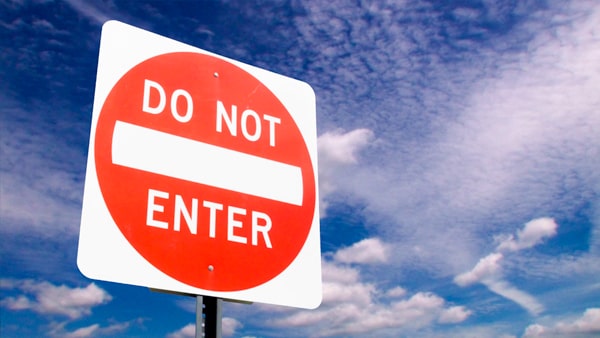
What must you do when facing a DO NOT ENTER sign?

This sign is used to prevent:
  1. A Avoid entering a parking area that has no open spaces
  2. B Enter only if no road workers are present
  3. C Continue because the street has no outlet
  4. D Do not enter the roadway or ramp at that location

Correct answer: D – Do not enter the roadway or ramp at that location

A DO NOT ENTER sign directs drivers not to enter the road or ramp where it is posted. It is commonly used where entering would place a vehicle against the permitted direction of travel. A WRONG WAY sign may also be present to reinforce the warning.

Source: California Driver’s Handbook — § 7, “Red and White Regulatory Sign”, California Driver’s Handbook — § 7, “WRONG WAY Sign”

Question 4

A steady yellow light appears while you are already in the intersection. What should you do?

  1. A Stop immediately, even if you block cross traffic
  2. B Continue only if no pedestrians are present
  3. C Continue only when making a right turn
  4. D Cautiously complete your movement through the intersection

Correct answer: D – Cautiously complete your movement through the intersection

A steady yellow signal warns that the related green movement is ending. California’s handbook says to stop if you can do so safely, but if you are already in the intersection, cautiously continue through it. Do not stop where your vehicle would obstruct traffic in the intersection.

Source: CVC § 21452(a), California Driver’s Handbook — § 7, “Solid Yellow Light”

Question 5

Standard warning signs for hazards such as curves and narrow bridges usually have which colors?

  1. A Black symbols on a white background
  2. B Black symbols on a yellow background
  3. C White symbols on a blue background
  4. D White symbols on a green background

Correct answer: B – Black symbols on a yellow background

Standard roadway warning signs generally display black symbols, legends, and borders on a yellow background. Their purpose is to alert drivers to conditions or hazards ahead, including changes in roadway alignment or width. Some special warning signs use other approved colors, such as orange in temporary traffic-control areas.

Source: California MUTCD 2026 Edition — Ch. 2C, “Warning Signs and Object Markers”

Question 6

Which pavement marking can identify the movement allowed from a turn lane?

  1. A A flashing red light above the roadway
  2. B A flashing yellow light beside the roadway
  3. C A white edge line along the shoulder
  4. D A white directional arrow within the lane

Correct answer: D – A white directional arrow within the lane

Lane-use arrows show the mandatory or permitted movements from particular lanes. These arrows are placed within the lane and are normally white. Drivers must follow mandatory lane directions shown by official signs and pavement markings instead of making a different movement from that lane.

Source: California MUTCD 2026 Edition — § 3B.20, “Word, Symbol, and Arrow Pavement Markings—General”, California MUTCD 2026 Edition — § 3B.23, “Lane-Use Arrows”