


Indiana BMV Permit Test Simulator

4.7 out of 5 (210 votes)
80% Passing score
50 Questions
10 Mistakes allowed
Indiana’s permit test is not something to take lightly because you have ridden in a car your whole life. The Indiana BMV knowledge exam is based on the Indiana Driver’s Manual, and it checks more than basic common sense. You are expected to know traffic laws, safe driving habits, traffic maneuvers, signals, pavement markings, and road signs well enough to answer under test conditions. This Indiana BMV practice test is built to give you a realistic run at that experience. Each session uses 50 questions, matching the commonly reported Indiana permit test format: 34 questions on traffic laws and maneuvers, plus 16 on road signs. The real exam is scored in two separate parts, and Indiana requires 80% or higher on each one. So an overall “pretty good” score is not the point. You want to be strong enough in both areas, which usually means planning for at least 28 correct answers on the traffic-law side and 13 on the road-sign side. The practice test rotates in a fresh set of questions each time, which matters more than it sounds like it should. Repeating the same quiz can make you feel prepared when, really, you have just memorized the furniture in the room. Here, the goal is a little different: get comfortable recognizing how Indiana asks about right-of-way, warning signs, work zones, school zones, traffic signals, and those rule-based questions that seem simple until two answer choices both look annoyingly plausible. Hints are available when you need a nudge, and missed answers include explanations, so the practice does not stop at “wrong.” It shows you why. The licensing process is worth keeping in the background while you study, too. Indiana allows a learner’s permit at 15 with enrollment in approved driver training, or at 16 without driver education. Teen drivers moving toward a probationary license generally need to hold the permit for 180 days and complete 50 supervised driving hours, including 10 at night. Adults follow a different path, though vision screening, the knowledge exam when required, and the driving skills test still matter. Use this Indiana permit practice test like a rehearsal, not a formality. Read carefully, learn the signs cold, and treat the explanations as the part that actually saves you from repeating the same mistake at the BMV.
FREE DMV Practice Test App
Study for your Indiana permit test or driver’s license with the NextDoorDriving app. 700+ DMV questions and answers, 100% free!
Download on the App Store

Sample Indiana Permit Test Questions

Question 1

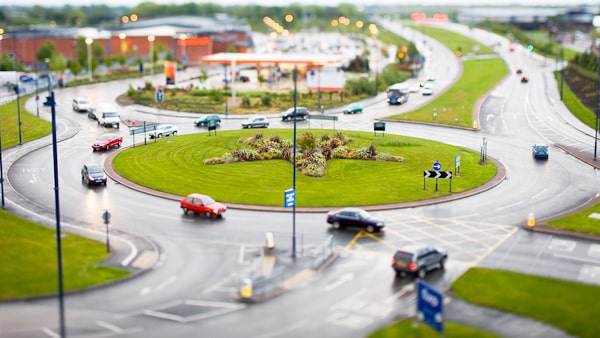
At an Indiana roundabout, which driver must yield?
You have the right-of-way when you are:
  1. A A driver already circulating must yield to entering traffic
  2. B A driver leaving a parking space must yield only to pedestrians
  3. C A driver backing from a driveway has priority
  4. D A driver entering must yield to traffic already circulating

Correct answer: D – A driver entering must yield to traffic already circulating

Traffic approaching a roundabout must yield to vehicles already traveling on the circular roadway. Drivers should also select the proper lane before entering a multilane roundabout and should not change lanes within the circulatory roadway. Enter only after an adequate opening is available.

Source: Indiana Driver’s Manual — Ch. 7, “Roundabouts”

Question 2

You clearly stop first at an all-way stop. What should you normally do?

  1. A Proceed first after checking that the intersection is safe
  2. B Wave every other driver through before moving
  3. C Wait until the intersection has no vehicles nearby

Correct answer: A – Proceed first after checking that the intersection is safe

At an all-way stop, the first vehicle to stop is normally the first vehicle permitted to proceed. Check for pedestrians and conflicting traffic before entering the intersection. If two vehicles arrive together, the driver on the left yields; if the order is uncertain or a collision is possible, yielding is the safer choice.

Source: Indiana Driver’s Manual — Ch. 7, “All-Way Stops”

Question 3

What does a flashing yellow traffic signal require?

  1. A Merge with traffic
  2. B Slow down and proceed cautiously
  3. C Stop for every pedestrian nearby
  4. D Come to a complete stop before proceeding

Correct answer: B – Slow down and proceed cautiously

A flashing yellow signal directs drivers to slow down and use caution through the intersection. A left-turning driver must still yield to oncoming vehicles and pedestrians. Indiana guidance also advises watching for road users who may attempt to cross even when cross traffic is required to yield.

Source: Indiana Driver’s Manual — Ch. 6, “Yellow Flashing Lights”

Question 4

Which activity can distract a driver?

  1. A Using a cell phone
  2. B Eating while driving
  3. C Thinking about something other than driving
  4. D All of the above

Correct answer: D – All of the above

All three activities can distract a driver. The Indiana manual defines distracted driving as an activity that takes the driver’s eyes off the road, hands off the steering wheel, or mind off driving. Staying focused helps a driver detect hazards and respond to changing traffic conditions.

Source: Indiana Driver’s Manual — Ch. 7, “Distracted Driving”

Question 5

Driving faster than surrounding traffic while repeatedly weaving around other vehicles:

  1. A Makes the trip substantially safer
  2. B Greatly increases the risk of a crash
  3. C Prevents traffic congestion
  4. D Is permitted whenever the road has several lanes

Correct answer: B – Greatly increases the risk of a crash

The driver’s manual warns that weaving in and out of lanes greatly increases crash risk. Excessive speed also reduces steering control, increases stopping distance, and can make a collision more severe. Lane changes should be limited to necessary movements and completed only after checking traffic, mirrors, and blind spots.

Source: Indiana Driver’s Manual — Ch. 7, “Changing Lanes and Passing Other Vehicles”, Indiana Driver’s Manual — Ch. 7, “Speed Limits”

Question 6

How should you control your speed when approaching and driving through a sharp curve?

  1. A Accelerate before entering the curve
  2. B Reduce speed and do not exceed the posted advisory speed
  3. C Wait until midway through the curve, then brake sharply
  4. D Cross the centerline to follow a straighter path

Correct answer: B – Reduce speed and do not exceed the posted advisory speed

Reduce speed for curves and ramps, and do not exceed a posted advisory speed. Indiana guidance notes that excessive speed reduces a driver’s ability to steer safely around curves or roadway objects. Avoid abrupt steering or hard braking, because sudden actions can cause a vehicle to skid.

Source: Indiana Driver’s Manual — Ch. 7, “Rollover”, Indiana Driver’s Manual — Ch. 7, “Speed Limits”, Indiana Driver’s Manual — Ch. 7, “Skidding”