Indiana BMV Sign Test 4

4.7 out of 5 (133 votes)
80% Passing score
20 Questions
4 Mistakes allowed
Road signs are the part of the Indiana permit test people tend to “sort of know,” which is exactly why they deserve a cleaner, more deliberate round of practice. The BMV knowledge exam is based on the Indiana Driver’s Manual and is split into separate scored areas, including traffic rules and road signs. You need 80% or better on each part, so a weak sign score can still trip you up even if the rest of your permit prep feels solid. Slightly unforgiving? Sure. But signs are not background scenery; they are instructions, warnings, and occasionally the only thing standing between you and a very avoidable mistake. This Indiana road signs practice test gives you 20 multiple-choice questions focused on the details drivers actually have to recognize: sign shapes, colors, symbols, and the action each sign expects from you. Red usually means stop, yield, or do not do the thing you were maybe about to do. Yellow warns you before conditions get awkward. Orange points to work zones, lane shifts, equipment, crews, cones, and the general roadside choreography that seems to appear at the least convenient time. The questions use practical wording and visual examples where they help, because road signs are, inconveniently enough, visual. The official Indiana learner’s permit knowledge test is commonly described as 50 questions, with 34 on traffic laws and maneuvers and 16 on signs. Since Indiana requires 80% on each component, applicants should plan on at least 28 correct answers on the traffic-law portion and 13 correct answers on the road-sign portion. This Indiana BMV practice test does not use the exact questions from the real exam, and that is not really the point anyway. It is built to make the format feel familiar, so test day does not feel like your first serious encounter with the material. It also helps to know where the sign test fits in the broader Indiana licensing process. Indiana allows a learner’s permit at 15 with approved driver education enrollment, or at 16 without driver education. Driver education includes 30 hours of classroom or online training plus 6 hours of behind-the-wheel instruction, and it can affect how soon a teen qualifies for a probationary license. Most young drivers must hold a permit for 180 days and complete 50 supervised driving hours, including 10 at night. So yes, this Indiana DMV sign test is permit prep. But it is also a steadier way to connect the signs, the rules, and the licensing steps before the BMV asks you to prove you were paying attention.
FREE DMV Practice Test App
Study for your Indiana permit test or driver’s license with the NextDoorDriving app. 700+ DMV questions and answers, 100% free!
Download on the App Store

Sample Indiana Permit Test Questions

Question 1

Which of these signs is normally rectangular?

  1. A School crossing sign
  2. B Advance railroad-crossing sign
  3. C Stop sign
  4. D Speed limit sign

Correct answer: D – Speed limit sign

Speed limit signs are rectangular regulatory signs. School-area signs are generally five-sided, advance railroad-crossing signs are circular, and stop signs have eight sides. Rectangular signs may also provide route information or certain warnings, but the speed limit sign is the rectangular choice listed here.

Source: Indiana Driver’s Manual — Ch. 6, “Traffic Sign Shapes”
Question 2

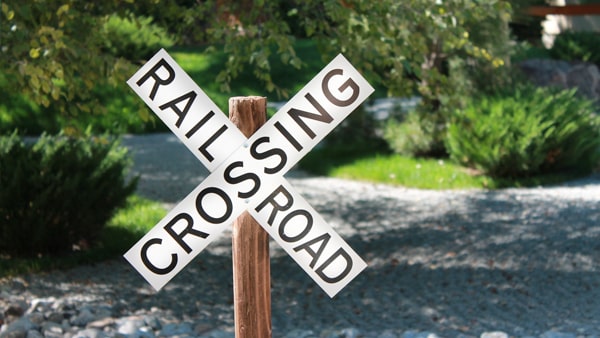
What does this crossbuck sign mark?

This road sign means:
  1. A An intersection where drivers stop only for traffic
  2. B A three-way intersection
  3. C A crossroad ahead
  4. D The location of railroad tracks

Correct answer: D – The location of railroad tracks

A crossbuck marks the location where railroad tracks cross the roadway. In Indiana, a crossbuck displayed by itself should be treated like a yield sign. Slow down, check for trains, and stop if a train is approaching; a crossbuck accompanied by a stop sign requires a complete stop.

Source: Indiana Driver’s Manual — Ch. 7, “Crossbucks”

Question 3

What may a driver do at a double solid yellow centerline?

  1. A Cross it to turn left into a driveway when safe
  2. B Use either side because the street is one-way
  3. C Use the marked area as a center turn lane
  4. D Cross it to pass a slower vehicle

Correct answer: A – Cross it to turn left into a driveway when safe

Double solid yellow lines separate traffic traveling in opposite directions and prohibit passing across the centerline. The Indiana manual permits crossing a solid yellow line to make a turn, such as a left turn into a driveway, when the movement can be made safely. These markings do not create a center left-turn lane.

Source: Indiana Driver’s Manual — Ch. 7, “Lane Markings”

Question 4

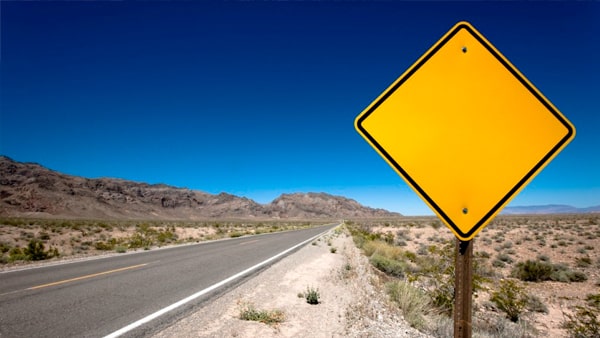
What is the purpose of a yellow-and-black diamond-shaped sign?

A yellow and black diamond-shaped sign:
  1. A To warn about a roadway condition or hazard ahead
  2. B To give directions to nearby destinations
  3. C To display a traffic regulation
  4. D To identify a temporary work zone

Correct answer: A – To warn about a roadway condition or hazard ahead

Yellow-and-black diamond signs warn drivers about upcoming road conditions and hazards, such as curves, merging traffic, or slippery pavement. Orange signs are used for temporary construction and maintenance conditions. Regulatory signs commonly have white backgrounds, while green signs generally provide directions or guidance.

Source: Indiana Driver’s Manual — Ch. 6, “Traffic Sign Colors”, Indiana Driver’s Manual — Ch. 6, “Traffic Sign Shapes”
Question 5

A red traffic light is displayed with a green arrow. What movement is permitted?

  1. A Only travel straight ahead
  2. B Travel in the direction shown by the arrow
  3. C Remain stopped until a circular green light appears
  4. D Travel in any direction after stopping

Correct answer: B – Travel in the direction shown by the arrow

A green arrow displayed with a red or green light permits movement in the arrow’s direction. The driver must use the appropriate lane and confirm that the intersection is clear before proceeding. In Indiana, the red light continues to prohibit movements not authorized by the green arrow.

Source: Indiana Driver’s Manual — Ch. 6, “Turning through an Intersection”

Question 6

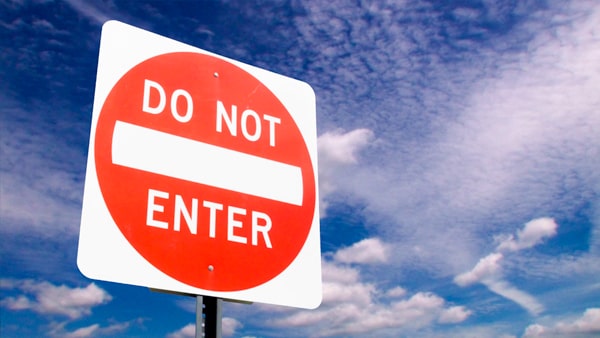
What must a driver do when facing this DO NOT ENTER sign?

This sign is used to prevent:
  1. A Enter only if parking spaces are available
  2. B Enter after checking for construction vehicles
  3. C Continue if the street has no outlet
  4. D Do not enter the roadway from that direction

Correct answer: D – Do not enter the roadway from that direction

A DO NOT ENTER sign is a traffic regulation sign that drivers must obey. It prohibits entering the roadway from the approach where the sign is posted. Do not proceed beyond it from that direction.

Source: Indiana Driver’s Manual — Ch. 6, “Traffic Regulation Signs”