


Iowa Practice Permit Test 5

5 out of 5 (72 votes)
80% Passing score
20 Questions
4 Mistakes allowed
A good Iowa DMV practice test should feel close enough to the real thing that you stop treating it like a warm-up and start noticing what the Iowa DOT actually expects you to know. This one does that without making a production out of it. It gives you 20 questions based on the Iowa Driver’s License Manual, which is the official study source for the Iowa learner permit knowledge test — the operator knowledge test used for first-time drivers. The material reaches into the same areas that show up across Iowa permit test prep: traffic laws, road signs, signals, pavement markings, lane controls, right-of-way, safe driving habits, alcohol and drug laws, vehicle equipment, emergencies, and sharing the road. That is a lot, admittedly. It sounds like a table of contents because, in a way, it is. But on the test, these topics do not arrive neatly labeled. A question about a pavement marking may really be testing whether you understand passing rules. A question about alcohol may be less about memorizing a number and more about knowing how impaired driving changes judgment, reaction time, and consequences. This Iowa practice permit test puts extra attention on DUI-related rules, including legal blood alcohol limits and the effects of alcohol or drugs behind the wheel. That matters for the exam, and it matters beyond the exam, which is the less cheerful but more important part. Iowa takes impaired driving seriously, and the knowledge test expects you to understand that before you ever get a license in your pocket. The official Iowa DOT practice test uses multiple-choice questions selected from a larger sample pool and lists 80% as the passing score. For the real Iowa knowledge test, the commonly reported format is 35 questions, with 28 correct answers needed to pass, meaning you can miss 7. Comfortable? Maybe. Generous? Not really, especially if signs, right-of-way, and alcohol laws all start blending together after ten minutes of studying. Use this Iowa driving permit practice test as a cleaner way to find the weak spots before they cost you anything. Miss questions here, reread the explanation, go back to the Iowa driver’s manual where needed, and keep going. It is permit test practice, yes, but it also gives you a more honest sense of whether you are ready to walk into the DOT and handle the actual Iowa driving permit test without guessing your way through it.
FREE DMV Practice Test App
Study for your Iowa permit test or driver’s license with the NextDoorDriving app. 700+ DMV questions and answers, 100% free!
Download on the App Store

Sample Iowa Permit Test Questions

Question 1

A pedestrian is crossing at an intersection where no crosswalk lines are painted and no traffic signal is operating. What must you do?

  1. A. Proceed because only marked crosswalks give pedestrians priority
  2. B. Slow down but pass in front of the pedestrian
  3. C. Yield, stopping if necessary
  4. D. Stop only if the pedestrian reaches the center of the road

Correct answer: C. – Yield, stopping if necessary

Iowa law requires a driver to yield to a pedestrian crossing within either a marked crosswalk or an unmarked crosswalk at an intersection when traffic signals are not operating. The driver must slow or stop if necessary to yield. Painted crosswalk lines are not required for this rule to apply.

Source: Iowa Code § 321.327(1) – Pedestrians’ and bicyclists’ right-of-way, Iowa Driver’s License Manual — § 2.22, “Right-of-Way”
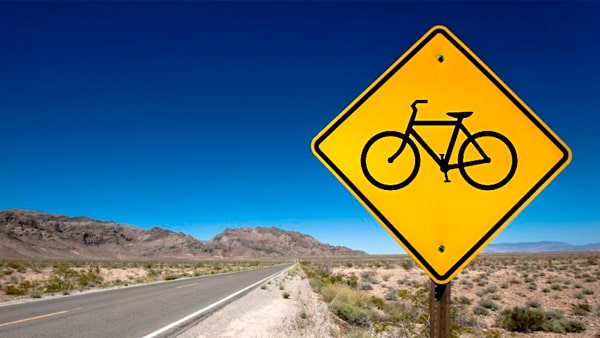
Question 2

A fluorescent yellow-green diamond sign displaying a bicycle warns you about:

This sign means:
  1. A. A playground where children may enter the road
  2. B. A bicycle rental facility
  3. C. A parking area entrance
  4. D. Bicyclists who may be on or entering the roadway

Correct answer: D. – Bicyclists who may be on or entering the roadway

Fluorescent yellow-green signs are used for pedestrian, bicycle, and school warnings. A diamond shape warns of a roadway condition or potential hazard ahead. When the symbol is a bicycle, watch carefully for bicyclists on or entering the roadway and be prepared to adjust your speed.

Source: Iowa Driver’s License Manual — § 2.1, “Traffic Signs”, Iowa Driver’s License Manual — § 5.11, “Sharing the Road with Bicyclists and Pedestrians”

Question 3

Why must drivers watch for bicyclists traveling in ordinary traffic lanes?

  1. A. Bicyclists are required to ride facing traffic
  2. B. Bicyclists have the right to use the roadway and share it with motor vehicles
  3. C. Bicyclists always have the right-of-way

Correct answer: B. – Bicyclists have the right to use the roadway and share it with motor vehicles

Iowa generally gives a person riding a bicycle on a highway the rights and duties applicable to a motor-vehicle driver. Bicyclists may therefore lawfully occupy the roadway, and drivers must watch for them. This does not give a bicyclist automatic right-of-way in every situation; applicable signs, signals, and right-of-way rules still control.

Source: Iowa Code § 321.234 – Bicycles, animals, or animal-drawn vehicles, Iowa Driver’s License Manual — § 5.11, “Sharing the Road with Bicyclists and Pedestrians”

Question 4

Orange signs, cones, and channelizing devices along a freeway indicate that you should:

  1. A. Change lanes immediately without reducing speed
  2. B. Watch for workers, equipment, and changing traffic patterns
  3. C. Assume that every travel lane ends ahead
  4. D. Increase speed to leave the area quickly

Correct answer: B. – Watch for workers, equipment, and changing traffic patterns

Orange signs and devices identify road work, maintenance, or temporary traffic-control conditions. Drivers should remain alert for workers, machinery, flaggers, lane shifts, and changing speed limits. The manual also directs drivers to obey work-zone instructions, adjust speed for conditions, and increase following distance.

Source: Iowa Code § 321.288(2)(f) – Control of vehicle — reduced speed, Iowa Driver’s License Manual — § 2.11, “Work Zones”

Question 5

Which item is not identified as a primary factor in determining a rider’s BAC?

  1. A. The person’s body weight
  2. B. The amount of alcohol consumed
  3. C. How quickly the alcohol is consumed
  4. D. How regularly the person exercises

Correct answer: D. – How regularly the person exercises

The official motorcycle manual identifies three primary BAC factors: the amount of alcohol consumed, how fast it is consumed, and body weight. An exercise routine is not included in that list. Regardless of apparent fitness or tolerance, alcohol can impair the abilities needed to operate a vehicle safely.

Source: Iowa Motorcycle Operator Manual — “Blood Alcohol Concentration”

Question 6

Which statement correctly describes alcohol’s effect on driving?

  1. A. Alcohol improves reaction time for experienced drivers
  2. B. Alcohol can impair coordination, reaction time, vision, and judgment
  3. C. Alcohol has no effect until a driver reaches a BAC of .08
  4. D. Coffee quickly removes alcohol from the bloodstream

Correct answer: B. – Alcohol can impair coordination, reaction time, vision, and judgment

Alcohol impairs muscle coordination, reaction time, depth perception, night vision, judgment, and inhibition. These effects make an impaired driver a danger to everyone sharing the road. Impairment may begin below the legal BAC threshold, and only time—not coffee or a cold shower—allows the body to process alcohol.

Source: Iowa Commercial Driver’s License Manual — § 2.22.1, “Alcohol and Driving”